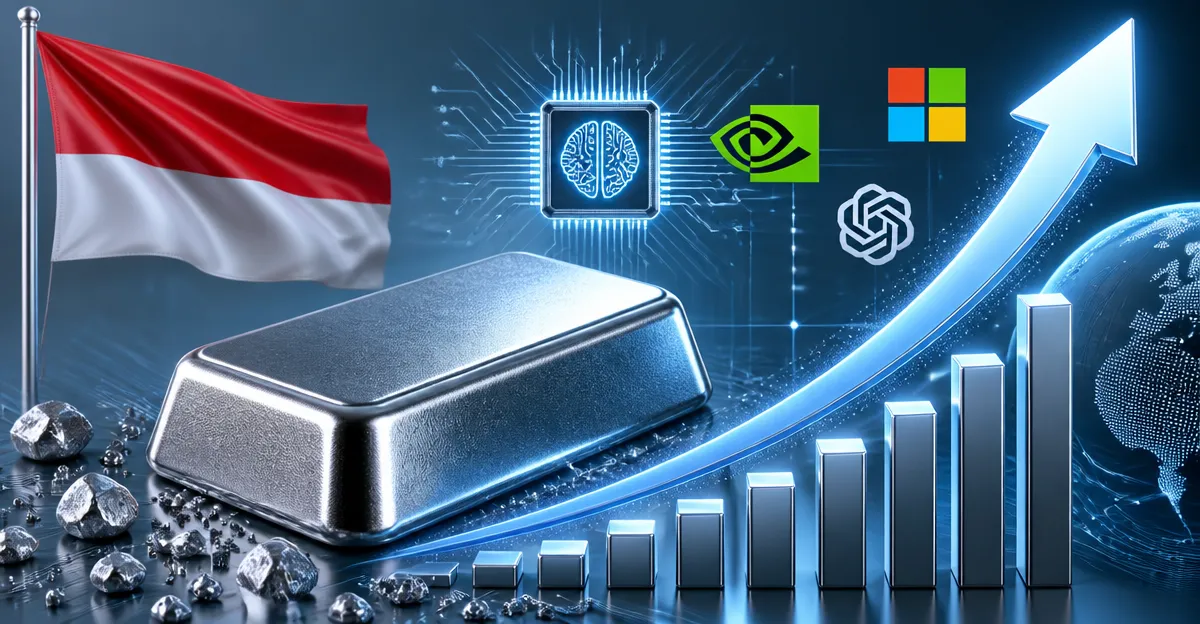
October 7, 2026, (Inside AI) — Tin, a metal once synonymous with the humble tin can, has quietly become the backbone of the artificial intelligence boom. Its price has more than doubled over the past three years, outpacing every other base metal on the London Metal Exchange (LME), including copper. Three-month tin has traded above $50,000 per metric ton since June, shattering its previous all-time high of $51,000 set in March 2022.
The surge reflects a structural shift in tin demand. Tin-plate packaging, once the metal's primary use, now accounts for just 11% of global consumption. Solders, the tiny metallic joints that connect electronic components, represent more than half. Every smartphone, drone, and AI data center relies on tin to bind its circuitry. As the world races to build AI infrastructure, tin has become an indispensable bridge to greater computing power.
AI Data Centers Devour Tin
The numbers are staggering. Each gigawatt of installed AI data center capacity requires 1,200 to 1,500 tons of tin, more than triple the amount used in a traditional data center, according to Shanghai Metals Market (SMM). A single AI server consumes up to 4 to 5 tons of tin, compared to just 500 kilograms for a standard server. A 10,000-card AI computing center demands 2.5 to 3.2 tons of printed circuit board solder alone.
This demand is not a temporary spike. Analysts at BMI estimate global capital expenditure on AI infrastructure will reach $785 billion this year. Cumulative spending on data centers could top $30 trillion by 2050, according to PwC. Semiconductor sales have risen for 18 consecutive months, with August billings hitting $160 billion, up 8% month-on-month and 144% year-on-year, per the Semiconductor Industry Association. The U.S. leads this growth, followed closely by China and Asia.
Read: Bitcoin Miners as AI Landlords
"The electronics sector has spent years trying to use less tin, leaving little wriggle room for further thrifting," noted Andy Home, a senior metals columnist. "The only real threat on the horizon is hybrid bonding, but SMM doesn't expect that to make a tangible impact until the next decade."
Tin's supply chain remains fragile. Production is concentrated in a few high-risk jurisdictions, including the Democratic Republic of Congo and Myanmar's Wa state. Despite relatively smooth output this year, visible inventories have slid from a February peak of 22,600 tons to 13,100 tons across LME and Shanghai Futures Exchange warehouses. LME time-spreads have tightened, with cash tin's discount to three-month metal narrowing from over $400 per ton in July to $105.
Read: San Jose Data Center Backlash
Copper may capture more headlines, but tin is already feeling the AI force. Accelerating electric vehicle sales outside the U.S. add another demand driver, as EVs require far more wiring and soldering than internal combustion vehicles. For now, tin remains the essential electrical and physical bridge to increased computing power, and its price reflects that reality.