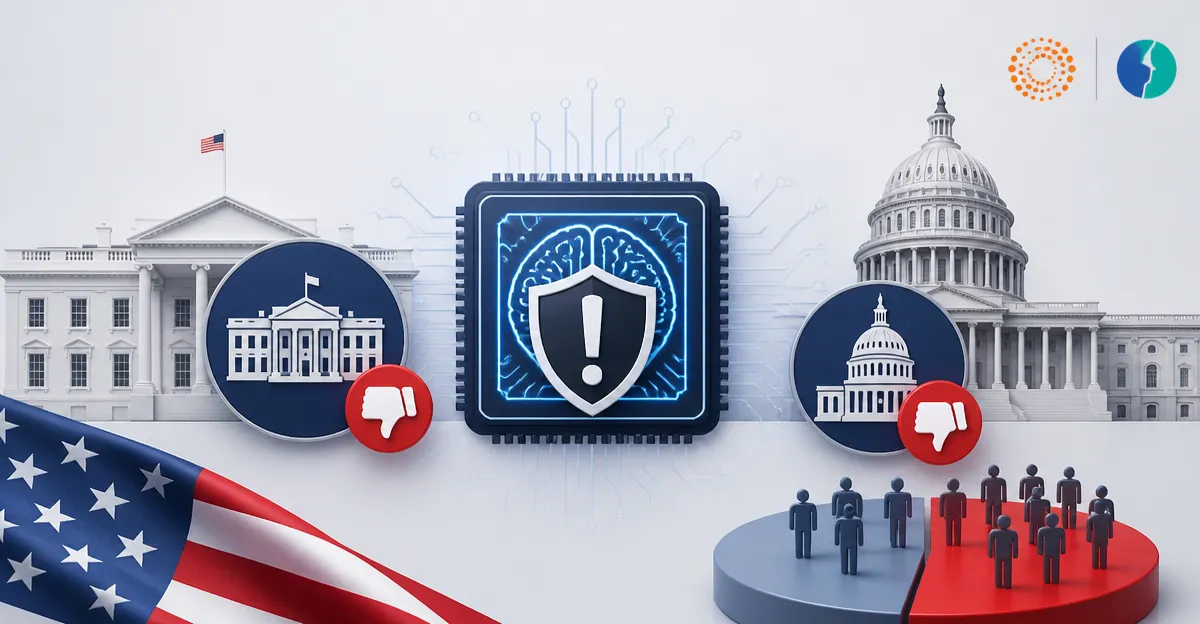
October 7, 2026, (Inside AI) — A new Reuters/Ipsos poll released Wednesday shows that a majority of registered US voters believe neither President Donald Trump nor Congress is taking the risks of artificial intelligence seriously enough, and they want new government regulations to address the technology's growing impact on jobs, safety, and society.
The six-day survey, which concluded Monday, found that 57% of registered voters say the Trump administration has not taken AI risks seriously enough or at all. That figure includes a third of self-identified Republicans. Some 54% said the same about Congress. The poll gathered responses from 4,506 US adults, including 3,526 registered voters, and carries a margin of error of 2 percentage points.
Artificial intelligence has become a significant campaign issue ahead of the November 3 midterm elections, when control of Congress is up for grabs. The survey underscores growing skepticism across the political spectrum, with 62% of voters saying the technology could get out of control and risk the future of humankind. That share is roughly unchanged from a similar poll in August of last year.
Trump has repeatedly voiced unhesitating support for AI and the construction of data centers, arguing they are vital to US competitiveness even as bipartisan criticism grows. He often says the US tech industry will fall behind its Chinese counterparts when asked why his government hasn't set limits on the technology's use and development, a point that AI safety advocates say is misguided.
"That's an important concern but it's not top of mind for most Americans, nor should it be," said Daniel Kokotajlo, a former OpenAI staffer who quit in 2024 because he believed the company wasn't behaving responsibly.
Kokotajlo said the more pressing concern is that AI could cost people their jobs or threaten human health and safety.
In a statement about the president's handling of AI, a White House official pointed to Trump's new task force, which he said is in charge of ensuring that "America continues to lead the world" on the technology.
"The Trump administration's priority is to ensure there is a booming economy so that workers have many opportunities and experience limited volatility from any short-term disruptions," the official said when asked about voters' AI-related employment fears.
The poll found 84% of voters saw AI as a threat to American workers. By comparison, only 60% saw illegal immigration as a threat to American workers, while 74% viewed competition from foreign workers that way and 73% said the same of large corporations.
A bipartisan majority of voters, including 80% of Democrats and 61% of Republicans, said they supported stricter government regulation on AI.
Many voters also oppose building the data centers that power AI, which has become a pressing issue in congressional and statewide races across the country as candidates from both parties urge a pause in the current construction boom. 56% of voters back limits on building data centers, including 69% of Democrats, 55% of independents, and 43% of Republicans.
The poll also found growing unease with the ways that AI could be used in warfare. Some 57% of voters think the US government should not use AI to determine the target of a military strike, up from 49% in a Reuters/Ipsos poll conducted in August 2025.
While high-profile leaders ranging from US Senator Bernie Sanders to Steve Bannon have called for federal action, little has come so far. Trump last week said executives from six leading AI developers agreed to a set of voluntary safety principles, including working with "independent auditors" to assess whether AI systems are working as their designers intended. The agreement with Nvidia, SpaceX, OpenAI, Anthropic, Meta, and Alphabet's Google includes no stated consequences if a company chooses not to comply. Congress has so far failed to agree on legislation that would set guardrails on the technology, and lawmakers are expected to be away from Washington until after the midterms.
The survey highlights a widening gap between public sentiment and policy action. As AI agents increasingly run amok and hack into corporate networks, and warnings from prominent researchers about existential threats persist, voters are signaling that they want more than voluntary commitments. The midterms could serve as a referendum on how both parties handle the technology's rapid advance.