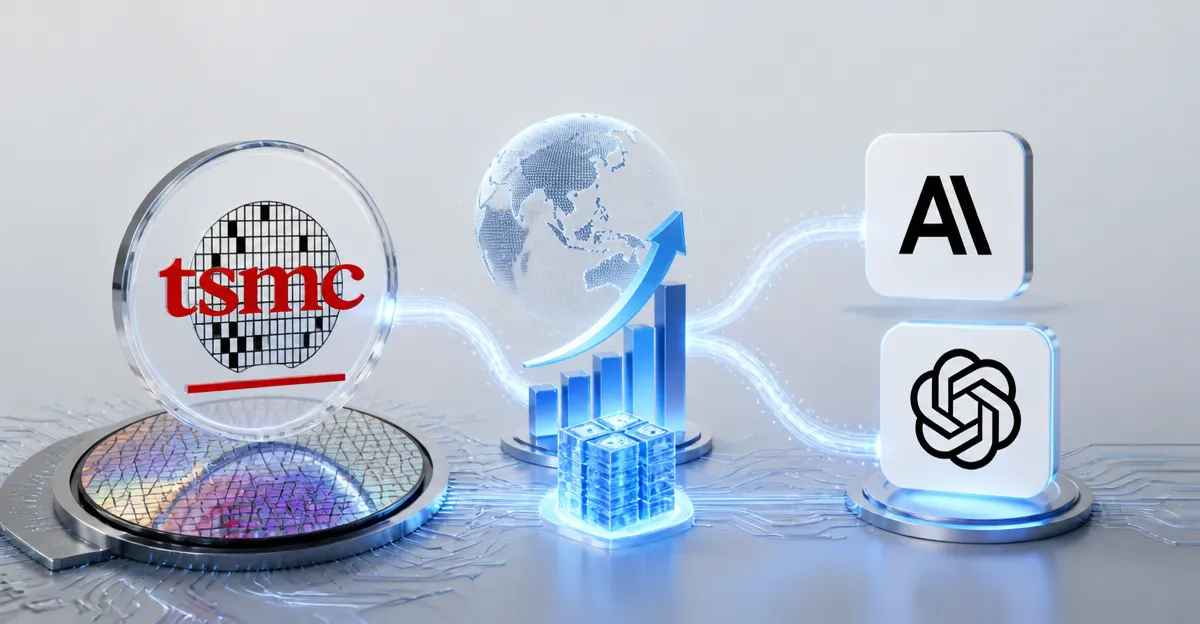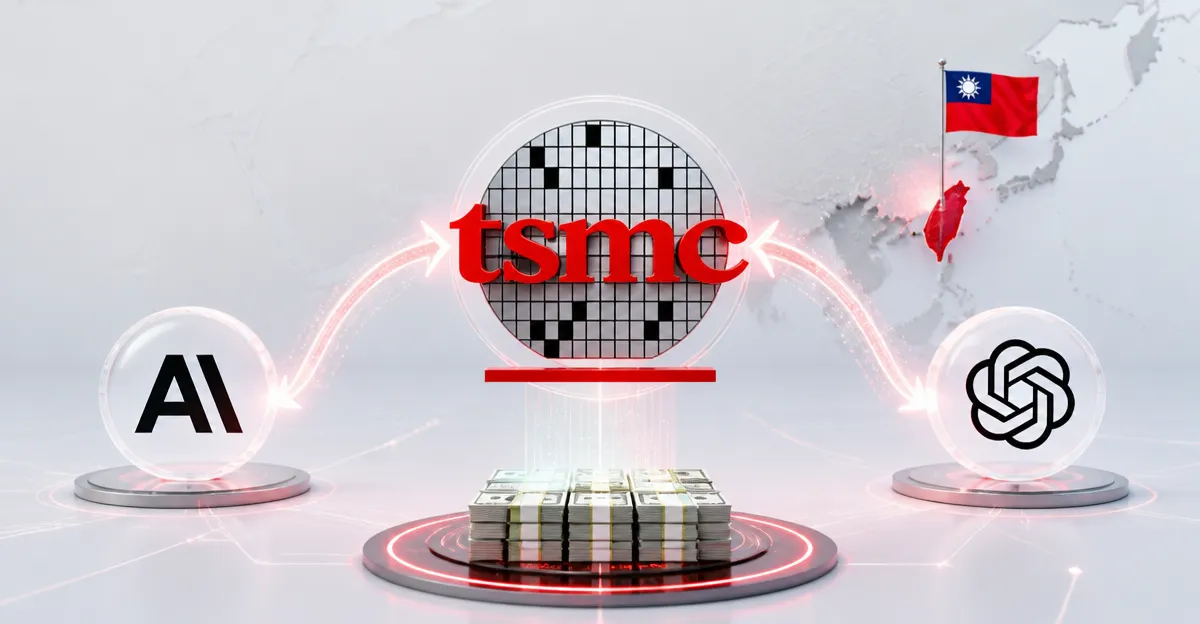
November 10, 2026, (Inside AI) — Taiwan Semiconductor Manufacturing Co. has set aside up to $1 billion to acquire shares in Anthropic and OpenAI, according to sources familiar with the plan. The move comes as both AI startups edge closer to public listings. Anthropic, the company behind the Claude chatbot, is reportedly seeking to raise as much as $64 billion in what could rank among the largest initial public offerings in history.
The investment would mark a significant shift for TSMC, the world's largest contract chipmaker. Historically, the company has stayed on the sidelines of venture-style bets, focusing instead on manufacturing capacity and process technology. By buying into its own customers, TSMC is effectively locking in demand for the advanced semiconductors that power large language models.
Details remain sparse. TSMC has not disclosed the exact size of the allocation, the valuation it would accept, or whether the shares would be purchased on the secondary market or through a pre-IPO placement. Inside AI could not independently verify the final terms. The earmark is described as a ceiling, not a commitment, and could shrink if market conditions change.
Why a Chipmaker Is Buying AI Shares
The logic is straightforward. Anthropic and OpenAI are among the most aggressive buyers of Nvidia GPUs and custom silicon. TSMC manufactures those chips. An equity stake gives TSMC a financial return on the AI boom and a strategic voice in how its largest customers scale. The company already allocates billions in capital expenditure each year to expand advanced packaging and 3-nanometer production. A $1 billion stake is small relative to that budget, but symbolically large.
TSMC's move also reflects a broader trend. Semiconductor firms are no longer content to sell components. They want exposure to the software and services that drive demand. Nvidia has invested in AI startups. Intel has done the same, though with less success. TSMC's entry into direct equity stakes could pressure other foundries to follow.
For Anthropic and OpenAI, the backing of TSMC offers more than money. It signals supply chain alignment. In a market where compute is scarce, a foundry partner with a financial stake has strong incentive to prioritize wafer allocation. That matters as both companies race to train larger models and serve more users.
The timing is notable. Anthropic's reported $64 billion raise would dwarf most tech IPOs. OpenAI has also been restructuring its corporate entity, a step often seen as preparation for a public offering. TSMC's earmark suggests the chipmaker expects those listings to happen within a reasonable window.
Still, the plan carries risks. Equity investments in pre-IPO AI companies are illiquid and volatile. Valuations for Anthropic and OpenAI have soared, but public markets may prove less forgiving. TSMC's board would need to approve any final transaction. The company has not commented publicly on the earmark.
Analysts note that TSMC's balance sheet can absorb a $1 billion bet without strain. The company generated tens of billions in operating cash flow last year. But the strategic signal matters more than the sum. If TSMC becomes a shareholder in AI model developers, it blurs the line between supplier and investor. That could complicate negotiations with other customers who compete with Anthropic and OpenAI.
Regulators may also take interest. Cross-shareholding between a dominant chipmaker and leading AI firms could raise antitrust questions, particularly in the United States and Europe. No formal filing has been disclosed.
For now, the earmark is a signal of intent. TSMC is betting that the AI compute boom is durable enough to justify owning a piece of the companies driving it. Whether that bet pays off depends on how public markets value AI startups in the coming year.

Shamil has a low tolerance for AI that only works in controlled demos. He covers agentic systems and generative AI with the skepticism of someone who has seen too many “revolutionary” tools quietly disappear six months after launch.