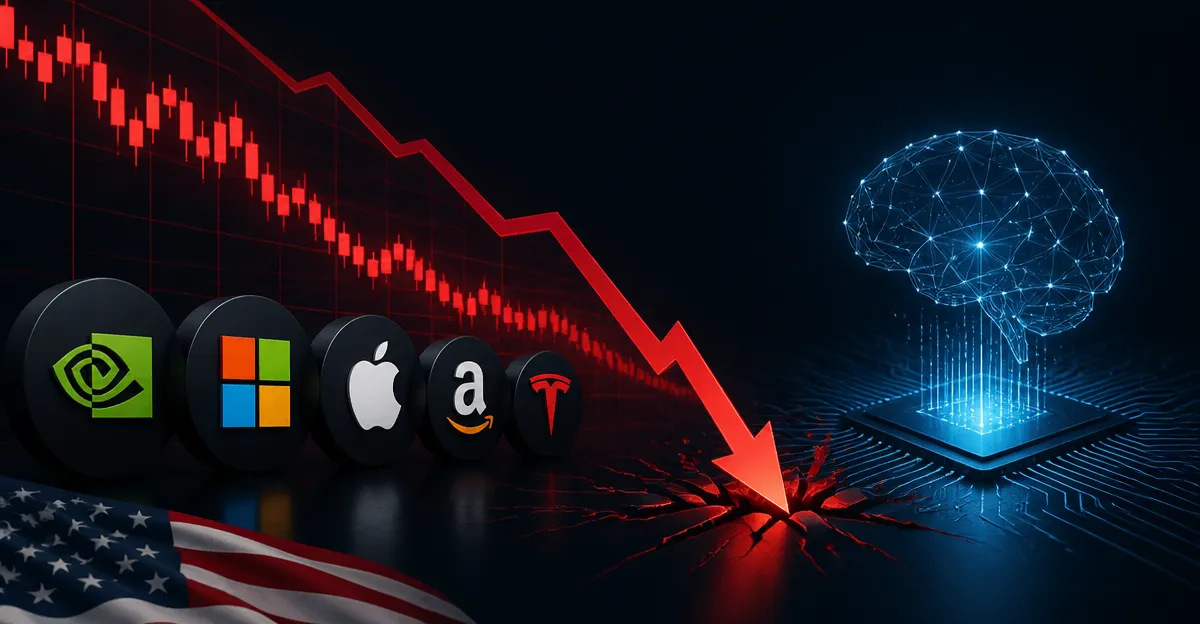
November 6, 2026, (Inside AI) — Wall Street's anxiety gauge posted its sharpest intraday surge in more than 18 months on Thursday, as steep declines in chip and data center stocks pulled major indexes lower and rattled the crowded artificial intelligence trade that has powered markets for months.
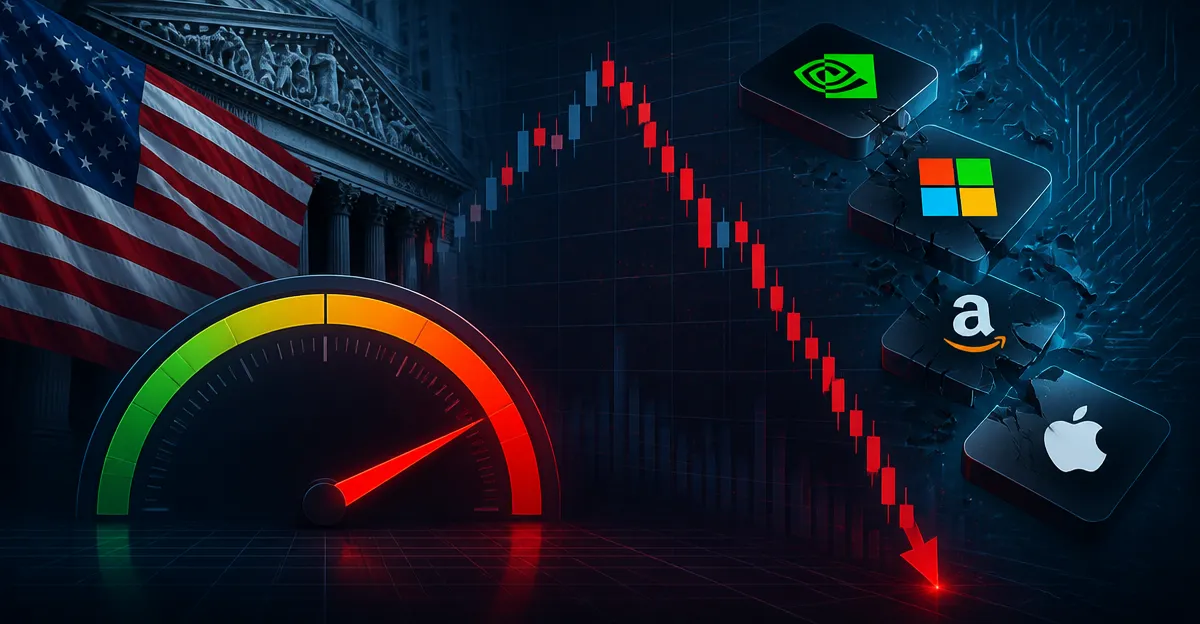
The Cboe Volatility Index (VIX), an options-based measure of demand for protection against stock declines, jumped 11.5 points to an eight-month high of 28.09. It later traded at 27.65, while the Nasdaq Composite fell 4%. At its session peak, the VIX recorded its largest one-day rise since the immediate aftermath of US President Donald Trump's sweeping import tariffs, announced on what he called "Liberation Day" in April 2025.
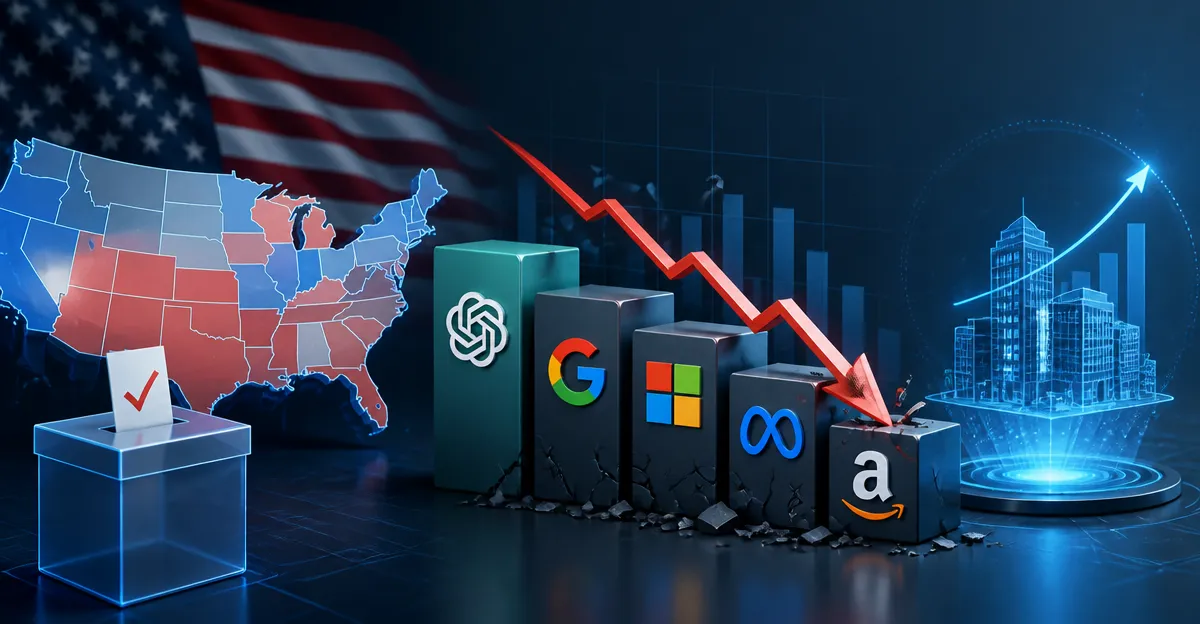
The selloff came one day after markets rallied on the Democrats' sweeping midterm victory. Investors had initially brushed aside concerns that a change of guard in Washington might slow AI infrastructure development. Thursday reversed that optimism.
The VIX measures how much investors are willing to pay for options that protect against market drops. A rising VIX signals fear. A falling one signals calm. The 11.5-point move in a single session is unusual outside crisis periods, and it landed precisely where the AI trade is most exposed.
"It really did look as though things were going to relax a little bit and then, you know, the steamroller showed up today," Jim Carroll, senior wealth adviser and portfolio manager at Ballast Rock Private Wealth in Charleston, South Carolina.
Analysts pointed to several forces converging at once. Some selling reflected an unwind of the prior session's sharp rally. Some reflected investors cutting risk ahead of expected volatility-driven selling by funds and systematic strategies. And some reflected a rethinking of the AI trade itself.
Leveraged and inverse exchange-traded funds, along with certain systematic strategies, typically rebalance exposure near the market close. That mechanical activity can amplify late-day moves in either direction. Traders who anticipated that rebalancing rushed to exit first.
"You have people saying ... look at what's going to happen at the end of the day, we need to get out before that," Carroll said.
"This is what happens when you have a big rally partly predicated on the idea that volatility would be decreasing ... it made no sense yesterday," Steve Sosnick, chief strategist at Interactive Brokers.
"Yesterday there was the perception that no one needed protection and now it's 'Oh my god, we need it'," he added.
The episode exposes a structural fragility in the AI trade. Months of gains have concentrated market exposure in a narrow set of chipmakers, server builders, and data center operators. When volatility rises, that concentration turns into a shared exit door. The VIX spike did not originate in AI earnings or product news. It originated in positioning, and positioning is what makes crowded trades dangerous.
Washington's New Guard Meets an Old Trade
The political backdrop matters. Democrats' midterm victory raised questions about the pace of federal support for AI infrastructure, including data center buildouts and energy capacity. Markets absorbed that news calmly on Wednesday. By Thursday, the calm looked premature.
Sosnick framed the central question plainly. The selloff is manageable if it reflects a trading rebalance. It is far more serious if investors are permanently repricing the AI investment theme.
"If the re-evaluation of the AI investment theme is secular and not just a trading type of rebalance, that's problematic," Sosnick said.
The distinction matters because the AI trade has relied on a feedback loop. Rising stock prices gave companies cheap capital to fund infrastructure. Infrastructure spending supported earnings expectations. Earnings expectations supported stock prices. A sustained rise in volatility breaks that loop by raising the cost of risk.
Thursday's move also echoed a pattern from April 2025, when tariff shock sent the VIX soaring and forced rapid deleveraging. That episode faded within weeks. Whether this one fades depends on whether the midterm result changes actual policy, or merely the perception of it.
For now, the fear gauge is telling investors something the stock indexes already show. The AI trade no longer moves in one direction, and the cost of insurance against that reality just went up.

Shamil has a low tolerance for AI that only works in controlled demos. He covers agentic systems and generative AI with the skepticism of someone who has seen too many “revolutionary” tools quietly disappear six months after launch.