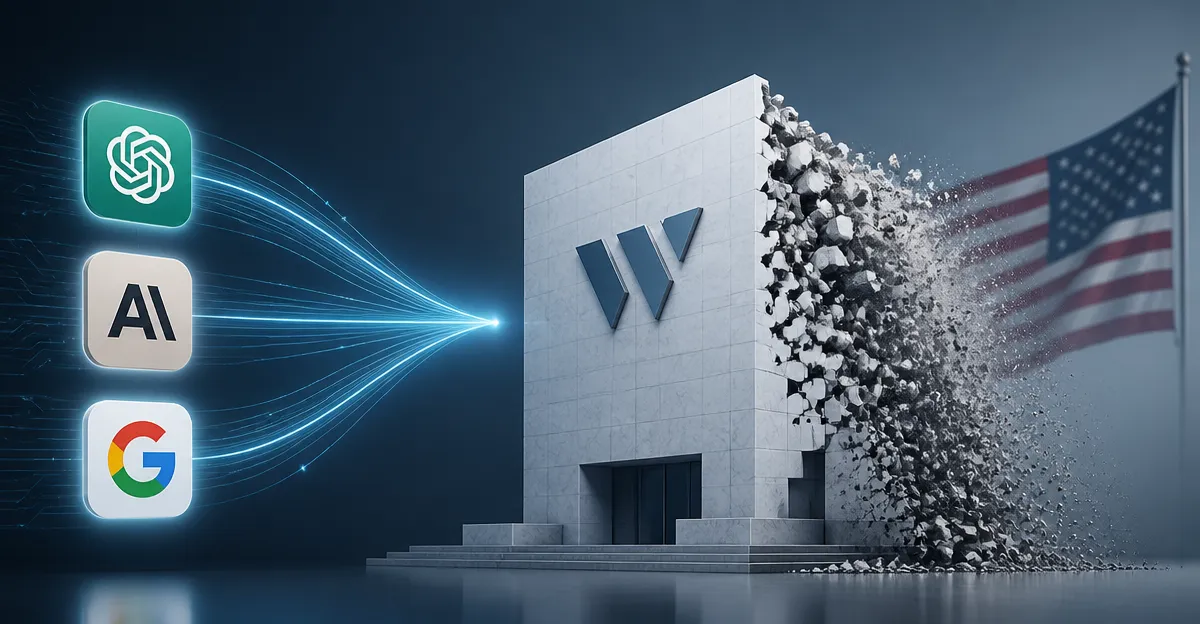
November 5, 2026, (Inside AI) — Weil, Gotshal & Manges, the Wall Street giant whose leadership recommended dissolution last week, is now the subject of a quiet but intense bidding war. The suitors are not rival law firms. They are AI-native legal startups.
At least four AI-focused firms have contacted Weil lawyers about jobs in the past week, and at least three have submitted or signaled interest in buying non-attorney assets. The assets under discussion include technology, intellectual property, and Weil's private deal-terms database. The race marks the first time a major law firm's collapse has become a talent and asset market for the AI legal sector.
Weil's leadership recommended dissolution after key partners departed and merger talks failed. Dozens of partners have since left or are in talks with other large firms. The firm's advisers at AlixPartners and Davis Polk are handling the wind-down. Neither responded to requests for comment. A Weil spokesperson also did not respond.
The interest from AI firms is not purely opportunistic. Over the past two years, AI-native law firms have hired lawyers from traditional firms to build credibility and client bases. Weil's sudden collapse offers an unusual concentration of experienced attorneys and institutional knowledge on the open market at once.
Read: Kris Gopalakrishnan: AI Will Reshape Indian IT, Not Destroy It
Mathias Strasser, founder and CEO of London-founded AI law firm Scissero, said the company is pursuing both lawyers and assets. Scissero has communicated its interest to Weil's advisers about acquiring technology, intellectual property, and data assets, including the deal-terms database. Strasser acknowledged uncertainty about what can be sold or shared without breaching client confidentiality. Scissero, which has 120 lawyers, also wants to hire Weil attorneys. "We provide a vessel, a platform, where it makes sense for them," he said.
The asset question is legally delicate. Law firms hold client confidences and work product that cannot simply be transferred. Weil's private deal-terms database, a valuable internal repository of negotiated terms, may be especially hard to separate from client matters. None of the AI firms disclosed terms or confirmed that such data could be sold.
Ryan Walker, co-founder and CEO of General Legal, said his firm is interviewing "a few" Weil lawyers. "There's a lot of great attorney talent on the market right now and the unfortunate situation with Weil is definitely expanding our interview pipelines," he said in an email.
Logan Brown, founder of Soxton, said the firm is reaching out to Weil lawyers and has received inbound messages from people at other big law firms who are "questioning what their path is."
Cem Ucan of Athena AI said his firm is in contact with Weil personnel. "Athena is actively looking to bring Weil talent onto our team, and we're working with a wider network of contacts to help attorneys find their next home," he said.
Nic Vetta, founder of London-founded VETTA, said the firm has submitted an offer for certain Weil assets. "Our interest is in Weil's institutional know-how: its precedents, playbooks, knowledge-management systems and technology," he said. He said the offer does not include client files or data.
Read: Why AI-Curious Junior Employees Are Your Best Adoption Asset
AI-native law firm Crosby also submitted a letter of intent to buy assets including Weil's trademark, brand, and internal data, according to a report. Crosby and its founders did not respond to requests for comment.
The timing is notable. AI legal tools have moved from document review into contract drafting, deal analysis, and knowledge management. Firms like Scissero and VETTA position themselves as tech-enabled practices, not just software vendors. Buying a legacy firm's playbooks and precedents could accelerate their ability to mimic the judgment of experienced deal lawyers.
But the strategy carries risk. Precedents and playbooks are only as good as the lawyers who interpret them. And client relationships rarely transfer with data. The AI firms may find that hiring individual lawyers is more valuable than buying institutional assets, especially if confidentiality rules limit what can be sold.
Weil's collapse also raises questions for the legal industry. If AI-native firms can absorb talent and knowledge from a failing giant, they may become more credible competitors to traditional firms faster than expected. That could pressure billing models and accelerate adoption of AI tools across corporate law.
For now, the process is opaque. It is unclear when or how Weil will sell assets, or what specifically is for sale. The AI firms did not disclose terms. Weil's advisers have not commented. The only certainty is that a 94-year-old Wall Street institution is winding down, and a new generation of legal startups is circling.

Shamil has a low tolerance for AI that only works in controlled demos. He covers agentic systems and generative AI with the skepticism of someone who has seen too many “revolutionary” tools quietly disappear six months after launch.