August 31, 2026, (Inside AI) — Zhipu AI posted first-half revenue of 953.9 million yuan ($141.96 million), a 400% jump from a year earlier. The Beijing-based startup disclosed the figure in a filing tied to its Hong Kong listing under ticker 2513.HK.
The surge shows how Chinese model builders are converting enterprise demand for large language models into hard sales. Zhipu has leaned on lower-cost products and a shift toward domestic chips to win deals amid tightening export controls.
Zhipu did not break out profit or loss in the filing. The revenue number alone leaves open whether the company is burning cash to chase scale. Investors will watch gross margins in the second half for signs of sustainable growth.
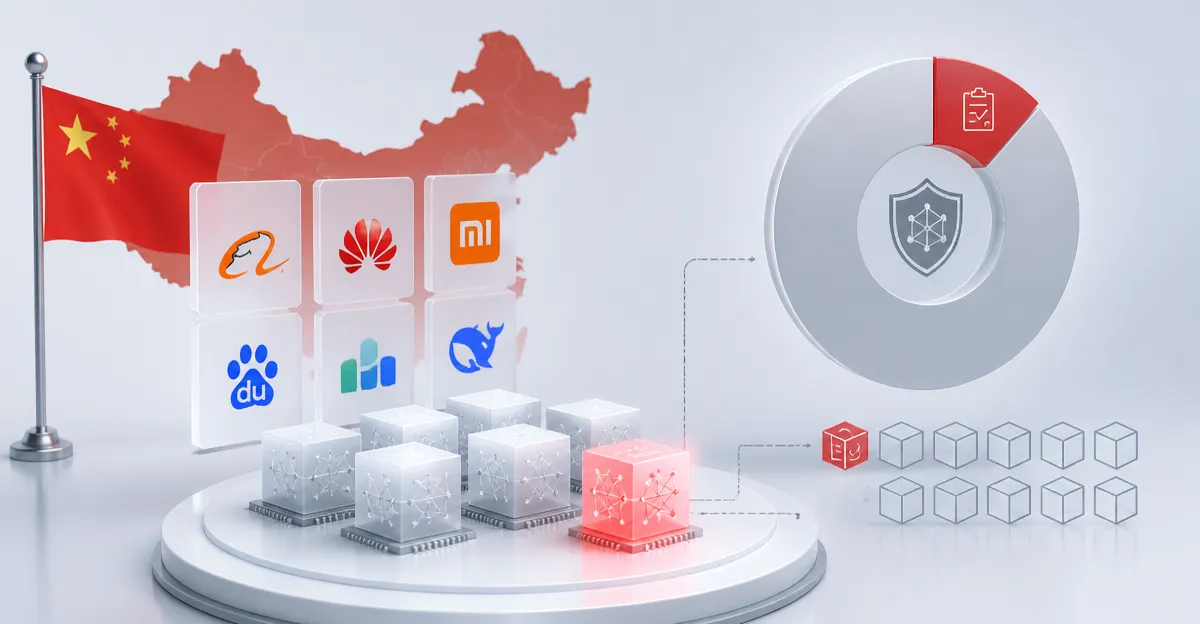
The company has positioned itself as a local alternative to Western models. Its GLM series competes with offerings from Alibaba, Baidu, and ByteDance. Zhipu has also pushed into government and state-owned enterprise contracts, where data sovereignty requirements favor domestic vendors.
Revenue growth of this magnitude is rare for a Chinese AI startup. Moonshot AI and MiniMax have reported far smaller public figures. Zhipu’s numbers suggest it has found a repeatable sales motion, not just pilot projects.
The company has aggressively cut prices on its API services. That strategy mirrors moves by DeepSeek, which forced a price war across China’s model market in early 2025. Zhipu’s ability to grow revenue while slashing prices points to volume-driven adoption.
Domestic chip adoption is another pillar. Zhipu has worked with Huawei’s Ascend processors to reduce reliance on Nvidia hardware. That alignment with Beijing’s self-sufficiency push may unlock preferential access to state projects.
The filing did not disclose customer concentration. A handful of large contracts could skew the revenue base. Zhipu will need to show diversification to convince public market investors that the growth is durable.
Hong Kong has become a favored listing venue for Chinese AI firms seeking capital without U.S. regulatory friction. Zhipu’s debut on the exchange adds another data point for how investors are valuing China’s model layer.
The company faces intense competition from Alibaba’s Qwen models, which are open-source and widely adopted. Zhipu has responded by emphasizing enterprise customization and on-premise deployment, a different wedge than pure API volume.
Analysts caution that China’s AI market remains fragmented. Price competition could compress margins even as revenue scales. Zhipu’s next earnings report will reveal whether the 400% growth came with improving unit economics or simply larger subsidies.
The startup has also expanded internationally, offering models through cloud partners in Southeast Asia and the Middle East. Those markets provide a hedge against domestic saturation but bring their own compliance and localization costs.
Zhipu’s trajectory echoes the early days of China’s cloud computing boom. Alibaba and Tencent posted triple-digit growth for years before profitability arrived. AI model providers may follow a similar arc, assuming capital remains available.
The company’s use of domestic chips could become a strategic moat. As U.S. export restrictions tighten, firms with proven experience on Chinese silicon will have a first-mover advantage in serving sensitive sectors.
Zhipu has not announced plans for a secondary listing. The Hong Kong filing suggests it is testing public market appetite while private funding rounds have slowed across the sector.
The revenue figure excludes any one-time gains from asset sales or government grants, according to sources familiar with the filing. That makes the 400% growth more credible as a measure of operating momentum.
Zhipu’s next milestone will be reaching 2 billion yuan in annual revenue. At the current pace, that threshold is within reach by year-end, though seasonality in government procurement could affect the second half.
The company continues to invest heavily in research. Its latest model release, GLM-5, claims benchmark results competitive with Western frontier models at a fraction of the inference cost.
Zhipu’s growth also reflects a broader shift in China’s enterprise software market. Companies that once hesitated to adopt AI are now signing multi-year contracts for model access, fine-tuning, and private deployment.
The startup’s valuation remains undisclosed. Its last private round valued the company at roughly $3 billion, according to sources. The public listing will provide a clearer benchmark for China’s AI unicorns.
Zhipu’s ability to sustain this growth depends on execution, not just market tailwinds. The company must manage rising compute costs, talent retention, and regulatory scrutiny while scaling across industries.
The filing also noted increased spending on sales and marketing. That investment likely drove the revenue surge but may pressure near-term profitability. Investors will parse the expense breakdown when full financials are released.
Zhipu’s story is a test case for whether China’s AI model layer can produce a standalone public company. The next two quarters will show if the growth is a one-time inflection or the start of a sustained trajectory.