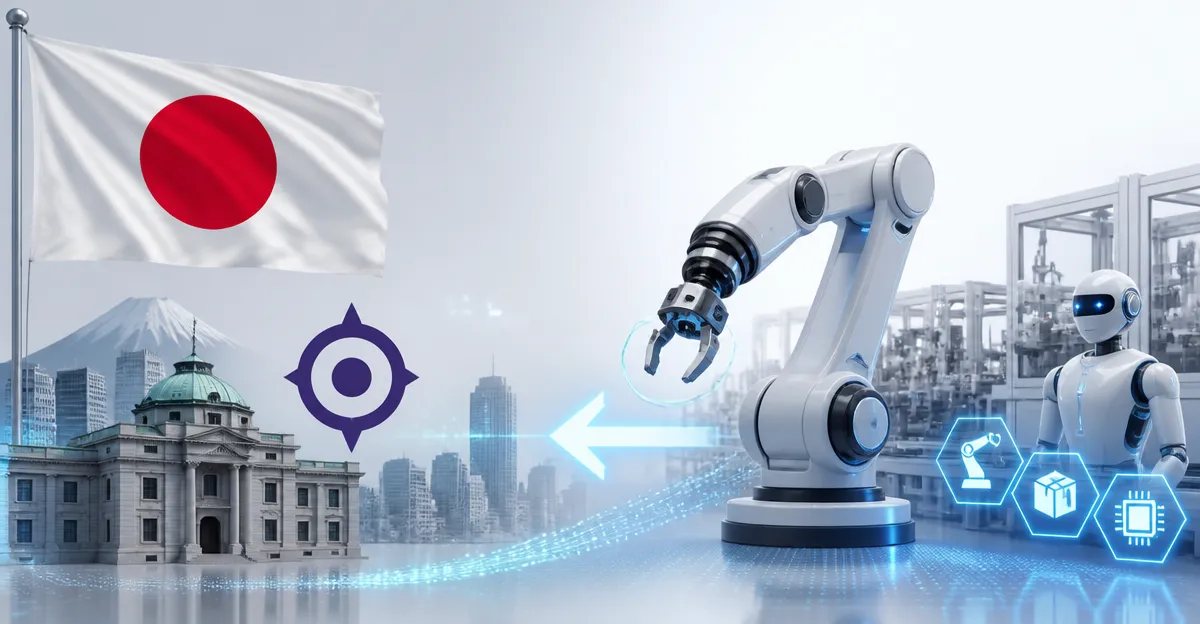
November 7, 2026, (Inside AI) — Bank of Japan Governor Kazuo Ueda said on Friday that Japan could benefit from artificial intelligence replacing labor, citing the country's severe worker shortages. Speaking at an International Monetary Fund event in Washington, Ueda described AI as a positive demand shock for the Japanese economy, but cautioned that supply-side effects still require study.
His remarks land at a sensitive intersection of monetary policy and labor economics. Japan's working-age population has shrunk for decades, and firms across retail, logistics, and elder care report chronic staffing gaps. Ueda's framing suggests the central bank sees AI as a potential remedy for a structural problem that monetary easing cannot fix.
"Japan could do well with AI replacing labor given its significant labor shortages," Ueda said, according to an official who spoke on condition of anonymity. The governor did not quantify how quickly such substitution might occur or which sectors would absorb it first.
The demand-side optimism is notable. Ueda said rapid AI advancements had already generated a positive demand shock, implying capital spending on chips, data centers, and software is lifting economic activity. Japan has courted semiconductor investment aggressively, with TSMC building a fab in Kumamoto and Rapidus targeting advanced logic production in Hokkaido. Those projects align with the demand impulse Ueda describes.
Read: South Korea's Lee Proposes Record Budget With $15.97 Billion for AI
Supply-Side Effects Remain Unclear
The supply side is messier. If AI displaces workers faster than it creates new roles, consumption could weaken even as output rises. Japan's experience with past automation offers a cautionary parallel. Factory robots boosted productivity in the 1980s, but they also concentrated gains in large manufacturers while smaller suppliers shed jobs. Ueda acknowledged that supply-side factors need study, a signal that the BOJ is not treating AI as an unqualified win.
His concerns extend to financial stability. Ueda said he worried about cyber risks and noted that some small banks and small firms had not done enough to guard against them. That warning carries weight in Japan, where regional banks serve aging communities and often run legacy IT systems. A breach at a small lender could ripple through local credit channels.
The commentary here is that Ueda's dual message reflects a broader tension in how central banks treat AI. Demand shocks are easy to model. Supply shocks that reshape employment and credit risk are not. The BOJ's willingness to flag cyber gaps at small institutions suggests regulators may soon tighten oversight, a move that could raise compliance costs for lenders already squeezed by low margins.
Ueda's remarks also arrive as the Federal Reserve and European Central Bank grapple with similar questions. The Fed has focused on AI's effect on productivity and inflation. The ECB has warned about concentration risk in AI infrastructure. Japan's angle is distinct because its labor shortage predates the AI boom by decades. That makes the country a live test case for whether automation can offset demographic decline.
For markets, the immediate takeaway is that the BOJ sees AI as a demand tailwind, not a reason to alter policy. Ueda did not signal any shift in stance on interest rates or yield curve control. His comments instead framed AI as a structural force that policymakers must monitor, not a lever they can pull.
Small firms remain the weak link. Many lack the capital to adopt AI tools or harden their cyber defenses. If larger competitors pull ahead, Japan's already wide productivity gap between big and small enterprises could widen. Ueda's warning about small banks and firms signals that the BOJ is watching that divide.
Read: Japan Asks Anthropic, OpenAI for More Access to Advanced Models
The IMF event drew central bankers and economists focused on AI's macroeconomic impact. Ueda's appearance underscores how the debate has moved from speculative think pieces to formal policy discussions. Japan's labor shortage gives it a unique stake in the outcome. Whether AI becomes a substitute for workers or a complement to them will shape the country's growth path for years.

Sofia spent years studying how machines parse human language before pivoting to cover the systems now rewriting it. She reads technical papers the way others read news and looking for what the numbers are actually saying beneath the headlines.