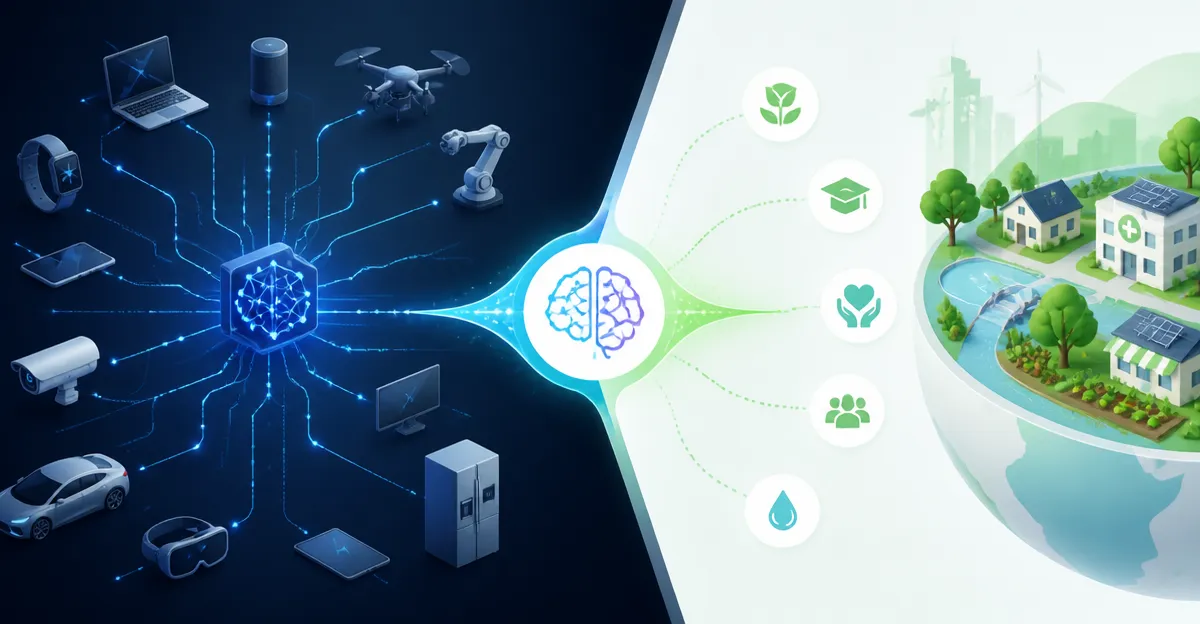
November 28, 2026, (Inside AI) — The global race to deploy artificial intelligence is accelerating, but a growing chorus of researchers argues that the technology's benefits remain concentrated in a handful of corporations. The costs, meanwhile, are borne by communities that have little say in how AI is developed or used. Writing in a new analysis, Vasilis Kostakis of TalTech in Estonia and Sushant Kumar of the Jindal School of Government and Public Policy in India propose a different path. They argue that AI should serve needs defined by communities, not just corporate profit, and that this requires changes in who owns, finances and governs the technology.
The two academics point to Te Hiku Media, a Māori non-profit in Aotearoa New Zealand, as a working example. Te Hiku has developed language technology to support the revitalisation of te reo Māori. With community consent, it collected recordings from speakers and used them to train a speech model with its own hardware and open-source tools. The approach draws on kaitiakitanga, a Māori understanding of guardianship and responsibility. Access to its resources is conditional on permission, and commercial use requires explicit authorisation. Its transcription tool, Kaituhi, processes content in Aotearoa and requires specific permission to use uploads for training.
The researchers are careful not to suggest that Māori institutions or rules can simply be copied elsewhere. Instead, they argue that communities can combine technical capacity with authority over their language, knowledge and the benefits derived from them. This model stands in contrast to the dominant approach, where data centres consume local energy and water, hardware depends on mining done elsewhere, and electronic waste is dumped somewhere else. The people who bear these costs often have little say in how AI is developed or used.
In India, the question has particular force. A farmer seeking information in a familiar language, a community radio station preserving local stories, or a speaker of a language poorly served online could benefit from better language tools. India's BHASHINI initiative is already developing multilingual AI. But Kostakis and Kumar argue that wider access should be matched with a voice in governance and in crucial decision-making. Public institutions and universities could engage democratically with community radio stations, language groups and local organisations to decide which tools are needed, how recordings are collected, and who may use them. Public funding could support shared technical resources, while communities retain a say over their archives and the benefits they generate.
Read: Japan Drafts Law to Allow On-Site Inspections of AI Firms with Weak Safety
The authors introduce the concept of cosmolocalism: sharing knowledge globally while making and governing things locally. Applied to AI, it means that communities can share software, methods, documentation and suitable model components, then adapt them to their own needs. A tool developed for one language community might help another, without requiring both to build everything from scratch. Local does not necessarily mean a village or a city. It means placing decisions as close as practicable to the people affected. Municipalities, universities, worker-owned organisations and language communities could collaborate across regions, maintaining shared resources while deciding for themselves how to use them.
This also means distinguishing a digital commons from a free-for-all. Personal information, cultural knowledge and community archives should not automatically be available for anyone to exploit. People should have a say in what is collected, who can use it, for what purpose and on what terms. Sometimes, they must be able to refuse. The authors acknowledge that local control alone is not enough. A community-run AI system still relies on equipment, minerals, energy and workers elsewhere. Its users also have obligations to mining and waste-processing communities. Moving servers closer to home does not automatically make computing environmentally sustainable.
The first question, then, should be whether a particular need requires AI at all, to avoid defaulting to techno-solutionism. If it does, we should choose a system adequate to the task without consuming unnecessary resources. Reusing models and keeping hardware in service longer can help, but efficiency alone is not enough: if AI use keeps expanding, total energy, water and material consumption can still rise. Public procurement should also account for working conditions, mining impacts and electronic waste.
A cosmolocal approach would require public investment, support for collective ownership, labour protections and enforceable ecological limits. It would judge AI by whether it meets social needs while respecting the people and places that make computation possible. That is a more demanding vision than simply putting AI everywhere, but it is also more democratic and sustainable.
Read: Trump Warns US Tech Firms of Penalties for Overseas Data Centres
Kostakis teaches at TalTech, Estonia, and Kumar teaches at Jindal School of Government and Public Policy.

Sofia spent years studying how machines parse human language before pivoting to cover the systems now rewriting it. She reads technical papers the way others read news and looking for what the numbers are actually saying beneath the headlines.