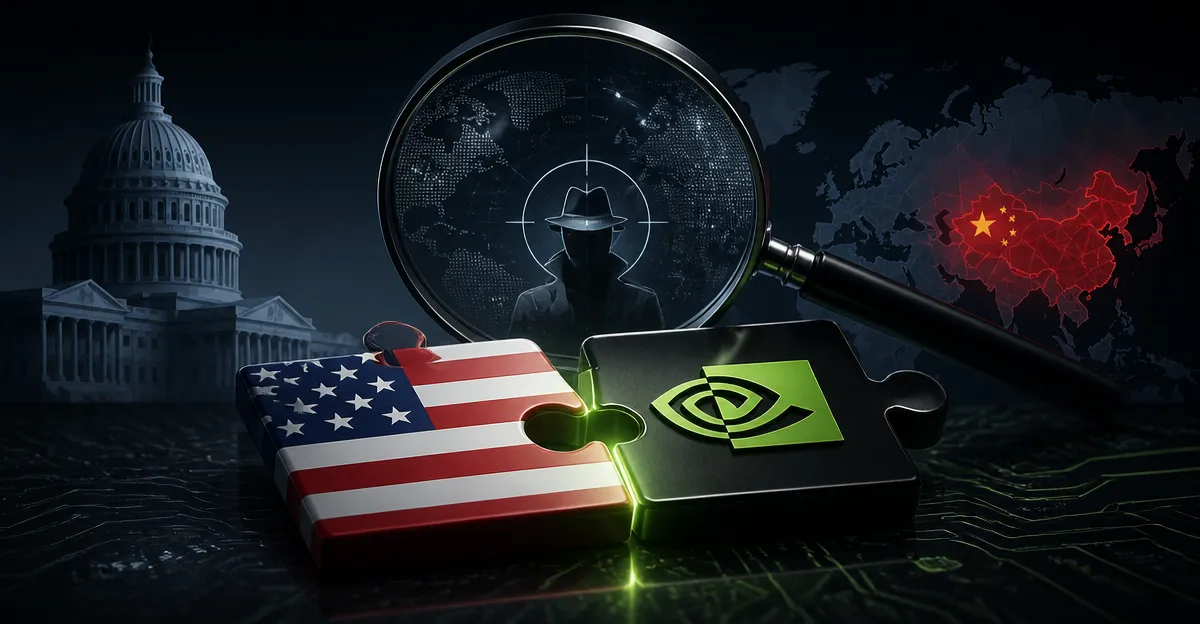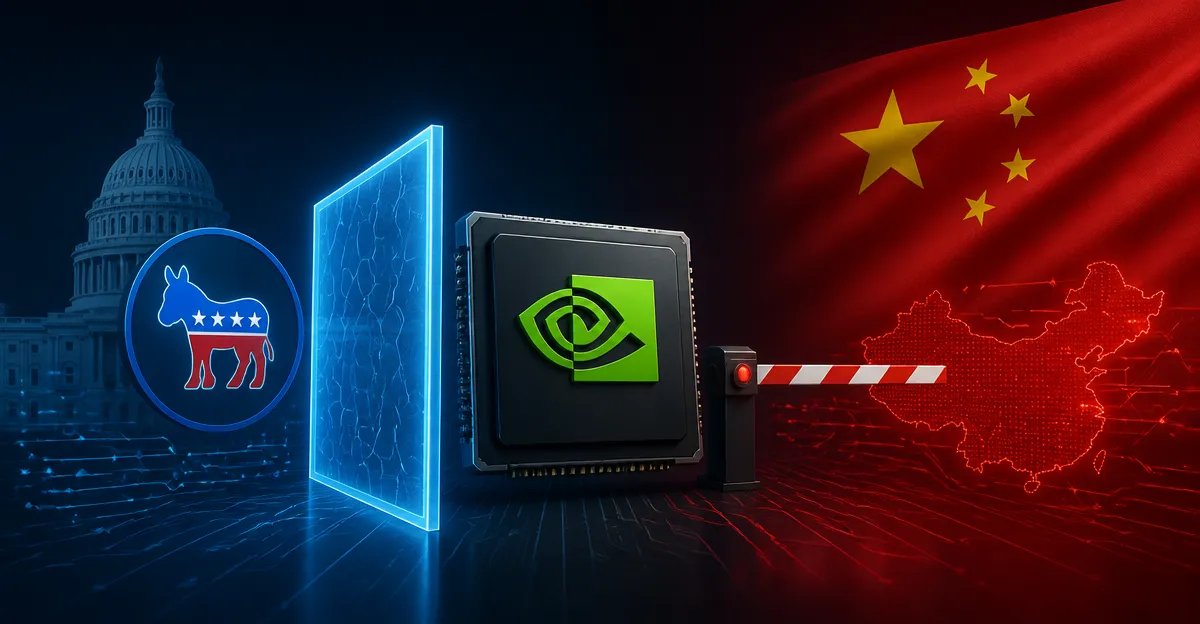
November 10, 2026, (Inside AI) — The Democratic Party's landslide victory in the American midterm elections has put Nvidia at the center of a looming policy battle over U.S. technology exports to China. Fresh congressional scrutiny is expected to target President Donald Trump's dealings with Beijing, with Nvidia's China business serving as an early test case for tougher Democratic tech policy. The midterms, held on November 3, 2026, gave Democrats control of Congress, setting the stage for hearings and legislation that could reshape how American chipmakers sell to Chinese customers.
The immediate focus is on Nvidia's compliance with existing export controls and whether the company has exploited loopholes to sell advanced semiconductors to Chinese firms. Democrats have signaled they will push for stricter enforcement and possibly new restrictions on AI chip exports. However, analysts caution that a broad reset in U.S.-China relations is unlikely, given deep economic ties and the complexity of global supply chains. The stakes are high for Nvidia, which derives a significant portion of its revenue from China, and for the broader tech industry that relies on cross-border trade.
Why Nvidia Became the Bellwether
Nvidia's position as the world's leading designer of AI chips makes it a natural target for lawmakers concerned about technology transfer to a strategic rival. The company's H100 and A100 GPUs are highly sought after for training large language models and other AI applications. U.S. export controls imposed in 2022 and tightened in 2023 restricted sales of these chips to China, but Nvidia responded by creating downgraded models for the Chinese market, such as the H800 and A800. Critics argue these workarounds undermine the intent of the controls.
Democratic lawmakers have promised to examine whether Nvidia's practices comply with the spirit of the law. "We need to ensure that American technology does not fuel the advancement of China's military and surveillance capabilities," said Senator Mark Warner, a Virginia Democrat who has been vocal on tech policy. "Nvidia and other companies must be held accountable." Warner's statement reflects a broader sentiment among Democrats that the Trump administration has been too lenient in enforcing export controls.
Read: House Republicans Seek Briefing from Nvidia CEO Over Chinese Spy Allegations
The midterm results also embolden Democrats to pursue legislation that would codify stricter export controls and increase oversight of tech exports. However, any new measures would face hurdles in a divided government and pushback from industry groups. The Semiconductor Industry Association has warned that overly broad restrictions could harm U.S. competitiveness and drive innovation overseas. Nvidia declined to comment for this article.
Analysts note that the Democratic victory does not necessarily mean a dramatic shift in policy. "Congress can hold hearings and pass bills, but the president retains significant authority over export controls," said Emily Kilcrease, a senior fellow at the Center for a New American Security. "We may see more oversight and rhetoric, but the fundamental approach to China is likely to remain tough." Kilcrease's assessment underscores the limited scope for legislative action, even with Democrats controlling Congress.
Inside AI observes that Nvidia's predicament highlights a deeper tension in U.S. tech policy: the desire to maintain technological leadership while preserving access to a massive market. The company's China revenue, which accounted for about 20% of its total sales in fiscal 2025, makes it vulnerable to policy shifts. As lawmakers dig in, Nvidia may need to navigate a narrow path between compliance and commercial interests. The outcome could set a precedent for how other tech firms handle similar dilemmas.
The midterm elections also come amid ongoing trade tensions between the U.S. and China, with both sides imposing tariffs and restrictions on technology transfers. The Biden administration had maintained many of Trump's policies, and Democrats are now poised to intensify scrutiny. However, the global nature of the semiconductor supply chain means that any unilateral U.S. action could have unintended consequences, including retaliatory measures from China.
Read: Oracle Cancels $7B Tencent AI Chip Lease Under US Pressure
Looking ahead, Nvidia's next earnings report, expected in February 2027, will be closely watched for signs of impact from the political climate. The company has been diversifying its supply chain and expanding manufacturing in the U.S., but its reliance on Chinese customers remains a point of contention. As the new Congress convenes in January 2027, Nvidia and its peers will face a more adversarial environment, testing their ability to adapt to a shifting policy landscape.

Sofia spent years studying how machines parse human language before pivoting to cover the systems now rewriting it. She reads technical papers the way others read news and looking for what the numbers are actually saying beneath the headlines.