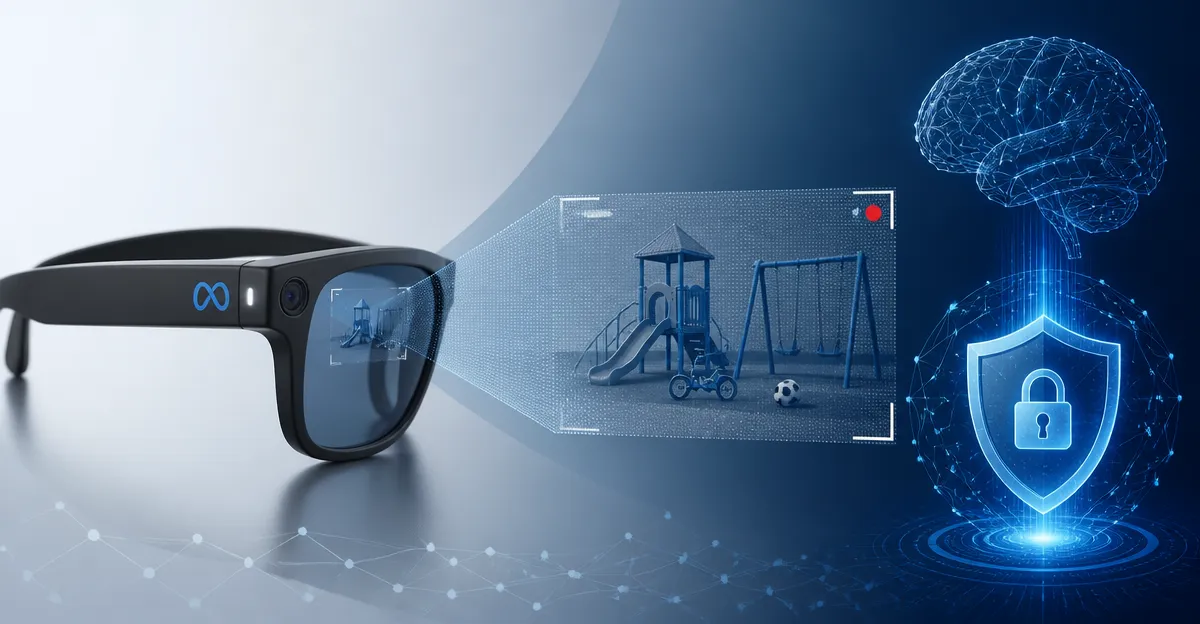
July 21, 2026, (Inside AI) — Meta’s Ray-Ban smartglasses let users record video with a glance, but a growing chorus of child safety experts warns that the same hands-free convenience enables covert filming of minors on trains, in parks, and inside schools. The glasses carry a small flashing light to signal recording, yet many bystanders never notice it. The risk is not just voyeurism—stolen footage feeds generative AI models that produce child sexual abuse material, a threat the Internet Watch Foundation says can normalize violence and increase real-world offending.
The debate reignited after Meta’s VP of wearables, Alex Himel, described using the glasses to film his daughter’s talent show. He told the BBC the device let him stay “kind of living in the moment, head up and hands free.” That parental ideal collides with a darker reality: on a crowded train, a stranger can photograph a toddler repeatedly, and only a visible phone screen betrays him. Smartglasses remove that giveaway.
Meta’s position places responsibility on users to avoid “actively exploiting” the technology. Critics call that stance a replay of early social media days, when platforms claimed they were merely neutral conduits. The difference now is that AI amplifies harm. Images captured covertly become training data for synthetic abuse imagery, a problem the Internet Watch Foundation flagged in a recent report. The foundation stressed that AI-generated material risks fuelling sexual interest in children and normalizing violence.
Google’s 2013 Glass failed partly because of the “glasshole” stigma tied to surreptitious recording. Meta learned the style lesson—partnering with Ray-Ban and Kylie Jenner—but not the privacy one. Nurseries and schools are already banning the glasses, fearing covert filming of children. Yet a blanket ban hurts blind users who rely on the same technology to navigate streets and translate text. The tension pits safety against accessibility.
Regulators face a menu of imperfect options. A mandatory audible alert—like a reversing lorry’s beep—would make recording obvious, but companies resist anything that makes wearables socially awkward. Holding manufacturers liable for malicious use could take years of litigation, leaving victims unprotected. The most muscular approach, a pre-market clearance regime akin to pharmaceuticals, would force tech firms to prove safety before launch. History suggests that is unlikely.
The underlying failure is a familiar one: an industry that builds first and asks questions later. Designing out harms that are “visible from space” remains the best option, yet the smartglasses market is projected to reach $30 billion by 2030, and the incentive to move fast is immense. Without intervention, the cost will be borne by the most vulnerable.