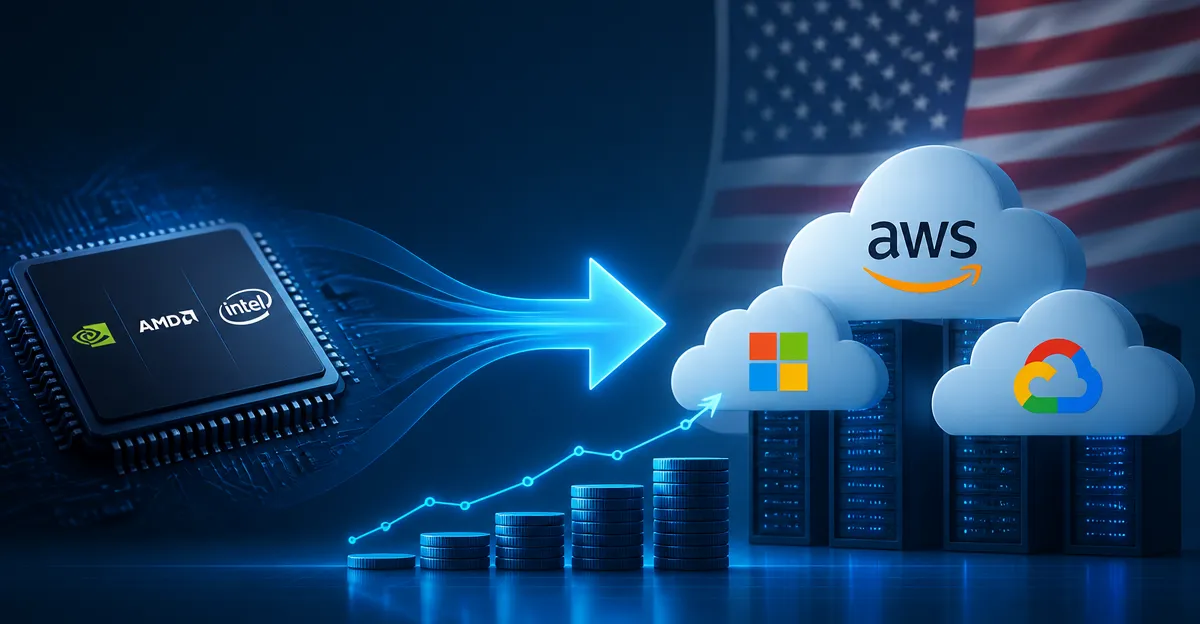
July 6, 2026, (Inside AI) — Morgan Stanley analysts are signaling a pivotal shift in AI investment flows, predicting that capital may rotate from semiconductor stocks toward hyperscale cloud providers and other sectors. The brokerage’s latest note, dated Monday, frames the recent sell-off in chip equities as a broadening of market gains rather than a retreat from AI.
The investment bank identifies so-called hyperscalers—companies like Alphabet, Amazon, and Meta Platforms that are pouring billions into data center infrastructure—as likely beneficiaries. This rotation could also lift consumer discretionary, transport, and biotechnology shares, according to the note.
The Philadelphia SE Semiconductor index has tumbled over 11% in the past two weeks, a stark reversal from its 11% surge in June. Meanwhile, the Roundhill Magnificent Seven ETF, which tracks the largest tech giants, has clawed back some losses, suggesting a rebalancing is underway.
Morgan Stanley’s thesis hinges on a critical gap: despite massive capital expenditures by hyperscalers, there is scant proof that AI products are generating returns that justify the spending. The note warns of potential “more capex discipline in the near-term,” implying that investors may start demanding clearer monetization paths.
The brokerage also points to macroeconomic tailwinds. Easing expectations for U.S. Federal Reserve rate hikes and falling crude oil prices are helping fuel the rotation away from the overheated chip trade. This environment could favor sectors previously left behind in the AI frenzy.
Yet the call is not without contradictions. Just last month, hyperscaler stocks suffered heavy selling, while chipmakers rallied. Now, that dynamic appears to be reversing. It underscores the market’s fickle sentiment and the challenge of timing AI infrastructure bets.
Historically, AI investment cycles have oscillated between picks-and-shovels plays and platform giants. During the early cloud era, investors flocked to server manufacturers before shifting to software-as-a-service providers. Today’s pattern echoes that transition, with semiconductors playing the role of picks and shovels.
However, competing viewpoints caution against a simplistic rotation narrative. Some analysts argue that chip demand remains structurally strong, driven by insatiable AI training needs. A recent report from McKinsey projects that global semiconductor revenue could reach $1 trillion by 2030, suggesting the pullback may be temporary.
What’s missing from Morgan Stanley’s analysis is a granular look at AI workload shifts. If enterprise adoption accelerates, hyperscalers could indeed capture more value, but they also face rising costs for custom silicon and energy. The brokerage’s note does not address how potential regulatory scrutiny on Big Tech might impact these stocks.
Investors are also grappling with the timeline for AI returns. While hyperscalers have committed billions, the revenue from AI services remains nascent. Alphabet’s cloud unit reported 28% growth last quarter, but it’s unclear how much is AI-driven. Without concrete metrics, the rotation thesis rests on forward-looking assumptions.
Morgan Stanley’s broader sector picks—consumer discretionary, transports, and biotech—add a defensive flavor. These areas could benefit from lower rates and oil prices, but their link to AI is tangential. It suggests the bank sees the AI trade broadening beyond pure tech, a view that aligns with recent inflows into value stocks.
The brokerage’s track record adds weight to the call. Morgan Stanley was early in flagging the chip boom in 2023, and its strategists have consistently highlighted AI infrastructure as a multi-year theme. Yet, the firm’s own wealth management arm has cautioned clients about concentration risk in tech.
For now, the market is at an inflection point. The SOX index’s decline, coupled with the Magnificent Seven’s relative resilience, suggests a tentative pivot. Whether it becomes a sustained trend depends on upcoming earnings reports and any signals from hyperscalers about capex moderation.
In the background, geopolitical tensions and export controls on advanced chips add another layer of complexity. If restrictions tighten, hyperscalers with domestic supply chains could gain an edge, reinforcing the rotation narrative.
As the AI cycle matures, the debate over where value accrues will intensify. Morgan Stanley’s note is an early marker, but the market’s verdict will unfold over months, not days.