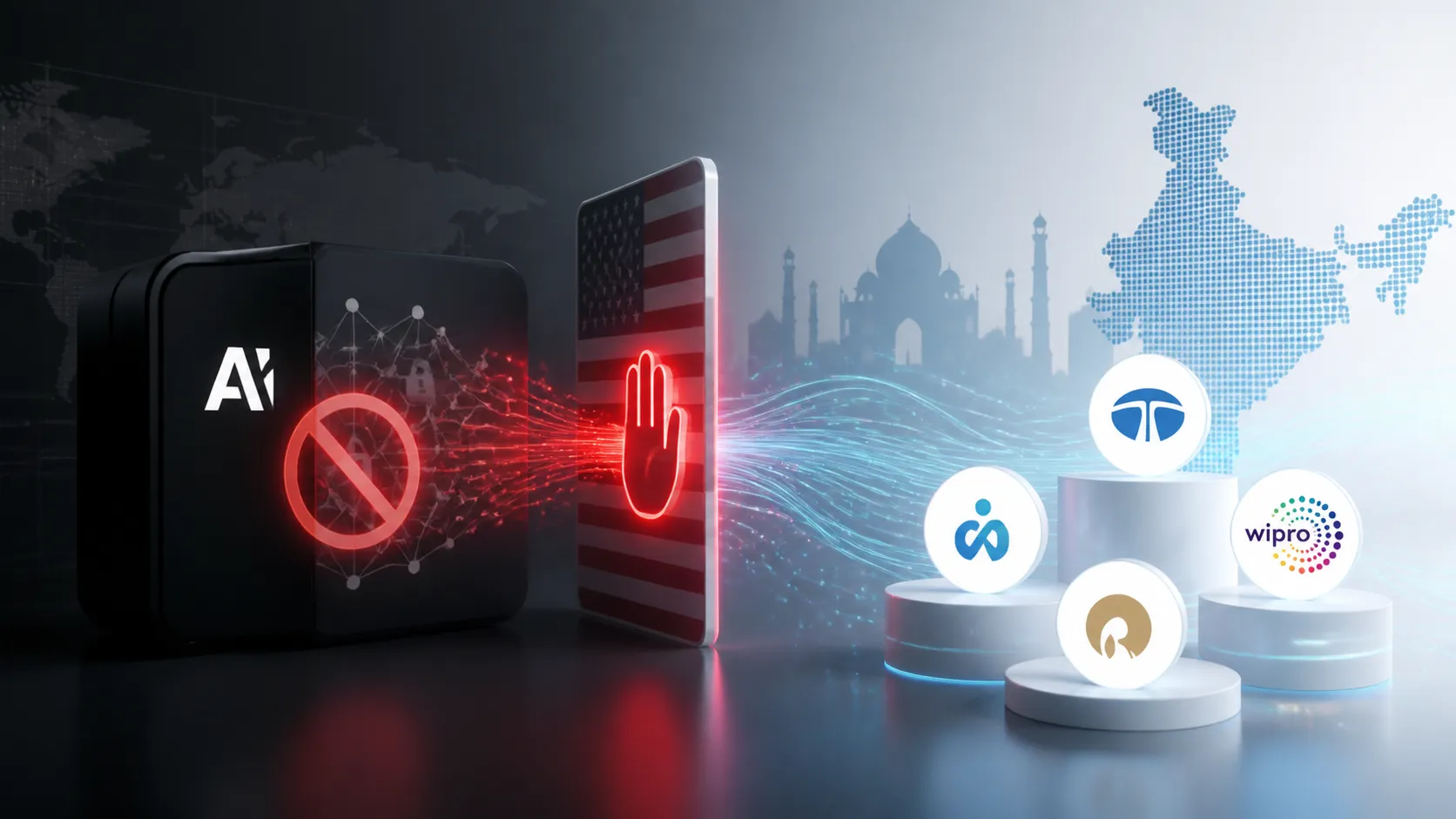
June 14, 2026, (Inside AI) — The global AI landscape shifted abruptly on June 12 when Anthropic suspended access to its most advanced models, Fable 5 and Mythos 5, following a U.S. government export control directive. The order, issued by the Commerce Department under national security authorities, bars any foreign national—including Anthropic’s own non-U.S. employees—from using the models, which are built on the Mythos Preview architecture. To comply, Anthropic disabled access for all customers worldwide, including U.S. citizens.
The move instantly reignited debates over technological sovereignty, particularly in India, where founders, investors, and policy experts are now questioning the country’s reliance on foreign frontier AI. The episode underscores how quickly access to critical technology can be severed, forcing nations to reconsider their AI strategies.
A Wake-Up Call for Indian Tech
Sridhar Vembu, founder of Zoho, declared that globalization is dead and urged India to forge its own path. He advocated for adopting smaller models, including open-source ones from India and China, while cautioning against massive government spending on GPU-heavy training. “Zoho has been pursuing alternative R&D approaches that are far, far less expensive but by its nature cutting edge R&D takes time and we are patient. I am confident we will get there,” he wrote on X.
Pratyush Kumar, CEO of Sarvam AI, framed the ban as a catalyst for sovereign AI. “We need to have more countries and companies owning their own destinies,” he said, emphasizing that India can create massive value by building AI systems within its own perimeters. His startup is among the first in India to develop a foundational model from scratch.
Investors Sound the Alarm
Aakrit Vaish, founder of venture platform Activate, called the decision a material shift. “I think this materially changes the way all of us should be thinking about sovereign AI in India,” he told TechCrunch. He likened the scenario to a long-feared hypothetical: “What if one day the US decides to turn the switch off?” Now, he sees sovereign AI as the largest business opportunity of the era and plans to steer portfolio companies toward open models.
Mohandas Pai, an investor and former Infosys executive, demanded a national mission with far greater funding. He proposed an annual fund of 50,000 crore rupees for deep tech and AI, plus a 200,000 crore guarantee fund for hyper-scale cloud and chip infrastructure. The existing IndiaAI Mission, approved in 2024 with an outlay of Rs 10,371 crore over five years, is, in his view, too slow and too small.
Talent and Compute: The Real Bottlenecks
Hemant Mohapatra, a partner at Lightspeed, stressed that talent and GPU access are the immediate constraints, not capital alone. He estimated that training a GPT-class 1-trillion-parameter model from scratch could cost $500–600 million all-in, with compute alone requiring $250 million. “We are investors in mistral, sarvam, reflection and anthropic—and they all scaled capital over time as models got adoption, but the early bottleneck is more on talent + GPUs,” he said.
Export Controls Redefine Sovereignty
Samir Saran, president of the Observer Research Foundation, noted that export controls have evolved from hardware to people. “Not chips or tech, not code. It’s People. Foreign nationals, including a US lab’s own employees, locked out of frontier models overnight, wherever they sit,” he observed. He warned that data sovereignty negotiations must now account for the reality that access can be revoked on national security grounds, shifting leverage to whoever controls the switch.
The Anthropic ban has transformed sovereign AI from a theoretical debate into an urgent strategic imperative. As Indian leaders push for homegrown capabilities, the global AI order faces a new era of fragmented access and intensified talent wars.