June 17, 2026, (Inside AI) — Amazon founder Jeff Bezos predicts artificial intelligence will create labor shortages, not mass unemployment. Speaking at the VivaTech conference in Paris on Wednesday, he rejected fears that AI will make humans redundant.
A Counterintuitive Forecast from a Tech Titan
Bezos, the world’s fourth-richest person with a net worth around $250 billion, offered an optimistic counter-narrative to widespread anxiety. A recent Reuters/Ipsos poll found half of Americans fear AI could cost them their jobs. Bezos directly challenged that view.
“I know there’s a lot of concern that many people have, including many smart people, that AI is going to make humans redundant and so on,” Bezos said.
“I totally disagree with this point of view. And I think, in fact, AI is going to create a labor shortage.”
He argued that human wants are endless, and AI will lower barriers to fulfilling them. This perspective reframes automation as a tool for expanding economic activity rather than displacing workers.
Prometheus and the Physical World
Bezos highlighted his new AI startup, Prometheus, which aims to accelerate physical manufacturing. The venture signals his belief that AI’s impact will extend far beyond digital tasks. By speeding up production, Prometheus could exacerbate the very labor scarcity Bezos envisions.
His space company, Blue Origin, also featured prominently. CEO David Limp confirmed reconstruction of the New Glenn launch pad in Florida has begun after a dramatic explosion in May. The incident delayed the rocket’s debut but hasn’t dimmed Bezos’s long-term vision.
Space as a Solution for Earth’s Limits
Bezos tied space exploration to his labor thesis. He believes moving polluting industries off Earth could restore the planet to a pre-Industrial Revolution state. That would require vast new workforces in orbit and beyond.
“If space travel gets reliable enough and inexpensive enough, and we can get materials from asteroids and near-Earth objects and the moon, then this garden planet can be returned to its pre-Industrial Revolution state,” Bezos said.
The vision competes directly with Elon Musk’s SpaceX, which held its IPO last week. Musk has outlined plans for lunar and Martian cities, and even firing AI data centers into space. Both billionaires see AI and space as intertwined growth engines.
Why the Labor Shortage Argument Matters
Bezos’s prediction runs counter to most economic models. Many experts warn of job displacement across sectors like logistics and customer service. Yet Bezos insists AI will unlock new categories of work that don’t yet exist.
Historical parallels exist. The industrial revolution eliminated many agricultural jobs but created factory and service roles. Bezos seems to bet on a similar transformation, amplified by AI’s speed.
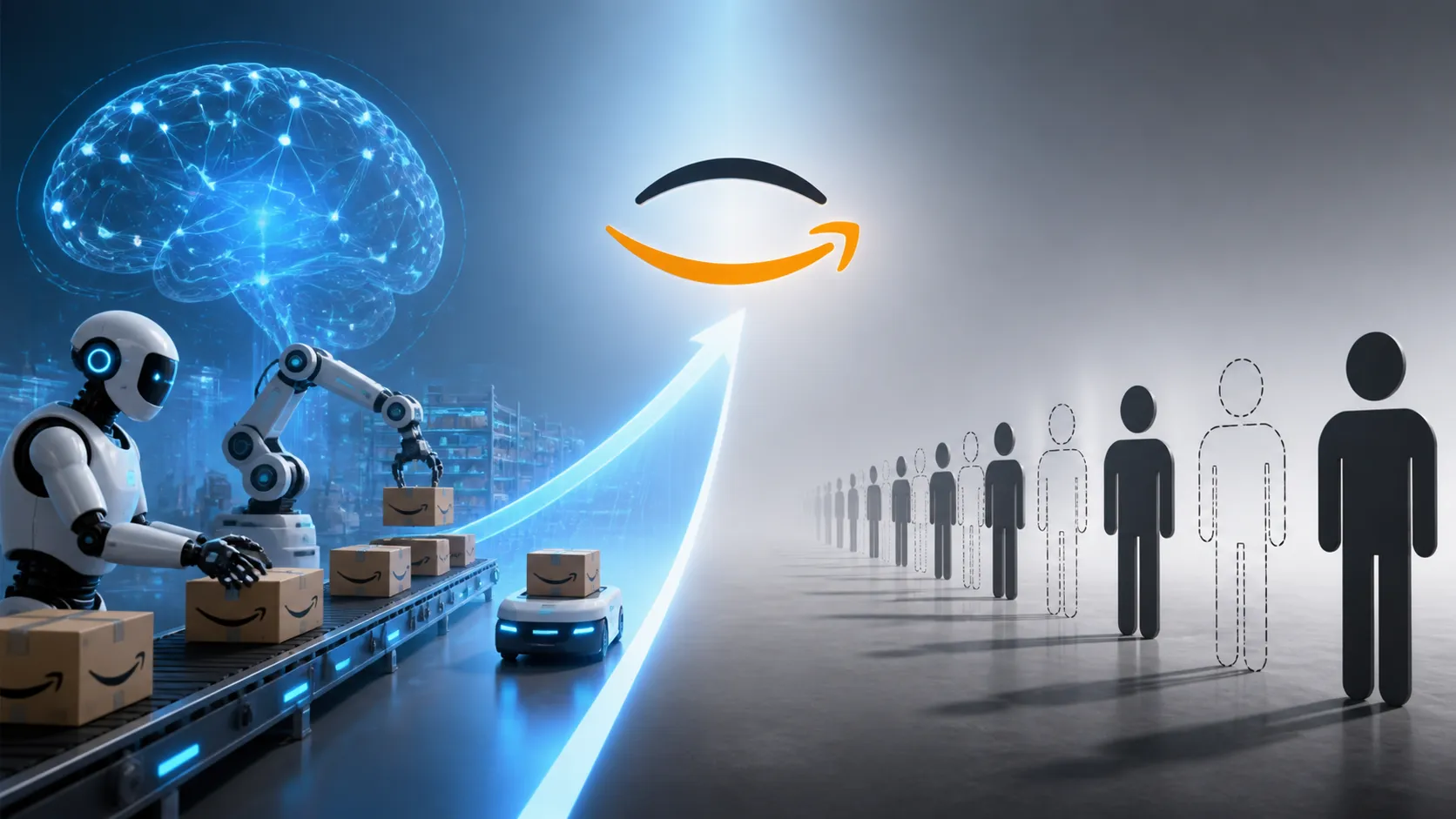
Critics note that Bezos’s own companies, including Amazon, have aggressively automated warehouses. That track record may color how his remarks are received. Still, his framing challenges the dominant narrative of AI as a job killer.
Unanswered Questions and Next Steps
Bezos did not specify which sectors would face labor shortages first. He also sidestepped how workers would transition to new roles. The timeline for Prometheus’s manufacturing breakthroughs remains unclear.
Blue Origin’s recovery from the May explosion will be a near-term test. The company faces pressure to deliver on its New Glenn promises while SpaceX accelerates its Starship program. The space race and AI race are increasingly one and the same.
As AI capabilities advance, the debate over jobs will intensify. Bezos’s comments add a high-profile voice to the optimistic camp. Whether his vision holds up will depend on how quickly new industries emerge to absorb displaced talent.