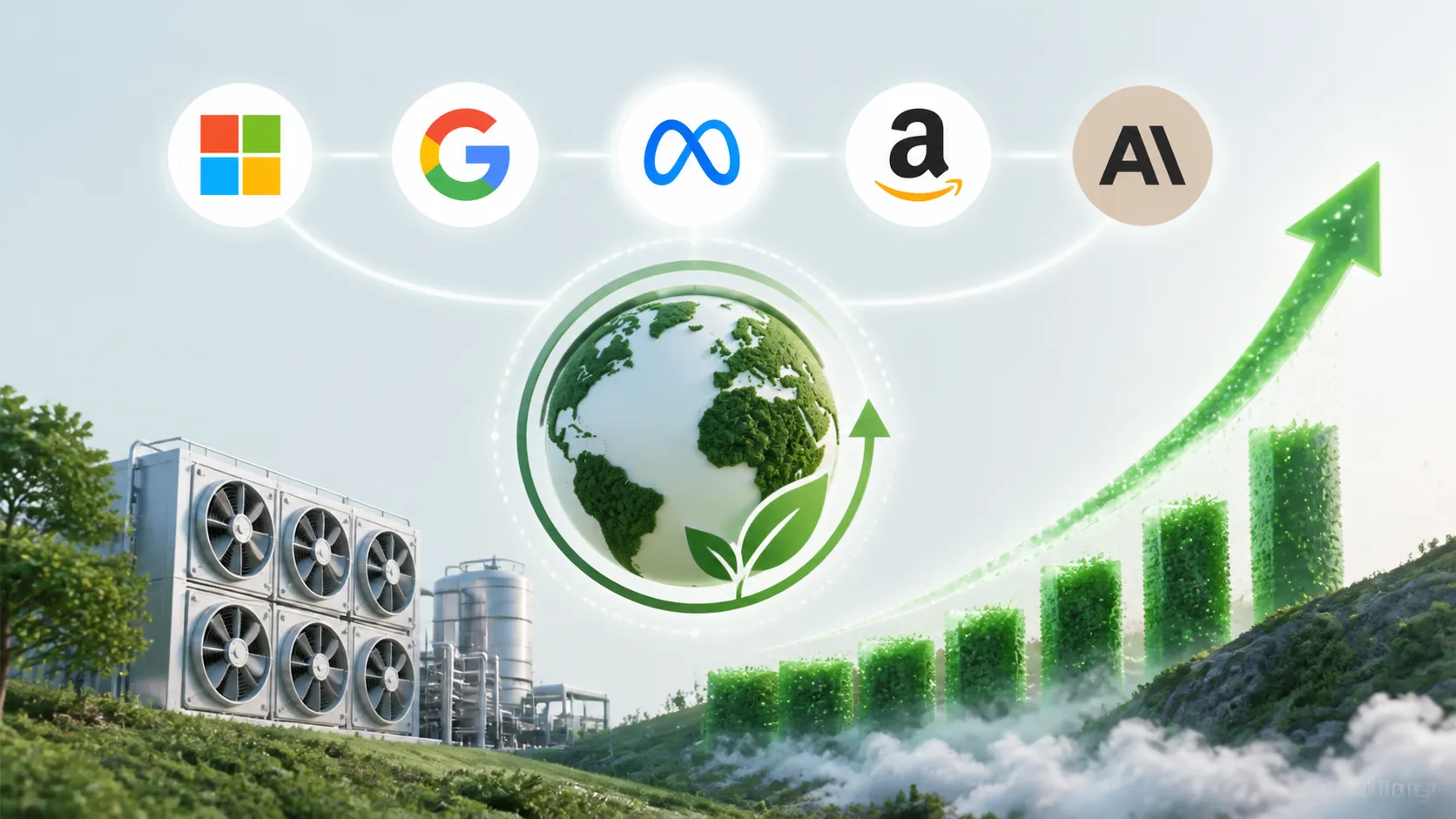
June 17, 2026, (Inside AI) — A Big Tech-backed coalition advancing carbon removal technologies announced an additional $915 million in funding on Wednesday. The group also added AI firm Anthropic as a new participant.
The Funding Surge and New Entrant
The coalition, which includes major technology companies, aims to accelerate the development and deployment of carbon removal solutions. The fresh capital injection brings the total committed funds to a significantly higher level, signaling growing corporate urgency around climate intervention.
Anthropic’s inclusion marks a notable expansion beyond traditional infrastructure and cloud providers. It underscores how AI developers view carbon removal as integral to managing their own escalating energy footprints.
Why Big Tech Is Betting on Carbon Removal
Data centers powering AI models consume vast amounts of electricity, often from fossil fuel sources. Companies face mounting pressure to offset emissions that renewable energy purchases alone cannot neutralize.
Read: Data Center Backlash Threatens U.S. AI Growth as Communities Fight Back
Carbon removal technologies—ranging from direct air capture to enhanced weathering—promise to extract CO₂ already in the atmosphere. Unlike avoidance offsets, these methods tackle legacy emissions, aligning with net-zero pledges.
The coalition’s structure pools demand, de-risks early-stage ventures, and drives down costs through guaranteed offtake agreements. This model mirrors how tech giants previously scaled renewable energy markets.
Anthropic’s Strategic Calculus
Anthropic, known for its safety-focused AI research, has not disclosed its contribution amount. However, its participation signals that frontier AI labs recognize climate risk as a systemic threat to long-term operational stability.
Training large language models requires immense compute, and inference demands are rising. By joining the coalition, Anthropic gains access to verified carbon removal credits, bolstering its sustainability credentials amid regulatory scrutiny.
Scaling Challenges and Skepticism
Carbon removal remains expensive and energy-intensive. Direct air capture costs exceed $600 per ton, far above most carbon prices. Critics argue that funding should prioritize emission reductions over unproven removals.
Proponents counter that both are necessary. The Intergovernmental Panel on Climate Change models show that limiting warming to 1.5°C requires removing billions of tons of CO₂ annually by mid-century.
The coalition’s approach—aggregating corporate demand—could accelerate cost declines, similar to solar and battery trajectories. Yet, transparency on project selection and verification remains uneven.
Read: Anthropic Plans Own Data Centers, Seeks Google Funding for Lease Costs
Historical Context: From Pledges to Procurement
In 2022, a precursor initiative called Frontier committed $925 million from Stripe, Alphabet, Meta, Shopify, and McKinsey. This new funding layer suggests that initial pilot purchases have matured into larger, multi-year contracts.
The addition of Anthropic reflects a broadening coalition beyond original e-commerce and cloud players. It also hints at competitive dynamics, as AI firms vie for leadership in responsible scaling.
What Remains Unsaid
The announcement omitted details on which specific technologies will receive funding. It also did not clarify whether the $915 million represents new commitments or includes previously pledged amounts.
Without rigorous monitoring, reporting, and verification standards, the risk of greenwashing persists. Independent audits and public registries will be critical to maintaining credibility.
The coalition’s growth may pressure lagging sectors to follow suit. However, voluntary corporate action cannot substitute for government policy, such as carbon pricing or procurement mandates.
As AI’s energy appetite grows, the intersection of machine learning and carbon removal will likely intensify, creating both collaboration and conflict over resource allocation.