June 30, 2026, (Inside AI) — China’s top leadership convened two high-level meetings on Monday to chart a course through the economy’s growing split. Officials focused on accelerating artificial intelligence, decarbonization, and healthcare as new growth engines while wrestling with stubbornly weak consumer spending at home.
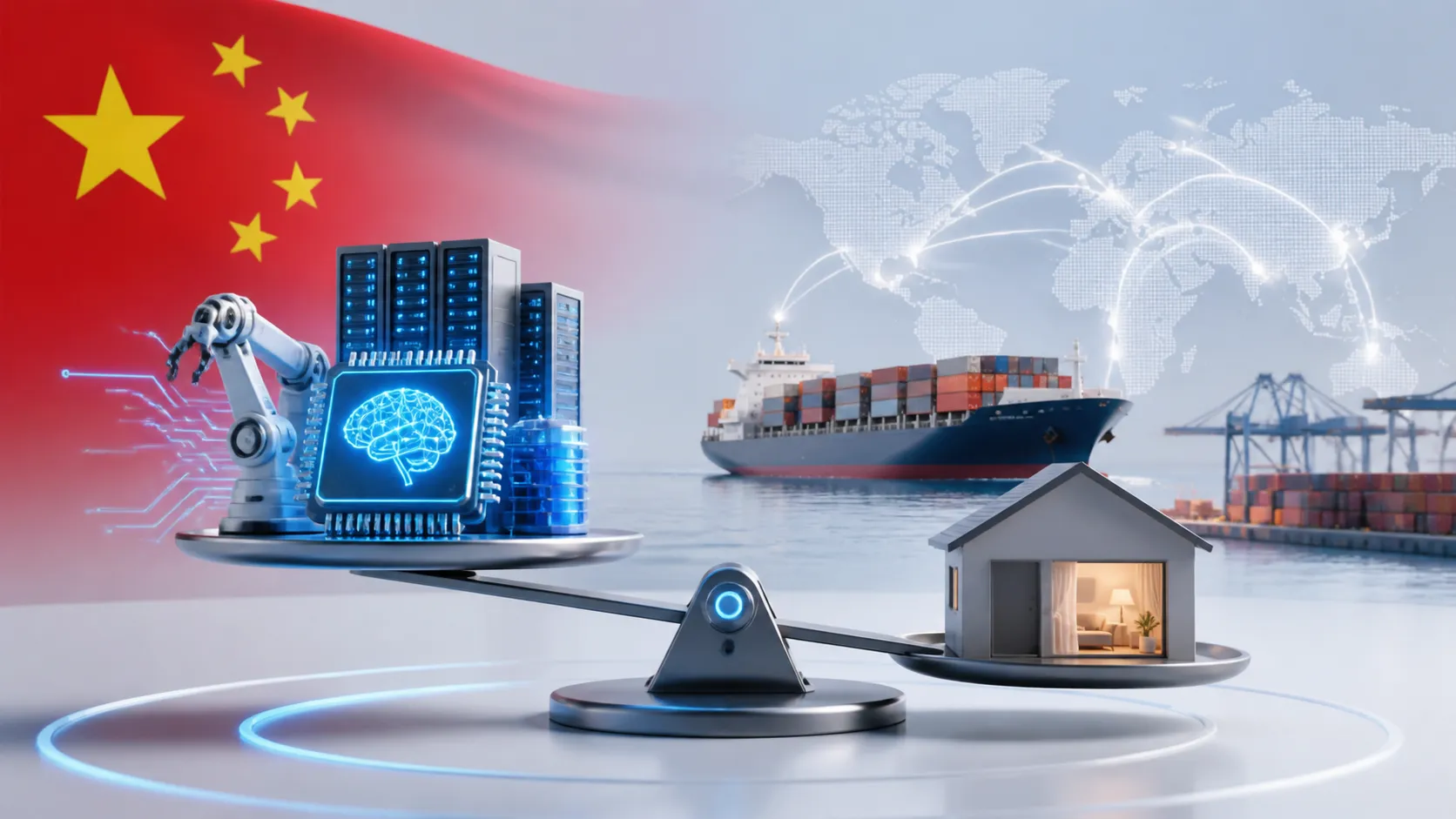
The sessions underscored Beijing’s recognition that its AI and export sectors are racing ahead, leaving domestic demand behind. Policy recommendations spanned a national unified energy market, urban-rural land reforms, cultural consumption expansion, and widening the scope for effective investment.
Larry Hu, Macquarie Group’s chief China economist, said the meetings were the latest signal that Beijing aimed to sustain the AI and export boom while also addressing macroeconomic weak links. “The top leadership was aware of the pronounced imbalance and even strains in the Chinese economy, where the divergence between sectors posed risks to achieving growth targets,” he added.
The AI-Export Engine Versus the Consumer Freeze
China’s foreign trade remains a bright spot, with the meeting stressing the need to maintain momentum while calling for expanded imports. This dual push reflects a delicate balancing act: keep exports humming to support growth, but also open markets to ease trade tensions and feed domestic needs.
Read: China’s AI-Driven Stock Rally Poised for Fresh Legs, Brokerages Say
Yet the consumer side tells a different story. Surveys and inspection trips by political parties and entities fed into the discussions, revealing a persistent reluctance to spend. The leadership heard recommendations on boosting consumption and investment, but concrete measures remain unclear.
The emphasis on AI and decarbonization as new growth drivers aligns with China’s long-term industrial strategy. These sectors have attracted massive state investment and policy support, helping China lead in areas like electric vehicles and solar panels. But the benefits have not trickled down evenly to household wallets.
Strains Beneath the Surface
The divergence between booming high-tech exports and tepid domestic consumption poses a structural risk. If global demand slows or trade barriers rise, China’s reliance on exports could backfire without a stronger internal market. The leadership’s acknowledgment of these strains suggests urgency behind the scenes.
Expanding cultural consumption and unifying the energy market were among the specific fixes discussed. These moves could unlock new spending avenues and reduce regional inefficiencies, but they require years of implementation. The immediate challenge is restoring consumer confidence shaken by property sector woes and income uncertainty.
China’s AI push, meanwhile, continues to draw global attention. From large language models to autonomous systems, Chinese firms are racing to close the gap with Western rivals. The meetings’ focus on AI signals that Beijing sees it not just as a growth driver but as a strategic necessity.
The inclusion of healthcare and decarbonization alongside AI highlights a broader effort to diversify growth sources. These sectors promise jobs and innovation, but they also demand significant upfront investment—funds that could otherwise support direct consumer stimulus.
Read: China’s AI Leads in Capability But Lags in Trust, Global Poll Finds
Beijing’s balancing act mirrors a global dilemma: how to foster cutting-edge industries without leaving ordinary households behind. The meetings offered no quick fixes, only a blueprint for managing an economy caught between two worlds.