June 17, 2026, (Inside AI) — Europe must deepen ties with China on artificial intelligence and welcome more Chinese investment to reduce its reliance on US technology, according to a key architect of the euro.
A Founding Voice Calls for Strategic Rebalancing
Christian Noyer, a founding vice-president of the European Central Bank and former governor of the Bank of France, made the call in an interview with the South China Morning Post on Tuesday. Noyer is also the lead author of a landmark proposal to integrate Europe’s capital markets.
He argued that Europe cannot depend solely on America for its AI and technology infrastructure. The statement signals a potential pivot in Europe’s economic strategy amid growing geopolitical tensions.
“We cannot rely entirely on America,” Noyer said.
The remark underscores Europe's urgent need to develop its own AI capabilities. It also reflects a broader debate about technological sovereignty.
Europe’s Precarious Position Between Two Giants
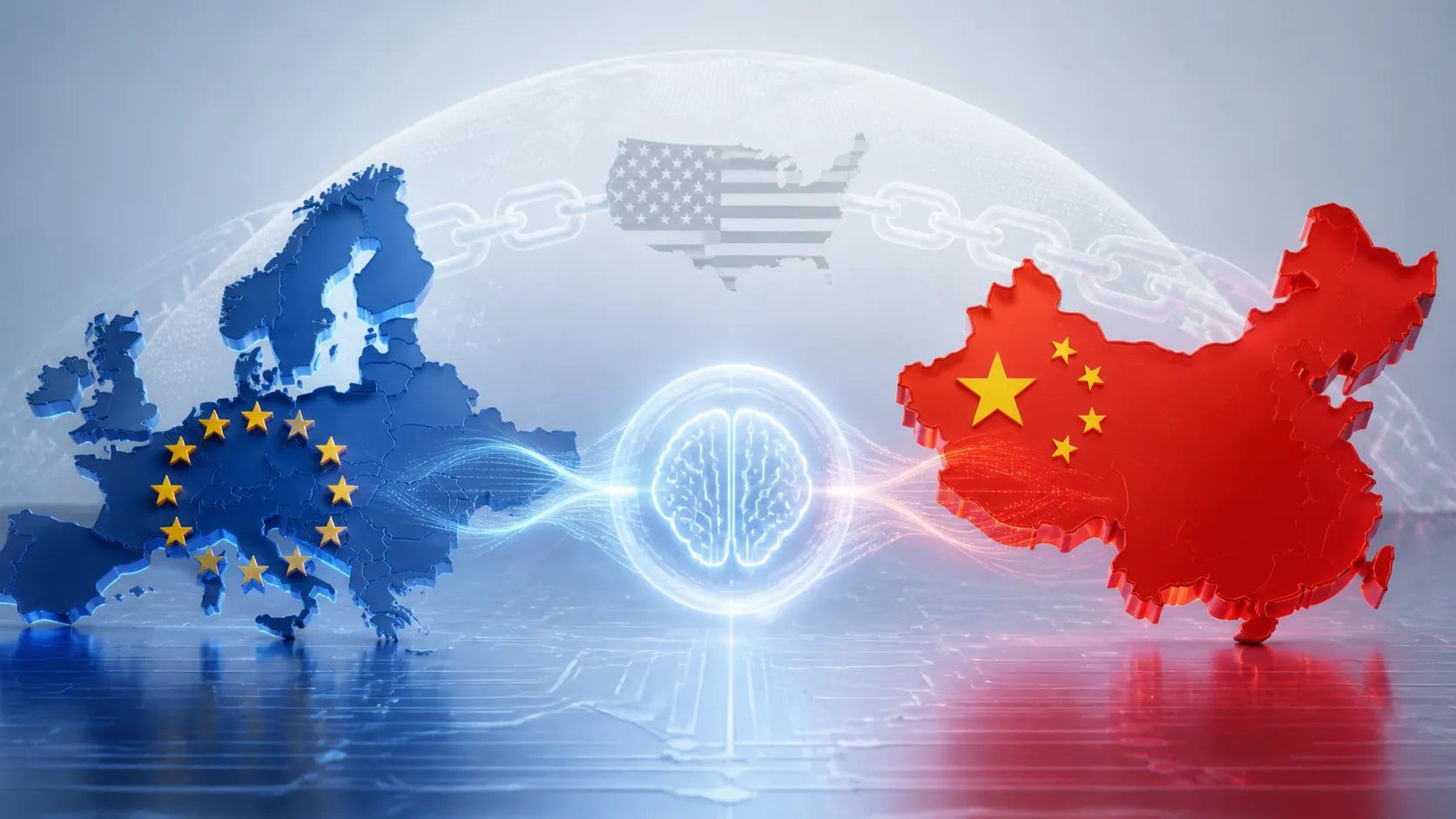
Noyer’s comments arrive as Europe navigates an increasingly difficult position between the world’s two largest economies. The US and China are locked in a race for AI dominance, leaving Europe at risk of dependency.
By deepening industrial partnerships with China, Europe could finance the industries of the future. Noyer stressed that openness to Chinese investment is key to achieving greater economic independence.
His proposal to integrate capital markets aims to mobilize private funds for strategic sectors. AI infrastructure is a top priority, given its transformative potential.
The Capital Markets Union and AI Funding
Noyer's landmark report on capital markets union calls for breaking down barriers to cross-border investment within the EU. This would channel savings into high-growth areas like AI.
Chinese capital could play a complementary role. European tech firms often struggle to scale due to fragmented funding, a gap that Chinese investors might fill.
However, such ties raise security concerns. Critics warn that Chinese involvement in critical infrastructure could pose risks, echoing US restrictions on Huawei.
Competing Visions for European Tech Sovereignty
Not all European leaders agree with Noyer's approach. Some advocate for a fortress Europe strategy, building domestic champions with strict controls on foreign investment.
Others point to successful collaborations, like the partnership between BMW and Chinese battery maker CATL. These cases show that mutual benefit is possible without compromising security.
The debate mirrors historical tensions between protectionism and openness. Europe's post-war recovery relied on American aid, but today's multipolar world demands a more nuanced strategy.
What the Shift Could Mean for Global AI Dynamics
If Europe embraces Chinese AI investment, it could reshape global supply chains. Joint ventures in chips, cloud computing, and autonomous systems might accelerate innovation.
Yet the US may view such moves as a strategic betrayal. Washington has pressured allies to limit technology transfers to China, citing national security.
Europe's decision will test its ability to chart an independent course. Noyer's call is a reminder that economic interdependence remains a powerful force.
As AI becomes central to economic competitiveness, Europe's choices will have lasting consequences. The continent must balance openness with resilience in a fractured world.