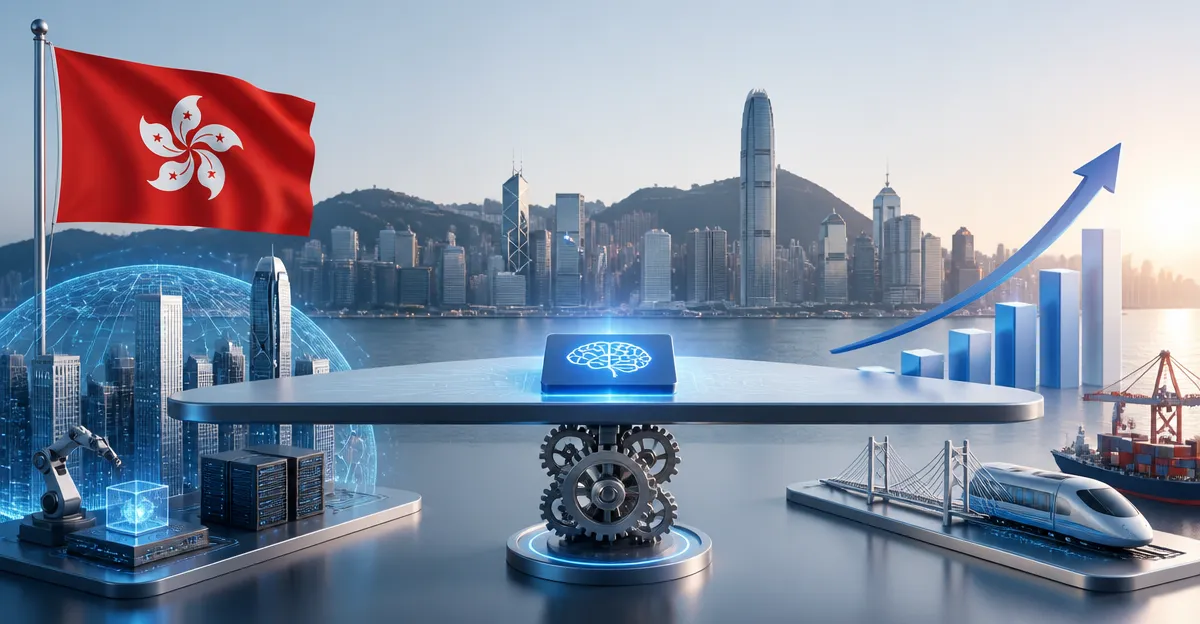
July 7, 2026, (Inside AI) — Hong Kong is placing artificial intelligence at the core of its economic strategy, with Chief Executive John Lee Ka-chiu declaring AI the “central plank” of the city’s development. Speaking at the South China Morning Post’s China Conference 2026 on Tuesday, Lee said the government’s first five-year blueprint and upcoming policy address will drive AI-led growth.
The conference, themed “Intelligence at Scale: Hong Kong’s AI-Powered Future,” highlighted the city’s ambition to become a global AI hub. Lee emphasized Hong Kong’s unique position under “one country, two systems” as a bridge between mainland China and the world.
“Hong Kong is recognised worldwide for its openness, deep international networks and role as a vital bridge between mainland China and the rest of the world,” Lee said.
The government last month launched a two-month public consultation on its first five-year plan, with the blueprint expected in the third quarter. Lee called the plan a “historic milestone” that aligns with China’s national 15th five-year plan for 2026–2030.
The blueprint will outline strategies for the Northern Metropolis, innovation and technology advancement, and development in finance, shipping, and trade. This marks a significant shift from Hong Kong’s traditional finance-centric economy toward a tech-driven future.
Hong Kong’s AI Ambitions in a Competitive Region
Hong Kong’s push comes amid fierce regional competition. Singapore has invested heavily in AI research and talent, while mainland Chinese cities like Shenzhen and Shanghai are rapidly advancing. Lee’s speech signals that Hong Kong intends to leverage its legal system, capital markets, and international connectivity to differentiate itself.
However, experts note challenges. Hong Kong faces a shortage of AI talent and must upgrade digital infrastructure. The city’s universities produce strong research, but commercialization lags. The five-year plan may address these gaps through tax incentives, R&D funding, and partnerships with mainland tech giants.
Industry observers also question how Hong Kong will balance AI development with its role as a financial center. Some argue that AI could enhance financial services through automation and fraud detection, while others warn of job displacement in traditional sectors.
The Northern Metropolis: A Testbed for AI Integration
The Northern Metropolis plan is a key component. This massive development near the Shenzhen border is envisioned as a tech and innovation hub. It could house AI research labs, data centers, and smart city infrastructure. The government aims to attract global tech firms and startups with streamlined regulations and funding.
Critics point to past infrastructure delays and bureaucratic hurdles. Yet, the urgency is clear: China’s national 15th five-year plan prioritizes AI, and Hong Kong risks being sidelined if it doesn’t execute swiftly. The public consultation, ending in August, will reveal whether citizens and businesses support the aggressive AI push.
Lee’s speech also hinted at AI’s role in governance, such as smart city applications and digital public services. This aligns with global trends where governments use AI for efficiency, but raises privacy and ethical concerns that Hong Kong must navigate.
The conference, sponsored by Manulife, showcased AI’s potential in insurance and finance. But the real test will be translating speeches into policy. With the blueprint due in the third quarter, all eyes are on Hong Kong’s ability to turn AI ambitions into economic reality.