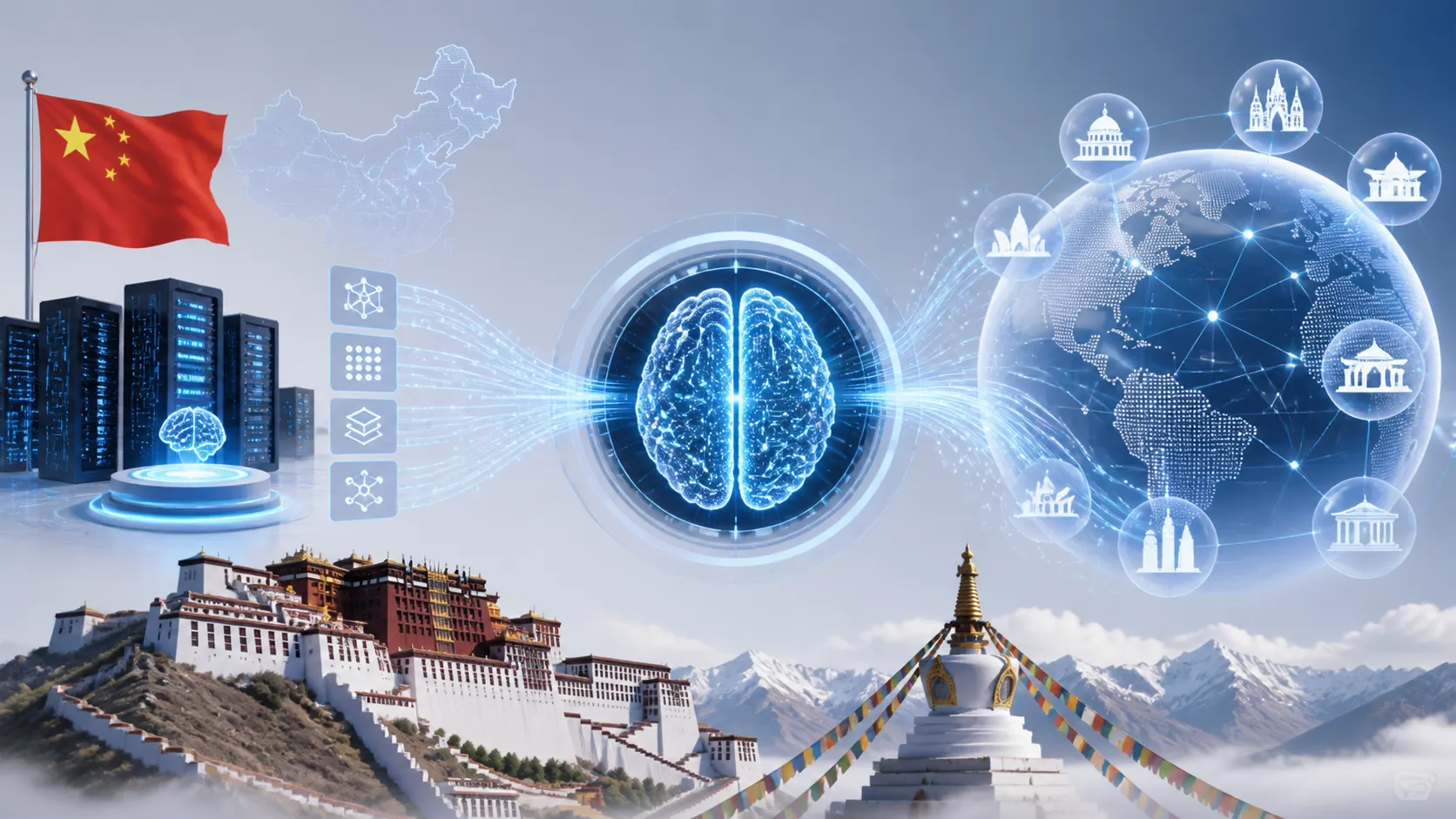
June 17, 2026, (Inside AI) — Over 300 media professionals, government officials and academics gathered in Lhasa on Tuesday for the Second Xizang International Communication Conference. The central message: China must shift its strategy from battling Western algorithms to leveraging them to reshape the global narrative on Tibet.
The Algorithmic Battlefield
Zachary Lundquist, an American media professional with the state-run China International Communications Group (CICG), delivered a stark assessment. He argued that algorithms have locked in negative associations about Tibet. Lundquist, known by his Chinese name Huang Hao, said the key is to “dance” with these systems rather than fight them.
“It is not always born out of pure malice, but the algorithm ‘learns’ these associations over time,” Lundquist stated. He warned that this creates an unbreakable information cocoon where rational voices are silenced.
Why Algorithms Shape Global Views
Recommendation engines on platforms like YouTube and Twitter amplify content that sparks engagement. This often means sensational or negative stories about Tibet rise to the top. Lundquist’s point is that China cannot simply counter with its own narratives; it must understand and work within the algorithmic logic that governs information flow.
Read: China’s AI Leads in Capability But Lags in Trust, Global Poll Finds
The conference highlighted a growing recognition that AI-driven curation is not neutral. It learns from user behavior, which can entrench biases. For Tibet, where geopolitical tensions run high, this means Western audiences see a skewed picture.
How China Plans to Adapt
Details from the conference suggest a multi-pronged approach. First, China aims to produce content that aligns with algorithmic preferences—short, emotive, and shareable. Second, it will deploy AI tools to analyze trending topics and insert counter-narratives in real time. Third, it may partner with platforms to adjust recommendation weights, though this faces regulatory hurdles abroad.
Lundquist’s presence at the event underscores CICG’s strategy of using foreign voices to lend credibility. His blunt talk reflects an internal push to modernize China’s propaganda toolkit for an AI age.
Competing Visions of AI’s Role
Not everyone agrees with Lundquist’s approach. Some Chinese scholars at the conference insisted that algorithmic bias must be exposed and regulated globally. They argue that “dancing” with algorithms risks legitimizing a system that distorts truth. Others pointed to China’s own algorithmic governance—like the 2022 regulations on recommendation systems—as a model for ensuring diverse viewpoints.
Western media analysts, however, see China’s pivot as a sophisticated form of information warfare. They note that AI-generated content can flood platforms, making it harder for users to discern fact from propaganda. The ethical line between persuasion and manipulation blurs when algorithms are weaponized.
Historical Context and Future Stakes
This is not China’s first attempt to influence the Tibet narrative. For decades, it has relied on state media, diplomatic channels, and cultural exchanges. But the digital shift has been uneven. A 2023 Oxford study found that anti-China narratives on Tibet dominated English-language social media, with AI amplification playing a key role.
The Lhasa conference signals a turning point. By embracing algorithmic tactics, Beijing hopes to break the information cocoon Lundquist described. Success could redefine global perceptions of Tibet. Failure might deepen the divide. The outcome hinges on whether China’s AI-driven content can gain organic traction or simply be labeled as state-backed manipulation.
Read: US Lawmakers Cast China as AI ‘Supervillain’ in Global Race
The gathering also included workshops on AI content creation and sentiment analysis, pointing to a long-term investment in technological capacity. As algorithms evolve, so will the battleground for hearts and minds.