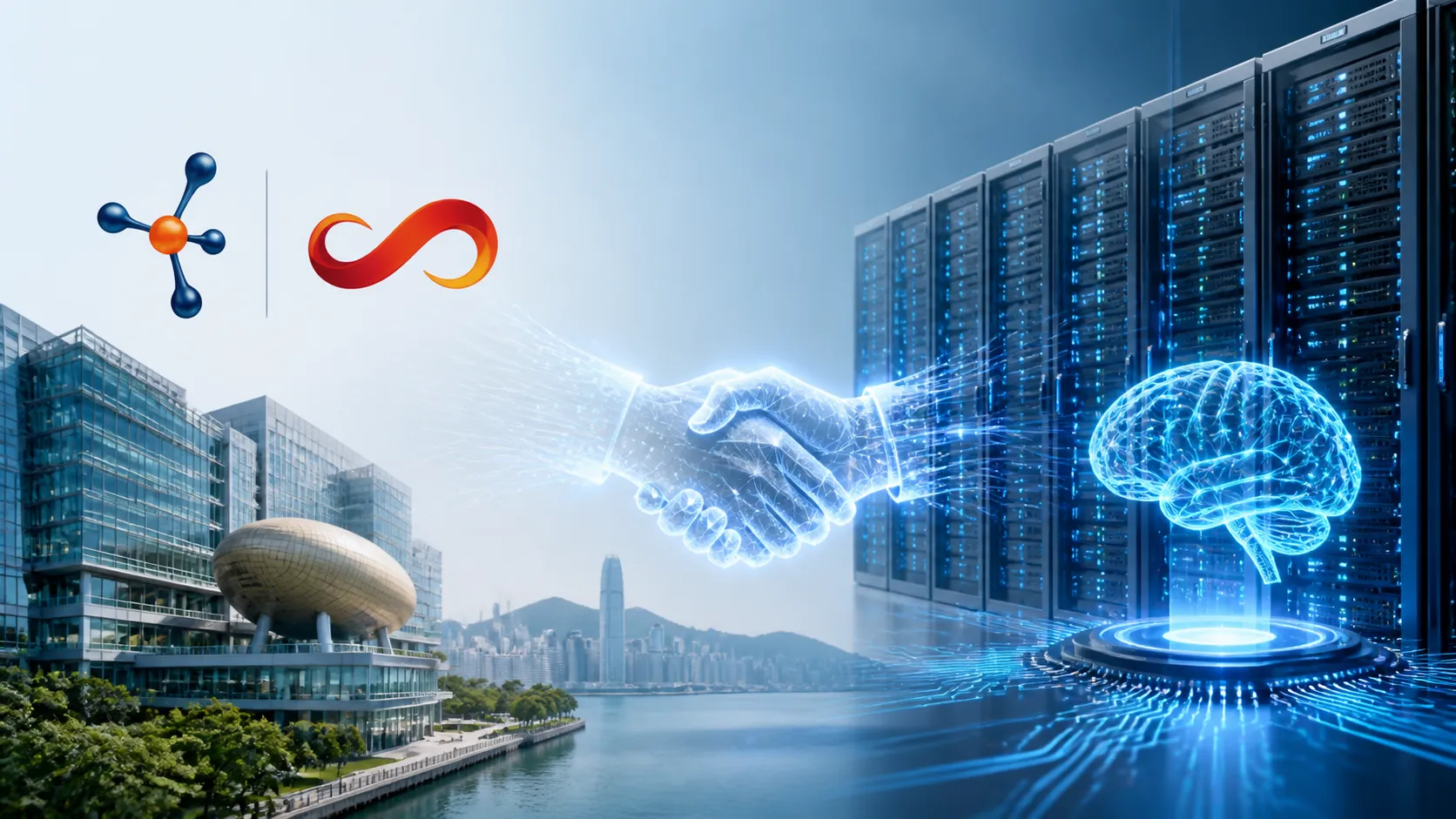
June 16, 2026, (Inside AI) — The Hong Kong Science and Technology Park (HKSTP) and SenseTime, the Chinese AI firm listed in the city, have partnered to build a home-grown AI data center by 2030. The project aims to reach 40,000 petaflops of computing power. Construction will happen in three stages, with phase one finishing by the end of this year.
The Deal’s Engine Room
Terry Wong Ping-sau, HKSTP’s CEO, said the partnership would
“propel the thriving development of Hong Kong’s ‘AI+’ Information and Technology ecosystem,”
moving the city toward AI industrialization. He noted the Science Park already hosts over 500 AI companies and more than 5,000 AI specialists. The data center is meant to anchor that cluster, not just expand it.
A Bridge Across Borders
Xu Li, SenseTime’s chairman and CEO, described the two as
“highly complementary partners”
that can build deep industrial-chain coverage. He outlined a model where SenseTime uses Hong Kong’s finance and legal strengths to complement mainland industries. Xu said it would be a
“train on the mainland, process in Hong Kong, serve the world”
approach, aiming to bring AI products to international clients.
Reading Between the Petaflops
The 40,000 petaflops target is ambitious. For comparison, current top supercomputers operate in the hundreds of petaflops. Reaching that scale by 2030 signals a bet on massive model training. Yet the announcement lacks details on energy sourcing, a critical gap given data centers’ huge power demands. Hong Kong’s land and electricity constraints could challenge the timeline.
Why Hong Kong, Why Now
This move fits a broader pattern. Cities like Singapore and Tokyo are racing to build sovereign AI infrastructure. Hong Kong’s unique position as a gateway between mainland China and global markets gives it an edge. But geopolitical tensions over chip exports and data sovereignty could complicate SenseTime’s access to advanced hardware.
The Unspoken Tensions
SenseTime faces U.S. sanctions, limiting its access to cutting-edge chips. The data center’s success may hinge on alternative supply chains or domestic chip advances. Neither executive addressed this directly. The “train on the mainland” phrase hints at using mainland resources, but specifics remain vague.
What Comes Next
Phase one’s completion this year will be an early test. If on schedule, it could attract more AI firms to the Science Park. The project also aligns with Hong Kong’s push to diversify its economy beyond finance. However, without transparent benchmarks, the 40,000 petaflops goal risks becoming a vanity metric.