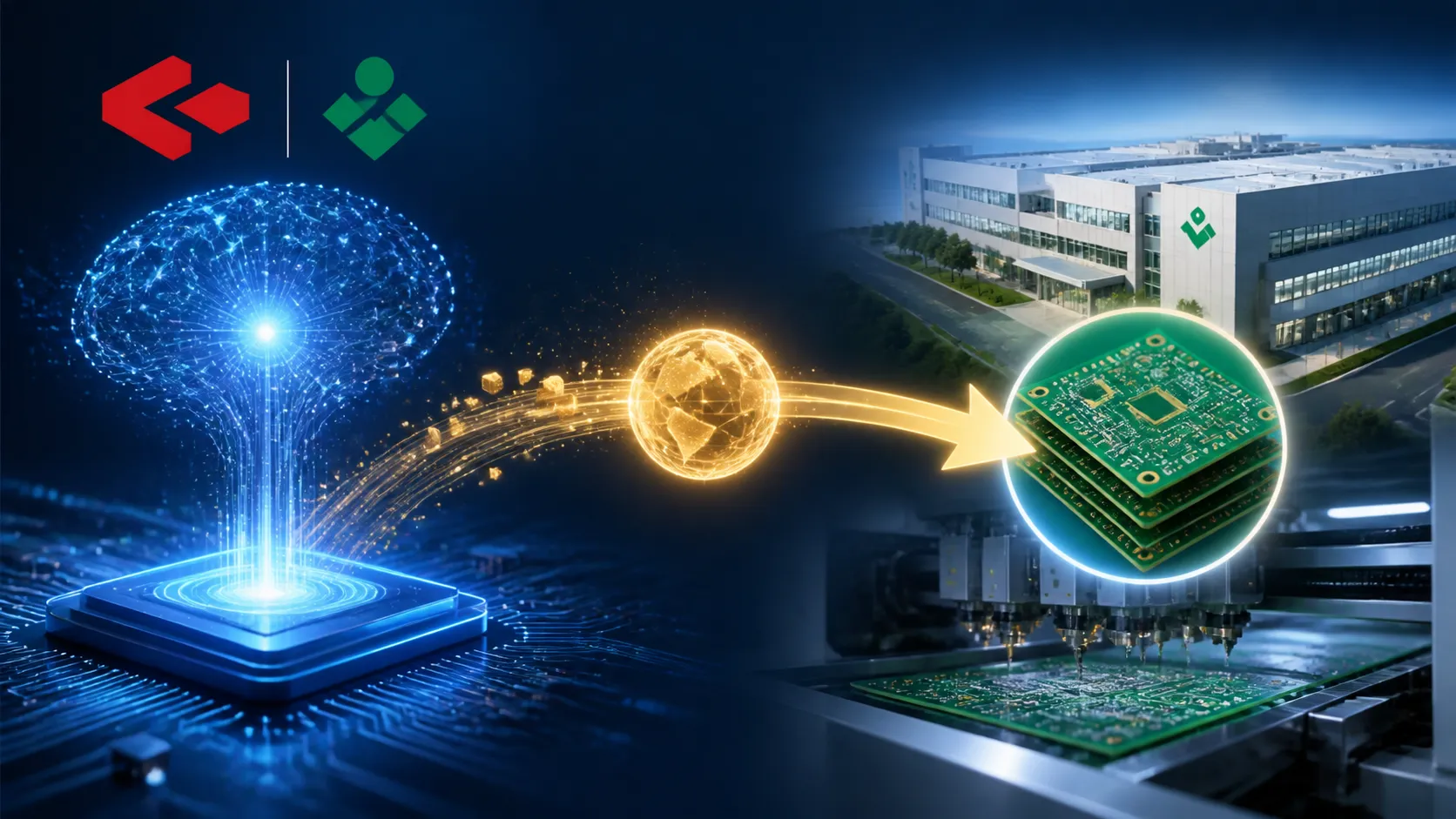
June 17, 2026, (Inside AI) — Kingboard Holdings plans to raise HK$11.77 billion (US$1.5 billion) by selling a stake in its subsidiary, Kingboard Laminates Holdings, a top global producer of laminate materials for AI server circuit boards.
The share placement involves 155 million shares at HK$76 each, an 11.5% discount to Tuesday’s close of HK$85.90. The deal, representing 4.92% of enlarged share capital, closes on June 22.
Why a laminate maker is cashing in on the AI boom
This move taps directly into the AI infrastructure spending surge. Morgan Stanley estimates the five hyperscalers—Alphabet, Amazon.com, Meta Platforms, Microsoft, and Oracle—will pour US$805 billion into AI infrastructure in 2026 alone.
Kingboard Laminates supplies the foundational materials for printed circuit boards (PCBs) inside AI servers. As AI models grow more complex, demand for high-performance laminates is skyrocketing.
The parent company stated the proceeds will expand business and production capacity. This signals a strategic bet that AI hardware demand will outstrip current supply for years.
The laminate bottleneck few saw coming
While chips and GPUs dominate headlines, laminates are a quiet chokepoint. Advanced AI servers require specialized, high-speed laminates with low signal loss. Only a handful of global suppliers can produce them at scale.
Kingboard’s capacity expansion could ease supply constraints for PCB makers like Unimicron and Ibiden. Yet, some analysts caution that rapid capacity additions might lead to oversupply if AI spending cools.
However, the company’s discount pricing suggests urgency. The 11.5% markdown likely aims to attract institutional investors quickly, locking in funds before market conditions shift.
Behind the numbers: a strategic divestment, not a distress sale
Kingboard Holdings retains majority control post-placement. The 4.92% dilution is modest, preserving strategic direction while injecting capital.
This isn’t a retreat from laminates but a doubling down. The parent is essentially recycling equity in a listed subsidiary to fuel that subsidiary’s growth—a capital-efficient move in a high-rate environment.
Competitors like Shengyi Technology and ITEQ Corporation may feel pressure to follow suit. The laminate sector has historically been fragmented and underinvested, but AI is forcing consolidation and scale.
What the hyperscaler spending spree really means
Morgan Stanley’s US$805 billion figure underscores a tectonic shift. It’s not just about training models anymore; inference at scale demands vast server fleets, each packed with high-layer-count PCBs.
Laminate demand correlates directly with PCB layer counts. AI servers often use 20+ layer boards, requiring ultra-thin, uniform laminates. Kingboard’s expansion targets this premium segment.
Yet, geopolitical risks loom. Trade restrictions on Chinese tech could disrupt supply chains. Kingboard’s Hong Kong listing offers some insulation, but investors will watch for any export control spillover.
The placement also hints at broader market confidence. AI hardware stocks have rallied in 2026, and Kingboard is leveraging that momentum. Whether this marks a peak or a stepping stone depends on sustained capex from the tech giants.
For now, the message is clear: the AI gold rush needs shovels—and laminates are among the most critical, overlooked tools.