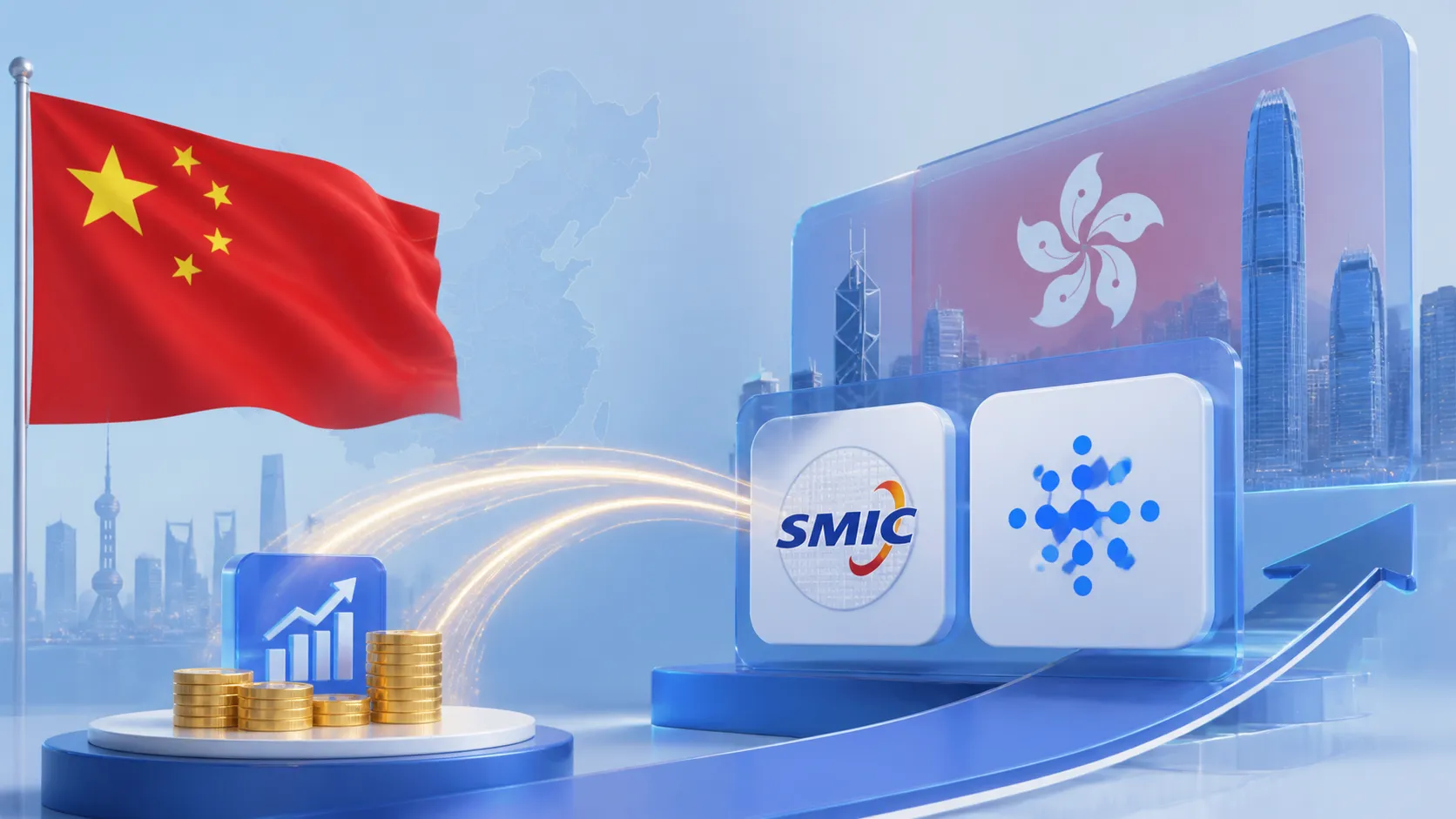
July 3, 2026, (Inside AI) — Mainland Chinese investors continued to pour capital into Hong Kong equities in June, but their buying failed to offset a broad market rout. The Hang Seng Index tumbled 9.1%, its steepest monthly drop in over two years. The sell-off was driven by a scarcity of pure-play AI hardware firms listed in the city and a hawkish pivot by the US Federal Reserve, which triggered a rotation into South Korea and Taiwan, the epicenters of Asia’s AI trade.
Through the first six months of 2026, mainland funds deployed HK$305.5 billion into Hong Kong stocks via the Stock Connect southbound channel. That figure represents a roughly 60% decline from the same period a year earlier, according to exchange data. The slowdown underscores how global rate expectations and sector composition are reshaping cross-border flows.
Among eligible southbound stocks, Kingboard Holdings attracted the most net buying in June, with HK$20 billion in inflows, data from Wind Information shows. Yet the broader market struggled. Analysts point to a “double whammy” of fund outflows and elevated overseas borrowing costs that compress valuations.
Xu Chi, an analyst at Zhongtai Securities, told the Post:
“Hong Kong stocks are facing a double whammy of fund outflows and higher borrowing costs overseas, which suppresses valuations. But stock valuations are already at depressed levels. Hong Kong stocks may have a catch-up on gains if expectations about a Fed cut resurface or the global AI trade spills over.”
The divergence highlights a structural gap: Hong Kong’s bourse lacks the semiconductor giants and AI infrastructure plays that dominate Seoul and Taipei. While mainland investors hunt for value in industrial and tech names like SMIC and Zhipu AI, global funds chase the hardware layer of the AI stack elsewhere. This dynamic left the Hang Seng Index lagging regional peers in June, even as southbound flows provided a floor for select stocks.
The AI Trade’s Geographic Divide
South Korea’s Kospi and Taiwan’s Taiex have become the default destinations for AI-hungry capital in Asia, thanks to heavyweights like Samsung Electronics, SK Hynix, and TSMC. These firms supply the memory chips and advanced processors that power generative AI. Hong Kong, by contrast, is home to more software-oriented AI plays such as SenseTime and Zhipu AI, which have yet to match the earnings momentum of their hardware counterparts.
This concentration risk is not new. During the 2023 AI rally, Hong Kong underperformed for similar reasons. Now, with the Fed signaling a longer pause on rate cuts, the cost of holding Hong Kong dollar-denominated assets rises, further tilting flows toward markets perceived as lower-risk AI bets. Yet Xu’s note of depressed valuations suggests a potential rebound if the macro outlook shifts.
What’s Missing in the Data
While the headline numbers show a sharp slowdown in southbound buying, the composition of flows matters. Mainland investors have been net buyers of SMIC, China’s largest chipmaker, and Zhipu AI, a Beijing-based large language model developer backed by state funds. These purchases reflect a strategic bet on China’s AI self-sufficiency drive, even as export controls limit access to advanced chips.
However, the data lacks granularity on institutional versus retail flows, and whether the buying is concentrated in a few large-cap names. Without that breakdown, it’s hard to gauge the conviction behind the trades. Moreover, the 60% year-on-year decline in total inflows may overstate the cooling effect; the 2025 base was inflated by a one-off surge in January 2025 linked to policy easing.
Another open question is the role of AI-themed ETFs listed in Hong Kong. Several products tracking mainland AI indices have launched in the past year, potentially channeling retail money into the market without direct stock picking. Their impact on individual names like Zhipu AI remains opaque.
Looking ahead, the trajectory of Hong Kong stocks hinges on two variables: the Fed’s rate path and the global AI trade’s willingness to broaden beyond hardware. If software and application-layer companies start delivering blockbuster earnings, Hong Kong could close the gap. Until then, mainland investors may keep buying the dip, but they will need patience—and a catalyst—to see their bets pay off.