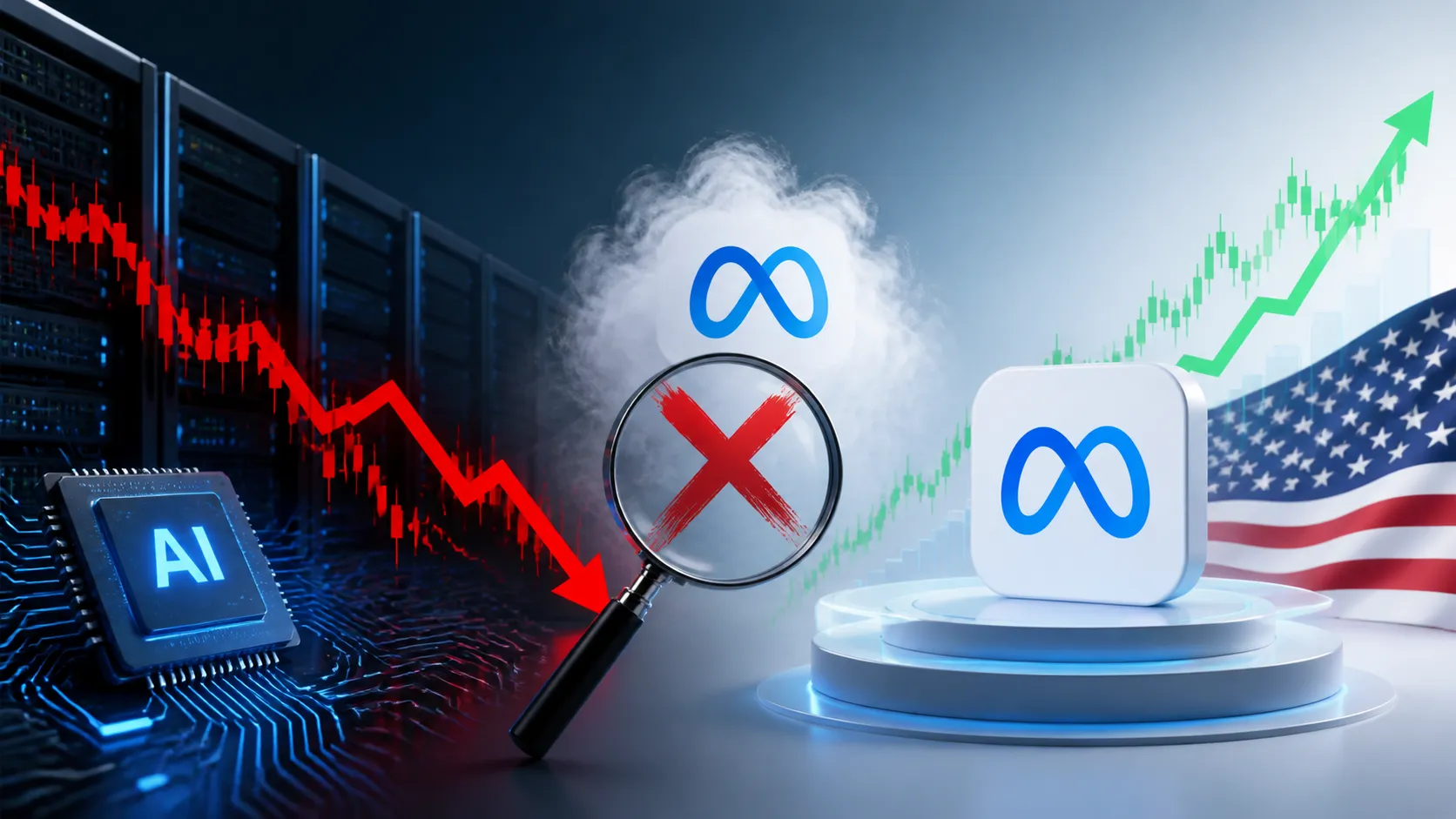
July 3, 2026, (Inside AI) — A sharp sell-off in semiconductor and cloud stocks on Thursday, triggered by fears of an AI hardware glut, was based on an “erroneous” reading of Meta Platforms’ strategy, according to a new note from research firm SemiAnalysis.
The panic erased billions in market value after investors misinterpreted Meta’s potential move into cloud services as a signal that the company would dump unused graphics processing units onto the market, flooding it with excess capacity.
Alternative cloud providers bore the brunt. CoreWeave shares tumbled 14%, while Nebius plunged 17%. Major chipmakers also suffered: Micron Technology, AMD, Intel, and SanDisk fell between 4% and 14%.
But the sell-off was a miscalculation, SemiAnalysis analysts wrote in a note released after markets closed. Far from signaling a pullback, Meta’s infrastructure ambitions point to an acceleration.
“Meta’s data centre and compute procurement will accelerate, not slow down,” the analysts said. They added that Meta’s capital expenditure in 2027 would be “shockingly high.”
The market’s reaction—both the aggressive dumping of cloud stocks and reignited debates about overcapacity—was not justified, they argued. The note suggests investors conflated a strategic expansion with a distress signal.
Meta’s exploration of cloud services is not a fire sale of idle GPUs. Instead, it reflects a broader push to monetize its massive AI infrastructure, built to support everything from recommendation engines to generative AI workloads. The company has been one of the largest buyers of Nvidia H100 chips, and its data center footprint continues to swell.
SemiAnalysis has a track record of defying market hysteria. During previous AI infrastructure scares, the firm correctly predicted sustained demand for accelerators and networking gear. Their latest note aligns with that contrarian stance.
Industry observers note that Meta’s move mirrors a pattern seen across hyperscalers: building internal clouds to optimize costs and eventually offering excess capacity externally. Amazon did it with AWS, and Google with GCP. Meta’s entry could intensify competition but doesn’t inherently signal oversupply.
Still, the sell-off highlights the fragility of AI infrastructure stocks. Any hint of slowing demand triggers violent rotations, as the market struggles to price a sector still in its infancy. The episode also underscores how deeply intertwined Meta’s fortunes have become with the broader AI supply chain.
For now, SemiAnalysis’s message is clear: the AI buildout is far from over. Meta’s spending trajectory suggests the opposite of a glut—it points to a coming wave of investment that could reshape the cloud landscape.