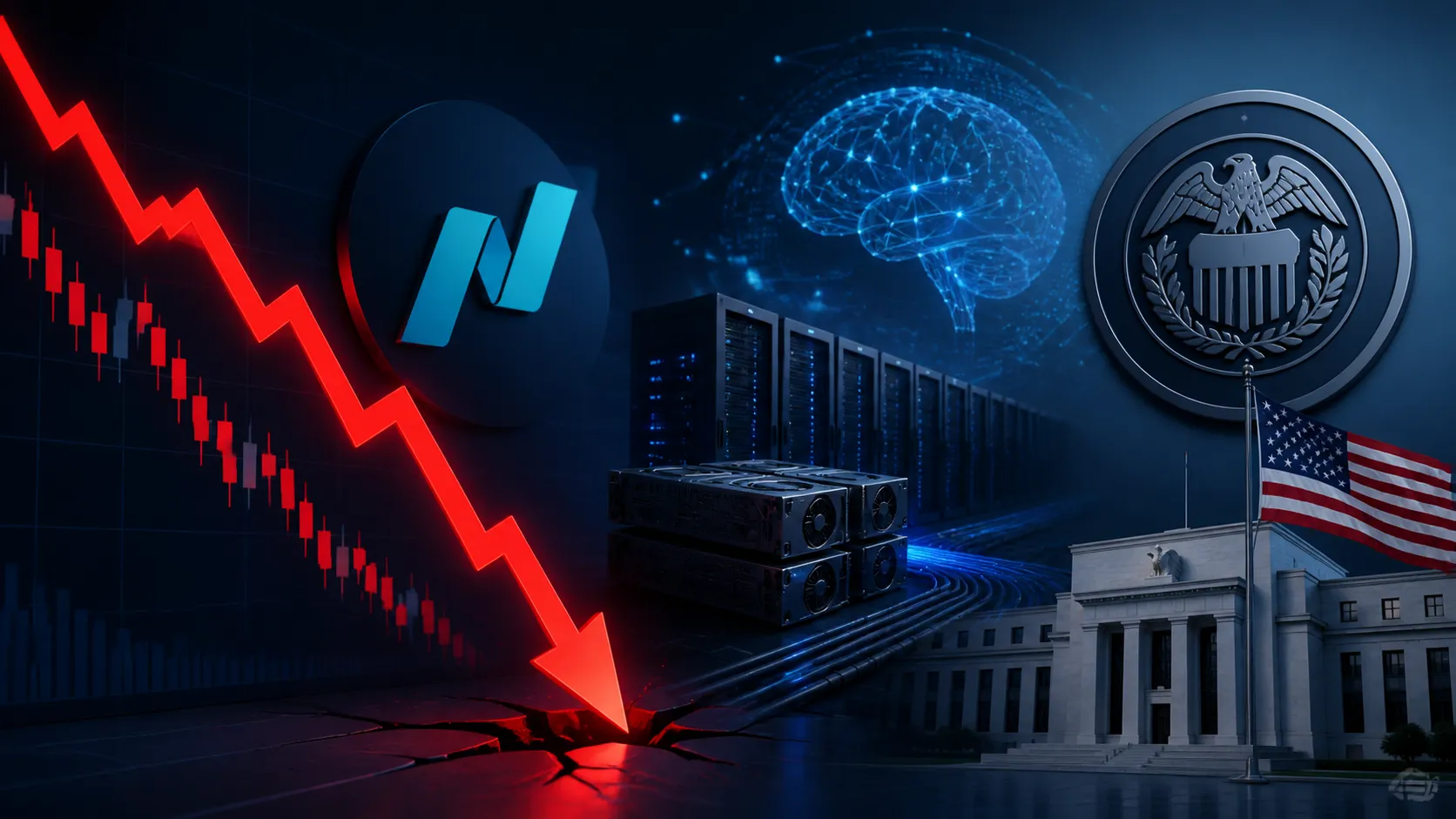
June 23, 2026, (Inside AI) — Nasdaq 100 futures tumbled 2.69% early Tuesday, leading a broad retreat in U.S. equity futures. The selloff reflects mounting unease over debt-fueled corporate spending on artificial intelligence and a hawkish shift in Federal Reserve rate expectations.
The tech-heavy index bore the brunt of the decline, with Dow E-minis down 318 points and S&P 500 E-minis off 1.45%. The rout extended globally, dragging down stocks in Europe and Asia alongside crude oil and precious metals.
Investor anxiety centers on the sustainability of AI infrastructure investments as borrowing costs rise. The Fed is now expected to hike rates by 50 basis points by December, up from 25 basis points just two weeks ago, according to the CME FedWatch Tool. New Chair Kevin Warsh is seen as more hawkish, amplifying rate fears.
Premarket trading hammered megacap AI names. Nvidia and Alphabet each fell nearly 3%. Chipmakers Intel, Marvell Technology, and Advanced Micro Devices dropped between 5.5% and 7.5%. The pain spread to memory stocks, with Micron sliding 8.6% ahead of its earnings report on Wednesday.
SpaceX shares dropped 4.5% after the company tapped the bond market to fund AI and infrastructure spending, despite reporting net losses last year. The move revived fears of excessive Big Tech debt.
Ipek Ozkardeskaya, senior market analyst at Swissquote Bank, captured the mood:
“SpaceX is not yet part of the Nasdaq indexes, but the fact that it is jumping on the bond train to fund excessive AI and infrastructure spending revives earlier concerns that Big Tech may be spending too much on AI infrastructure and increasingly financing that spending through debt.”
The CBOE Volatility Index, Wall Street’s fear gauge, surged to 20.12, its highest in over a week. The rate-sensitive Russell 2000 futures sank 1.7%. The 2-year Treasury yield dipped to 4.19% after hitting its highest since February 2025 in the prior session.
AI valuations had rallied strongly earlier this quarter following a Middle East ceasefire. But that optimism is fading. The Philadelphia Semiconductor Index hit a record high just Monday, yet chip stocks are now under heavy pressure. Micron’s results on Wednesday could offer critical clues on memory and AI chip demand.
Geopolitical risks add another layer of uncertainty. The U.S. waived sanctions on Iran for 60 days after initial peace talks, but President Donald Trump warned he will “do what I have to do” if Iran fails to comply. Investors are also eyeing June business activity surveys and Friday’s Personal Consumption Expenditures Index, expected at 4.1%—more than double the Fed’s target.
The convergence of tighter monetary policy, debt-laden AI spending, and fragile geopolitics creates a precarious backdrop for tech stocks. How long this correction lasts may hinge on whether corporate earnings justify the AI buildout’s soaring costs.