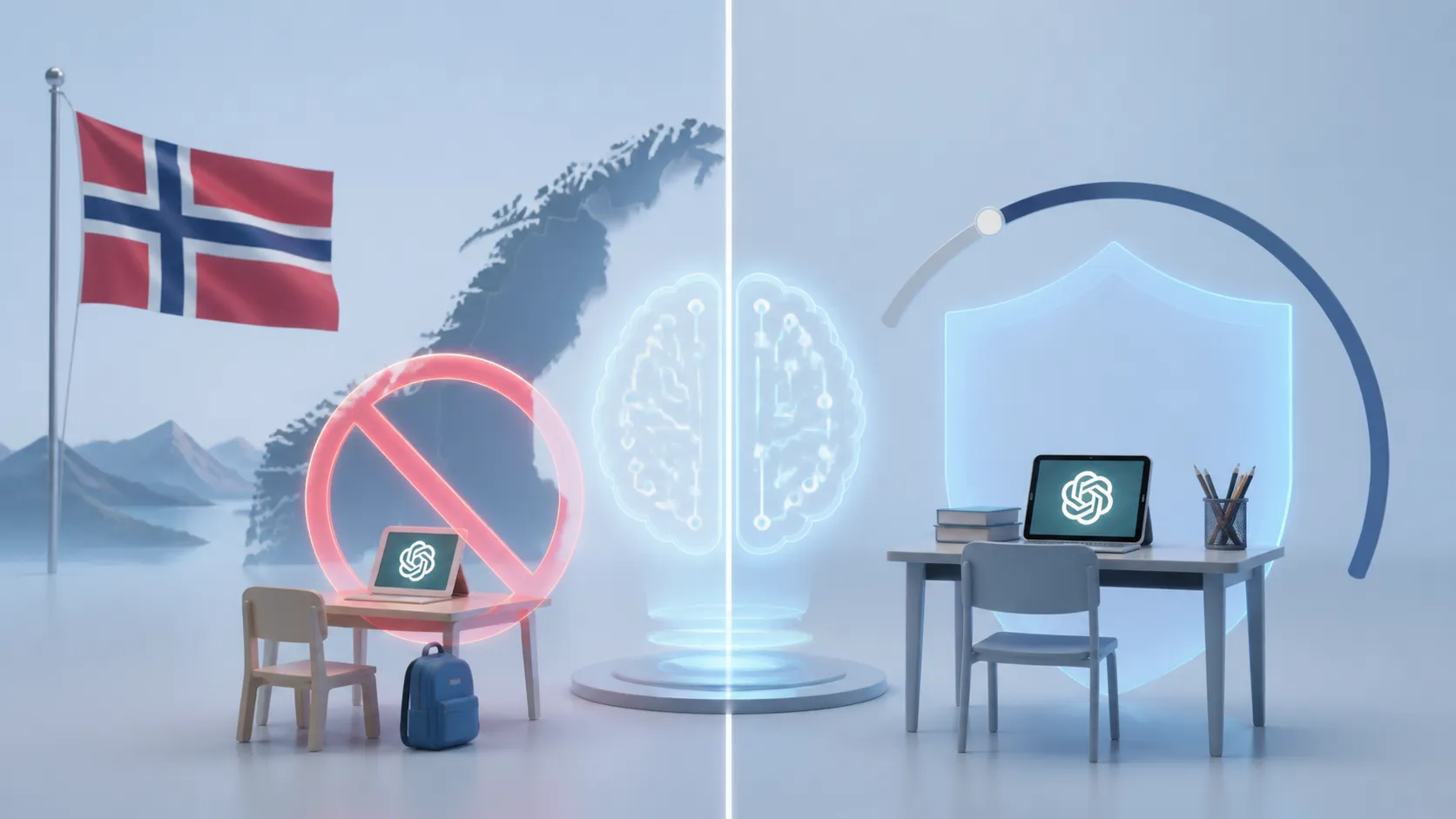
June 20, 2026, (Inside AI) — Norway will ban artificial intelligence for junior school pupils and tightly restrict its use for older children starting in late August, the government announced. The new rules target pupils aged 6 to 13 in first through seventh grade, who should generally not use AI at all. Those in lower secondary school, aged 14 to 16, may cautiously adopt AI tools under direct teacher supervision.
A Radical Pivot from Digital to Fundamentals
The policy marks a sharp turn in a nation known for tech-forward classrooms. Prime Minister Jonas Gahr Stoere framed the move as a return to basics after years of sliding test scores. The government had already banned smartphones in schools in 2024 and restored teacher authority over discipline. Now, AI joins the list of classroom distractions being stripped away.
Why Norway Is Hitting the Brakes on AI in Classrooms
Stoere left no room for ambiguity about the motive. He said:
“The most important thing in school is that our children learn to read, write and do mathematics.”
Read: Microsoft Report: 92% of U.S. Students and Leaders Now Use AI in Education
How the Ban Will Work Across Age Groups
His words reflect growing alarm over foundational skill erosion. National and international assessments have shown Norwegian pupils falling behind in core subjects. The government blames unfettered screen time and digital tools that replaced direct instruction with passive consumption.
The ban is not a blanket prohibition but a tiered restriction. For the youngest pupils, AI is off-limits entirely. For teenagers, the door stays slightly open. Teachers must approve any AI use and ensure it supplements rather than supplants learning. The government will issue detailed guidelines before the new school year begins in late August.
Global Echoes of a Backlash Against EdTech Overreach
Norway’s decision aligns with a broader European reassessment. Sweden paused a national digital learning plan in 2023. Denmark restricted Chromebooks in schools. The common thread is a post-pandemic reckoning with technology that promised personalized learning but often delivered distraction and shallow engagement.
The Missing Evidence on AI’s Educational Impact
Norway’s move exposes a critical gap: the lack of robust, longitudinal studies on AI’s effect on developing minds. While AI tutoring tools show promise in controlled settings, real-world classroom data is thin. Critics argue the ban may be premature, locking students out of vital future skills. Others say the precautionary principle is warranted until benefits clearly outweigh risks.
What the Ban Leaves Unanswered
The policy does not address AI use at home or via personal devices. It also sidesteps the challenge of enforcing the ban in classrooms where teachers may already rely on AI for lesson planning. Norway’s teacher unions have cautiously welcomed the move but warned that implementation will require significant training and support.
Read: Hong Kong, Taiwan, and China Face AI Ethics Crisis in Schools
Looking Ahead: A Test Case for the World
As the first wealthy nation to enact such a sweeping classroom AI ban, Norway will be closely watched. If test scores rebound, other countries may follow. If they don’t, the debate will shift toward how—not whether—to integrate AI into early education.