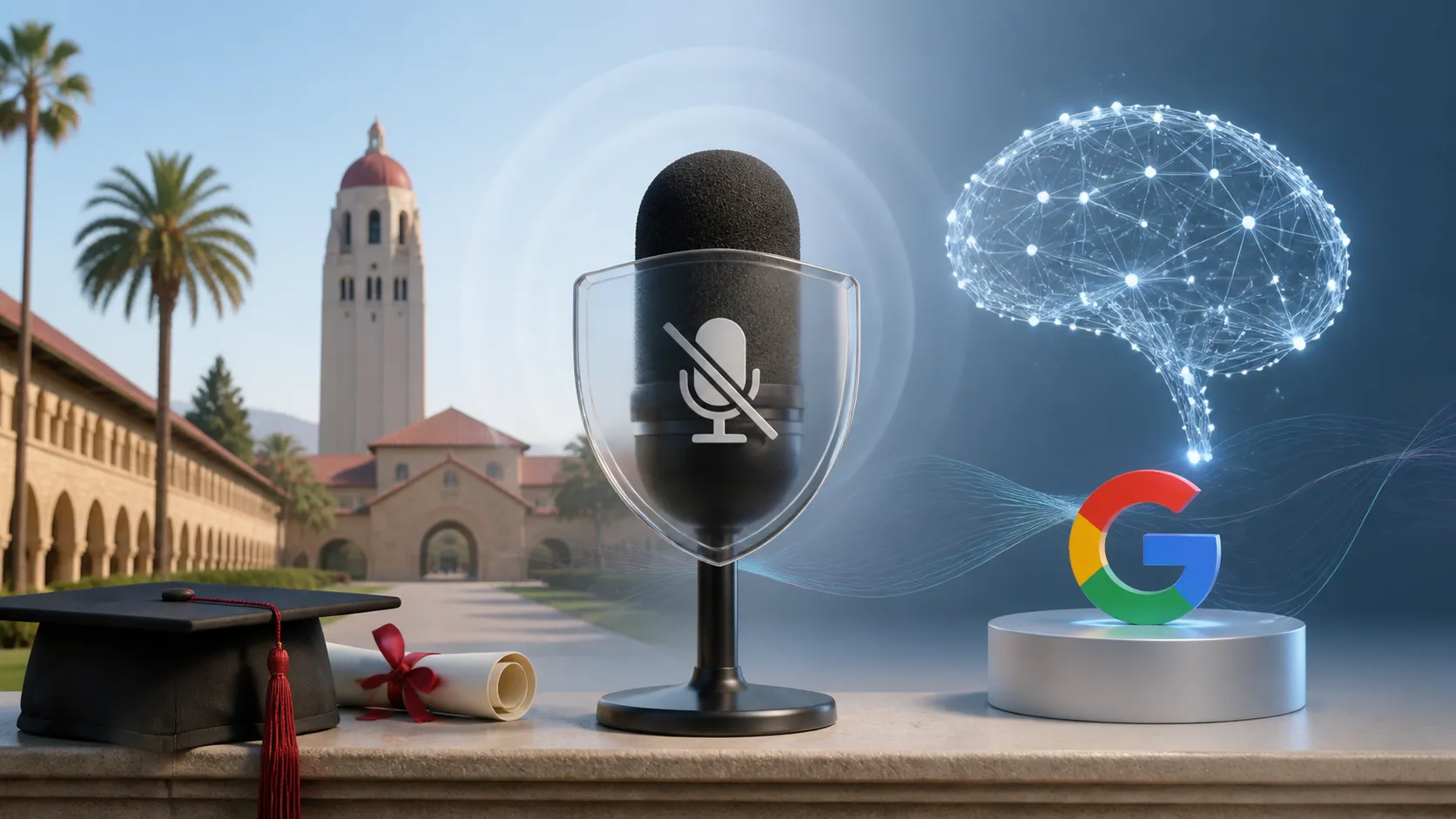
June 15, 2026, (Inside AI) — Google CEO Sundar Pichai delivered Stanford University’s 2026 commencement address with a striking omission: artificial intelligence. In a moment when AI dominates global discourse and reshapes employment, Pichai instead urged graduates to anchor themselves in optimism, personal passion, and the courage to tackle hard problems. His speech, rich with personal anecdotes, came as dozens of students walked out in protest of Google’s Project Nimbus contract with Israel.
Why the AI silence spoke volumes
Pichai acknowledged the elephant in the room early, joking that people had advised him not to talk about AI. The choice was likely strategic. Just months earlier, former Google CEO Eric Schmidt faced loud boos at the University of Arizona after focusing his commencement on AI and automation. By steering clear, Pichai sidestepped a similar backlash while still addressing a generation anxious about technology’s role in their futures.
Yet the protest that unfolded was not about AI. Students filed out chanting “Free Palestine,” objecting to Google’s involvement in Project Nimbus, a cloud computing deal with Israel’s government. The walkout underscored that even a tech-agnostic speech cannot escape the geopolitical shadows cast by the speaker’s company.
From Chennai’s droughts to Silicon Valley dreams
Pichai rooted his message in his own improbable journey. He recalled childhood in Chennai, India, where his family waited years for a telephone and worried about water shortages. “We worried about severe drought and whether the water trucks would arrive in time,” he said. His father spent a year’s salary on a plane ticket when Stanford called. That first flight, Pichai noted, was his first time on an airplane.
Read: Google Shakes Up AI Leadership as DeepMind Chief Shifts Role
Arriving in California, he confronted a landscape far from the lush green he expected. His host, Jane Earl, reframed the brown hills as “golden,” a metaphor Pichai used to champion optimism. “It’s easy to look at the news and think we’re living in uniquely challenging times,” he said. “We don’t get to choose the world we graduate into; but we do get to choose how we frame our circumstances.”
Las Vegas and the myth of make-or-break moments
Pichai dismantled the pressure graduates feel to get every decision right. He confessed to skipping class during his first winter quarter at Stanford for a spontaneous road trip to Las Vegas with a classmate named Pat. With only five dollars, he learned blackjack, won fifteen, and realized something profound. “No one seemed to notice that we had missed class. For the first time, I realized the world won’t end if I relaxed a little,” he said.
He stressed that few moments in life are truly make or break. Failed exams, skipped classes, or abandoned tuba lessons rarely derail a life. The real risk, he implied, is letting fear of missteps prevent bold moves.
Chrome’s near-death experience as a lesson in grit
The speech’s most concrete career lesson came from Chrome’s rocky launch. Pichai described how a small team believed they could reimagine the browser for a new era of rich web applications. After a splashy 2008 debut that drew eight million users in 24 hours, growth stalled. “We kept going, setting highly aggressive stretch goals,” he recalled. The team shipped updates every six weeks while competitors moved at a glacial pace. That relentless iteration eventually fueled Chrome’s dominance.
His advice distilled the experience: “If there’s a choice to work on something hard—say yes.”
Passion over expectation
Pichai closed by urging graduates to ignore external pressures. He recalled meeting women in rural India using Android smartphones to learn trades and connect with distant family, a moment that reinforced his own sense of purpose. “When all else is equal, do the thing that excites you,” he said. He warned against chasing parental approval, peer trends, or societal norms. “Instead, think about the things that keep you chatting excitedly with your roommates late into the night. And go do those things.”
Read: Why Chinese Youth Embrace AI While American Graduates Reject It
The address, Pichai’s second ever commencement speech, offered no grand vision of AI’s future. Instead, it delivered a human-centered counter-narrative at a time when technology’s promises and perils are colliding in real time on campuses and beyond.