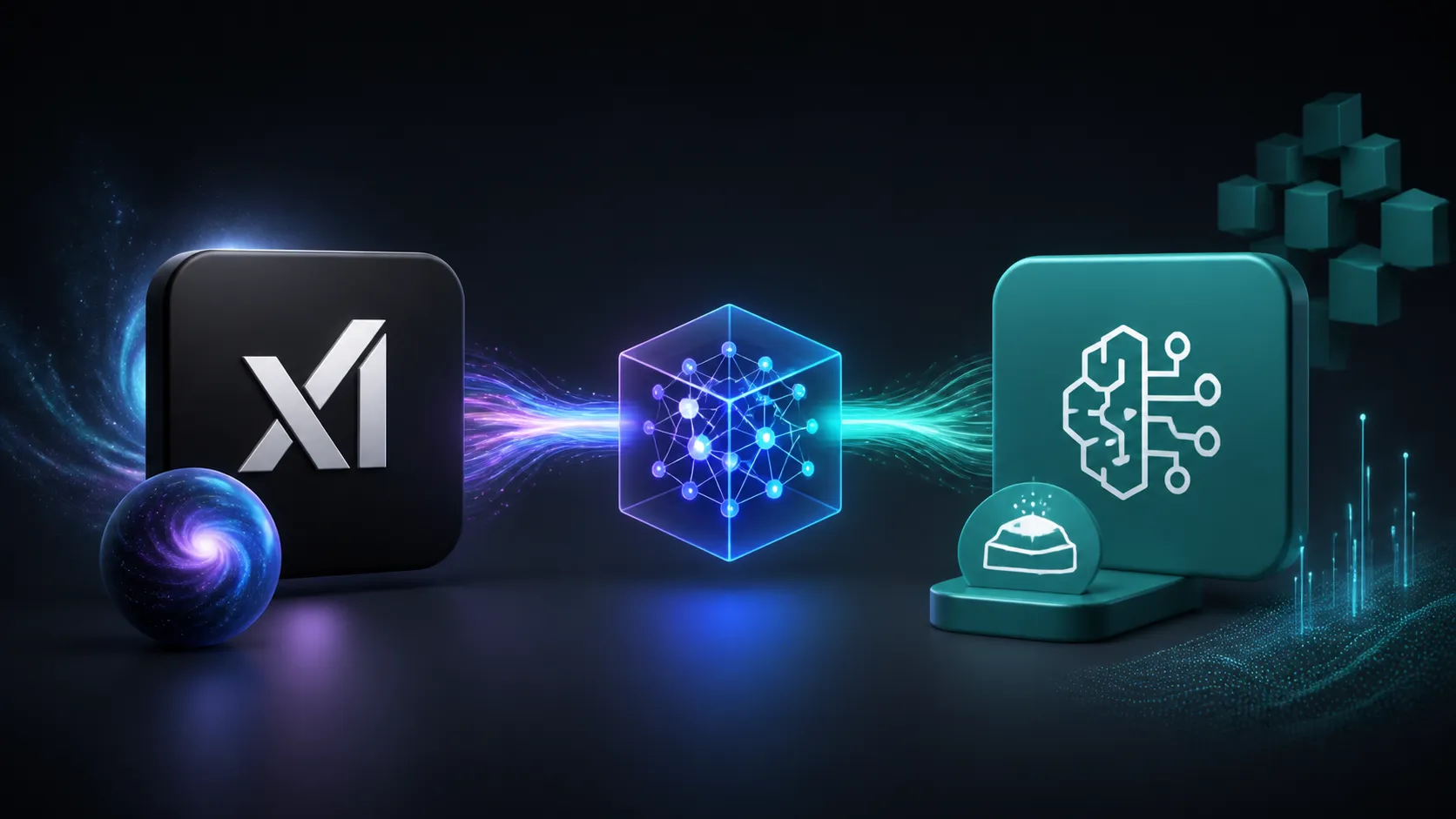
June 16, 2026, (Inside AI) — Amazon Web Services has integrated xAI’s Grok 4.3 into its managed AI service, Amazon Bedrock. The move brings a reasoning-first model to the platform, expanding options for enterprises building generative AI applications.
Grok 4.3 arrives with a unique design philosophy. Unlike many models that treat reasoning as an optional mode, this model keeps it always on. Users can configure the reasoning effort across four levels: none, low, medium, and high. This constant reasoning capability aims to deliver more consistent behavior in multi-step agent loops, a common pain point where models that skip thinking can falter.
Why Always-On Reasoning Matters for Enterprise Agents
The always-active reasoning sets Grok 4.3 apart in a crowded market. Most large language models toggle reasoning on or off, which can lead to unpredictable outputs in complex tasks. By baking reasoning into every inference, xAI targets reliability for agentic workflows. The model also boasts strong tool use and instruction-following, critical for building autonomous agents that execute multi-step processes.
Read: OpenAI Launches Partner Network with $150M to Fix Enterprise AI’s Last-Mile Problem
Token efficiency is another highlight. High-volume inference can become costly, but Grok 4.3 is designed to balance performance with cost-effectiveness. This makes it suitable for enterprise workloads where both accuracy and budget matter.
Where Grok 4.3 Fits in the Enterprise Toolkit
AWS positions Grok 4.3 for specific high-value tasks. The model excels in contract review, case law research, credit agreement analysis, and financial document Q&A. It also delivers consistent results in conversational AI, search, chat, and multi-turn workflows. This focus on legal and financial domains signals a strategic play for industries that demand precision and auditability.
Grok 4.3 runs on Mantle, a new inference engine within Amazon Bedrock. Mantle is optimized for price performance and supports tool calling, structured output, and response streaming. These features are essential for developers integrating AI into existing systems where predictable data formats and real-time interactions are non-negotiable.
The Broader Bedrock Landscape and Competitive Dynamics
With xAI joining Amazon Bedrock, the platform now hosts models from multiple providers, including Anthropic, Meta, and Stability AI. This diversity lets enterprises pick the best model for each task without managing infrastructure. However, some analysts note that Bedrock’s model garden is becoming crowded, and differentiation may hinge on unique capabilities like Grok’s always-on reasoning.
Read: Cheaper AI Models Reshape Business Choices as Soaring Bills Bite
Competing platforms such as Microsoft Azure AI Studio and Google Cloud’s Vertex AI offer their own reasoning-focused models. Yet Grok 4.3’s configurable effort levels and Mantle’s cost optimization could give AWS an edge for budget-conscious enterprises. Still, the model’s real-world performance in agentic scenarios remains to be seen, as always-on reasoning might introduce latency that some applications cannot tolerate.
AWS has not disclosed pricing details for Grok 4.3, but the emphasis on token efficiency suggests competitive rates. Region availability is limited at launch; users should check the official documentation for supported areas.
To get started, developers can visit the Grok 4.3 model detail page in AWS documentation. The addition of xAI as a provider underscores AWS’s commitment to offering a broad model selection, but it also raises questions about how enterprises will navigate an increasingly complex AI ecosystem.