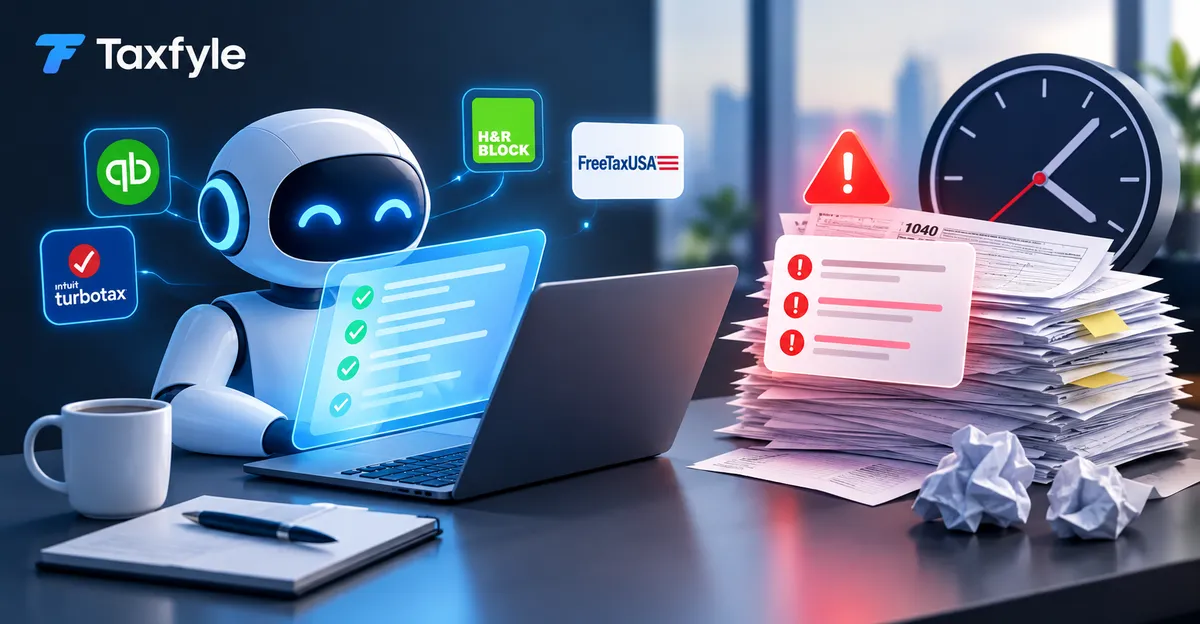
Every October, the same story plays out. Taxpayers who filed for an extension in April are racing the October 15 deadline, pulling together documents, running numbers, and hoping everything lines up. What is different now is that many of them are running the work through an AI assistant before it ever reaches a professional. The tools are genuinely useful. The trouble is the specific way they fail.
AI tax tools can organize documents, flag missing forms, and draft a return faster than most people could on their own. But speed and confidence are not the same as accuracy, and that gap
is where the new mistakes are showing up.
The Confidence Problem
The biggest issue is not that AI gets things wrong. It is that AI rarely signals uncertainty the way a human preparer does. A CPA who is unsure how to treat a transaction will flag it, ask a follow-up question, or dig into the specifics of a client's situation. An AI tool tends to produce a clean, confident-looking answer regardless of how unusual or ambiguous the underlying facts are.
This is measurable, not hypothetical. When NerdWallet's data team ran a set of tax questions through three widely used assistants earlier this year, the errors were delivered without hesitation: a standard deduction figure off by nearly $3,000, incorrect guidance on state filing obligations, wrong claims about credit eligibility. In a second test, the same tool asked the same personalized question produced answers ranging from a precise "approximately $32,267" to a vague "tens of thousands." The precision carried no information about the reliability.
The IRS has issued its own guidance telling taxpayers not to rely on AI-generated answers to complex tax questions and to verify any calculations these tools produce. Filers see a polished output and assume it is correct. In reality, the tool may have applied a general rule to a situation that needed a more nuanced read, and nothing in the output says so.
Read: Taxfyle’s new AI tool helps financial advisors do tax planning faster and easier
What a Professional Catches that Software Does Not
In a final review, we are not just checking math. We are looking at things like:
- Whether income was classified correctly across multiple sources, including gig work, K-1s, and equity compensation, where the right treatment often depends on details a form does not capture.
- Whether estimated payments made throughout the year actually match what is owed, and whether there is penalty exposure the filer does not know about.
- Whether elections and carryforwards from prior years were applied consistently.
- Whether a life event, such as a home sale, a new dependent, or a business change, triggered a filing requirement the software would not know to ask about.
These are not edge cases. They are the everyday judgment calls that separate a return that is technically filed from one that is actually correct.
What Extension Filers Should Do Now
Before the deadline, taxpayers who filed an extension should:
- Confirm every income document is accounted for, including any 1099s or K-1s that arrived late.
- Reconcile estimated payments against actual liability to catch underpayment penalties early, while there is still time to address them.
- Revisit any major life or financial changes from the year that could affect filing status, deductions, or credits.
- Have a licensed professional review AI-generated or software-prepared returns before submission, not after.
Read: M-Files Releases New AI Agents that Know the Context of Your Documents And Handle Repetitive Work
AI is a strong starting point for tax prep. It is not a substitute for the final judgment call a licensed professional makes, and it does not move the responsibility for what gets filed. As more filers turn to these tools under deadline pressure, that final review matters more, not less.

Richard Lavina is a CPA and the Co-Founder and CEO of Taxfyle, a tax technology company connecting individuals, businesses, and RIAs with a network of more than 7,200 licensed CPA professionals for filing, advisory, and AI-powered tax planning. A former PwC senior professional and ETAAC member, Lavina has spent his career at the intersection of tax practice and technology.