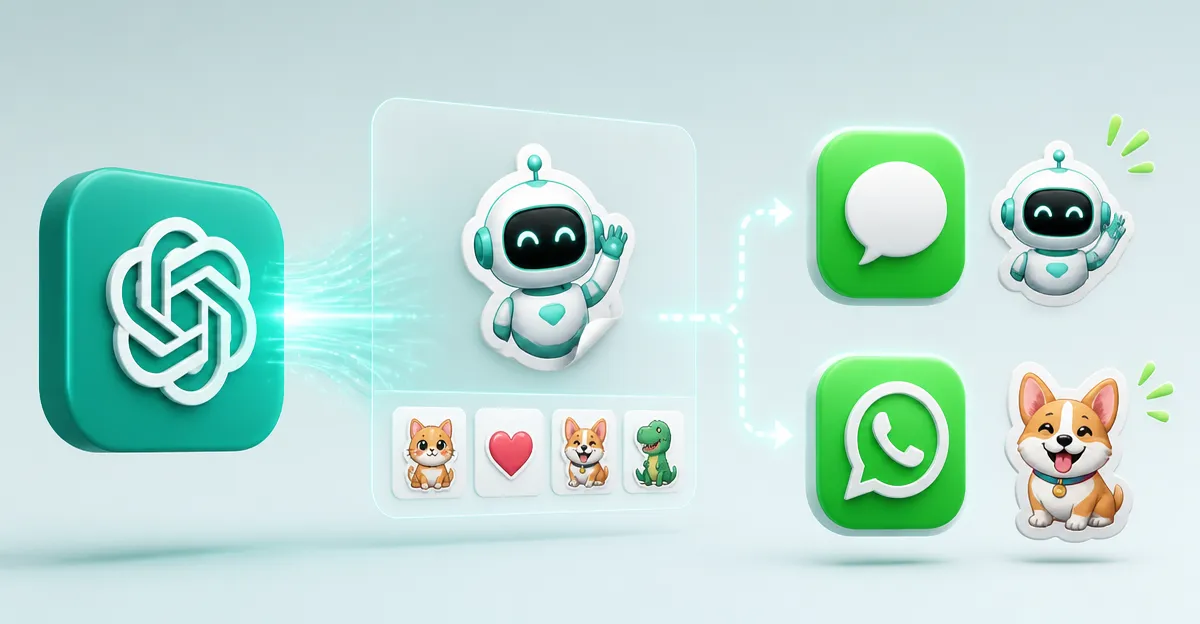
August 25, 2026, (Inside AI) — OpenAI launched a new feature on August 24, 2026 that turns personal photos into custom sticker packs for WhatsApp and iMessage. Users can now generate stylized stickers directly inside ChatGPT, eliminating the need for external design apps or file conversion tools.
The feature lives in ChatGPT’s Images sidebar. Users select “Images,” tap “Stickers,” choose an artistic style, upload a photo, and combine it with emojis. Available styles include cartoon, illustration, and anime variations. The generated packs appear as individual stickers ready for immediate use in messaging apps.
This launch signals a strategic shift for OpenAI. Sticker creation is not a conversational feature. It is a practical creative tool that moves ChatGPT deeper into everyday digital communication. The company framed it as an extension of existing image generation capabilities, powered by DALL-E technology.
Why Sticker Creation Matters for ChatGPT’s Product Strategy
Custom stickers have long been a fragmented experience. Users typically juggle separate apps like Sticker Maker, PicsArt, or platform-specific tools. Each requires exporting files, adjusting formats, and manually importing into messaging apps. ChatGPT compresses that workflow into three steps inside a single interface.
OpenAI did not announce premium pricing for sticker creation. The feature is free for all ChatGPT users. That decision contrasts with other AI image tools that gate advanced stylization behind paid tiers. It suggests OpenAI is prioritizing user engagement and platform stickiness over immediate monetization.
Industry analysts note that sticker packs are a high-frequency, low-friction use case. People send stickers daily. If ChatGPT becomes the default tool for creating them, it embeds itself into routine social interactions. That is a different kind of user retention than occasional text queries.
Competing tools still exist. Canva offers sticker templates. Giphy provides animated stickers. But neither combines photo-to-sticker conversion with conversational AI in one place. ChatGPT’s advantage is unification, not novelty.
What the Launch Reveals About OpenAI’s Roadmap
OpenAI has been expanding beyond text generation for years. DALL-E introduced image creation. Sora pushed into video. Sticker packs are a smaller, more personal application. They demonstrate how generative models can serve lightweight creative tasks without requiring technical skill.
The company has not released usage numbers. But social media reaction since launch shows widespread experimentation. Users posted anime-style portraits, cartoonish pet stickers, and illustrated family photos. The pattern mirrors early adoption of Lensa AI avatars in late 2022, though without the privacy backlash that followed.
Privacy questions remain unaddressed. OpenAI has not detailed how uploaded photos are stored or whether they are used for model training. The company’s existing data policies allow users to opt out of training, but the sticker feature’s specific data flow is unclear. For a feature built on personal photos, that gap could invite scrutiny.
WhatsApp users access generated stickers through the app’s sticker menu. iMessage users add packs directly to their message options. Both integrations rely on standard platform APIs, which means no special permissions or beta access are required. That simplicity likely accelerated the feature’s rapid adoption.
OpenAI’s broader ambition is clear. The company wants ChatGPT to be a hub for creative output, not just a chatbot. Sticker creation is one more signal that the product roadmap prioritizes practical, shareable, visual tools. Whether that strategy sustains user interest beyond novelty remains an open question.