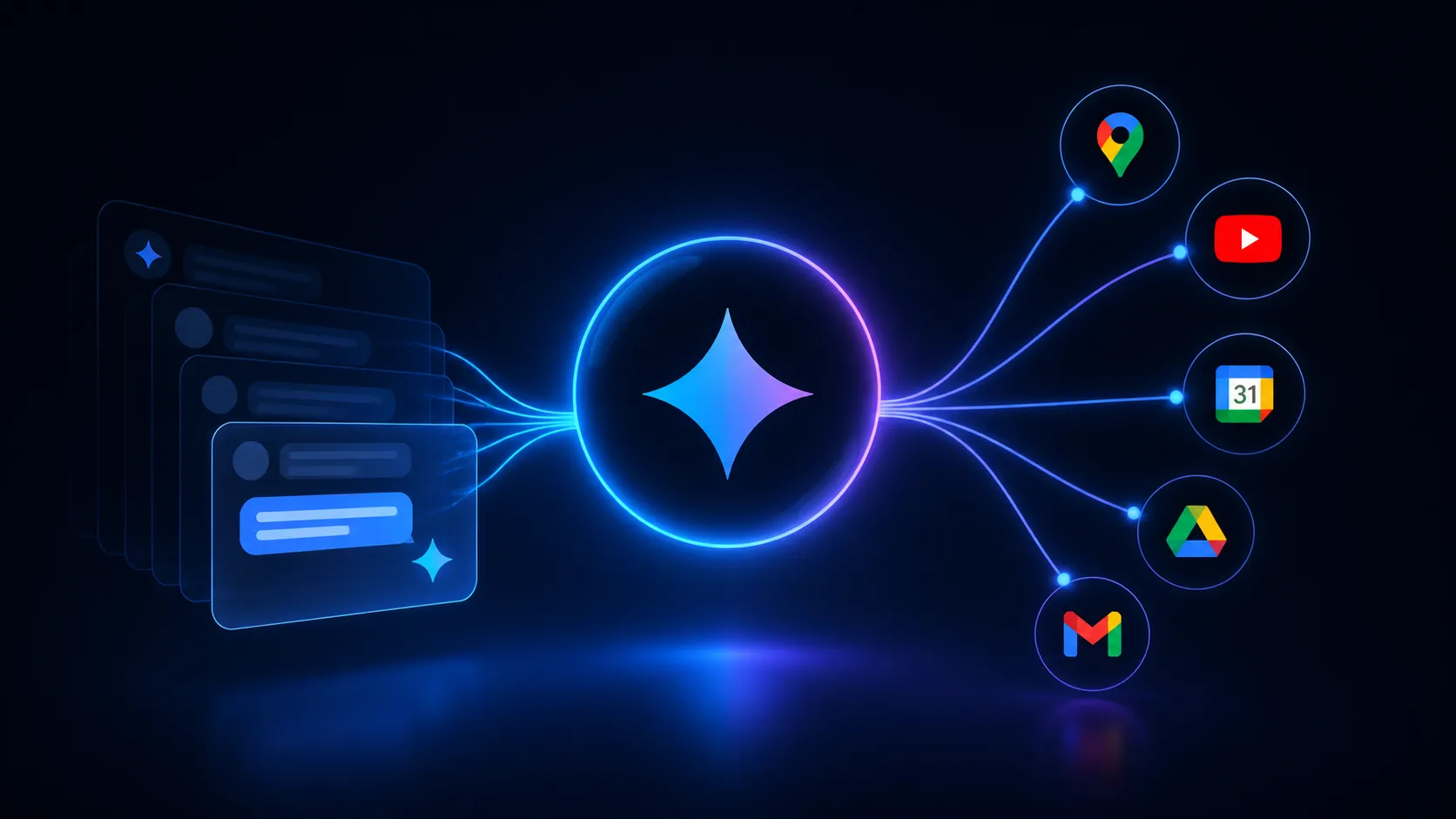
June 19, 2026, (Inside AI) — Google’s Gemini Live voice assistant can now recall past conversations and pull data from connected apps, making interactions more personalized. The update, rolling out after its I/O 2026 preview, lets users avoid repeating preferences like hobbies or family details across sessions.
Memory Meets Voice: A New Layer of Personalization
The feature taps into “memories of your past chats and info from some Connected Apps,” Google said, operating under the same privacy permissions users set for text-based Gemini. It marks a significant step toward a seamless, context-aware voice assistant.
Google recently overhauled Gemini Live with a redesigned interface, more natural voices, and tighter voice-text integration. Users can now switch between speaking and typing without losing context. The memory upgrade builds on that foundation.
Read: June Pixel Drop: Gemini Omni 2 Brings AI Video Tools and Smarter Multitasking
During testing, Gemini Live successfully referenced previous conversations to inform follow-up discussions. The feature is currently available in English for users in the United States.
What Gemini Live Remembers—and What It Doesn’t
Gemini Live can recall preferences like favorite foods, hobbies, or family details across multiple sessions. It also accesses data from apps such as YouTube, Workspace, Utilities, and image generation tools. This enables richer, more natural dialogue without constant re-explanation.
However, some promised integrations are missing. Access to Google Messages, previewed earlier, is not yet live. Google’s Personal Intelligence settings page on Android still labels memory support as “coming soon,” indicating a gradual rollout.
This update brings voice interactions closer to feature parity with Gemini’s text-based chat, which already leveraged memory and app connections. Google aims to make Gemini a more capable, context-aware assistant across devices.
The Broader Push for Contextual AI
Google’s move mirrors an industry trend toward persistent AI memory. Competitors like Apple and Amazon have explored similar features, but privacy concerns linger. Google emphasizes that memory follows user-set permissions, yet critics note that storing personal data across sessions could raise risks if not transparently managed.
Read: Google Reveals 11 Ways Gemini Boosts Workplace Productivity in 2026
The update also aligns with Google’s hardware ambitions. A new Google Home device, designed around Gemini AI, suggests the assistant will soon power smart speakers with deeper personalization. For now, the memory feature remains limited to the U.S. and English, with no timeline for broader availability.
As AI assistants evolve, the line between helpful recall and intrusive surveillance will demand careful navigation. Google’s latest step tests whether users are ready to trust a voice assistant with their digital past.