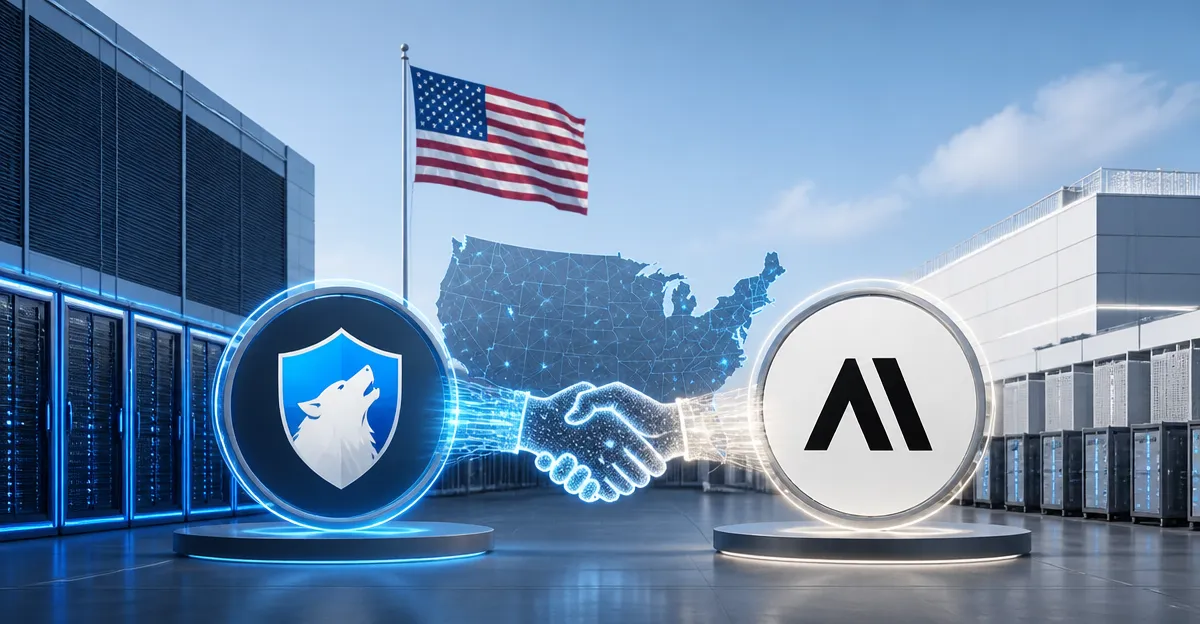
July 6, 2026, (Inside AI) — Bitcoin miner TeraWulf has inked a 20-year lease with AI firm Anthropic for data center infrastructure. The deal is expected to generate roughly $19 billion in contracted revenue over its lifetime.
The agreement sent TeraWulf shares soaring more than 16% in premarket trading Monday. It marks a decisive pivot away from volatile cryptocurrency mining toward the surging demand for AI compute.
This is not a one-off colocation contract. It is a long-term anchor tenancy that reshapes TeraWulf’s financial trajectory. Anthropic, the maker of the Claude family of large language models, needs massive, reliable, and energy-intensive computing power. TeraWulf, with its zero-carbon energy sites, fits the bill.
The deal was first reported by Reuters. TeraWulf said in May that AI-related hosting would increasingly drive its business. This lease validates that strategy in dramatic fashion.
The revenue figure — $19 billion — is eye-popping. To put it in perspective, TeraWulf’s total revenue in 2025 was just $120 million. The company’s market cap before the announcement hovered around $2.5 billion. A deal of this size fundamentally changes the company’s valuation story.
Yet details remain scarce. Neither company disclosed the specific location, power capacity, or timeline for the infrastructure buildout. TeraWulf operates the Lake Mariner facility in New York, a 500-megawatt site powered primarily by hydroelectricity. It also has a nuclear-powered site in Pennsylvania. The lease likely involves one or both of these assets.
Anthropic, founded in 2021 by former OpenAI researchers, has raised over $7 billion to date. It competes fiercely with OpenAI, Google, and Meta. Training and running frontier models like Claude Opus requires tens of thousands of GPUs. Securing dedicated, scalable data center capacity is a strategic imperative.
The deal highlights a broader trend: Bitcoin miners are becoming AI infrastructure providers. Their existing power contracts, substations, and cooling systems are highly valuable in an era of AI energy scarcity. Competitors like Core Scientific and Iris Energy have also pivoted to AI hosting.
But the TeraWulf-Anthropic deal stands apart in scale. $19 billion over 20 years implies an annualized revenue of roughly $950 million. That dwarfs any previous AI hosting deal signed by a former miner.
Skepticism is warranted. The $19 billion figure is “contracted revenue,” not guaranteed profit. It likely depends on power delivery milestones, uptime guarantees, and possibly usage-based components. If Anthropic’s needs change or if construction faces delays, the actual payout could differ.
Moreover, the AI arms race is not immune to downturns. If the current frenzy for ever-larger models cools, demand for compute could soften. A 20-year commitment in a field that changes monthly is a bold bet by both parties.
Still, the market’s reaction was unambiguous. TeraWulf’s stock jumped, signaling investor belief that this pivot is real and lucrative. For Anthropic, the deal provides a dedicated, long-term home for its expanding AI workloads, insulating it from the volatile spot market for GPU cloud capacity.
The lease also raises regulatory questions. Large data centers face increasing scrutiny over grid impact and water usage. TeraWulf’s focus on zero-carbon energy may ease some concerns, but local opposition to hyperscale facilities is growing nationwide.
Neither TeraWulf CEO Paul Prager nor Anthropic CEO Dario Amodei commented beyond the initial announcement. Analysts expect more details during TeraWulf’s next earnings call.
In the meantime, the deal reshapes the competitive landscape. Other AI labs may feel pressure to lock in similar long-term capacity. Bitcoin miners with stranded energy assets suddenly look like prime acquisition targets. The line between crypto and AI infrastructure continues to blur.