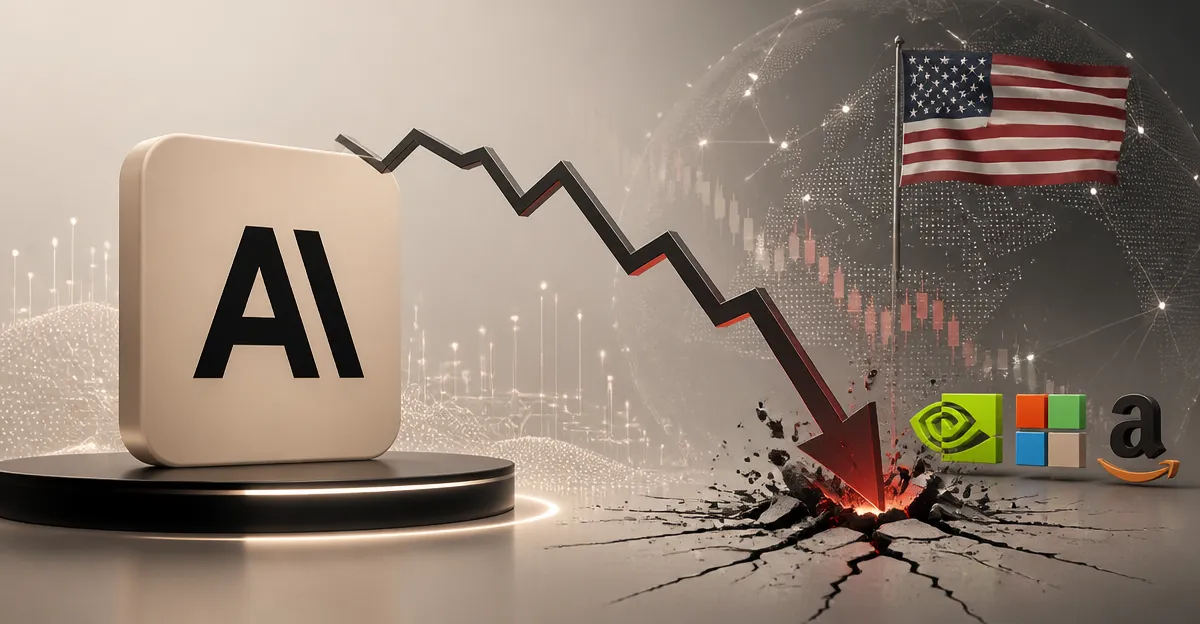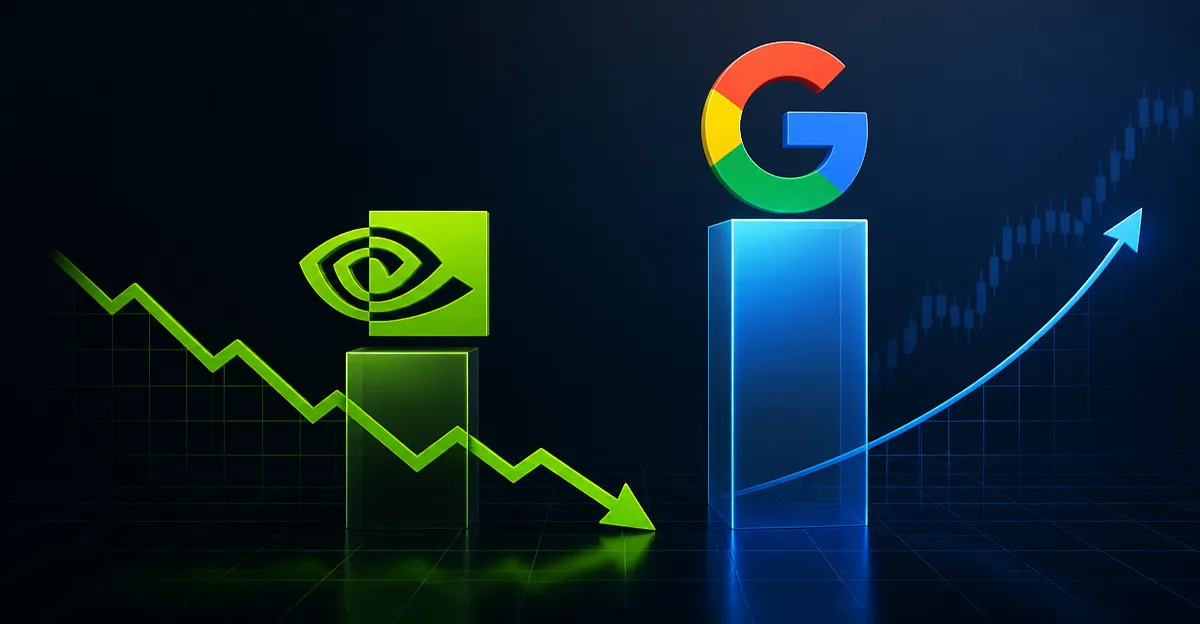
November 20, 2026, (Inside AI) — Nvidia's stock fell 3% on Friday, pushing its market value to $3.4 trillion and dropping it behind Alphabet to become the fourth-most valuable U.S. company. The decline marks a seventh consecutive weekly loss, the chipmaker's longest losing streak since 2008.
The move reshuffles the top of Wall Street's market-value rankings and signals a broader recalibration of the AI trade. Apple leads at $5.08 trillion, followed by Microsoft at $3.72 trillion and Alphabet at $3.44 trillion, according to LSEG data. Nvidia's slide comes days after its first earnings report since co-founder Jensen Huang's resignation, which failed to reassure investors about leadership and the durability of AI spending.
The selloff reflects a shift in investor preference toward companies that pair heavy AI investment with established cloud and software revenue streams. Nvidia, which supplies the bulk of advanced AI chips, has been the centerpiece of the AI trade. Its fall suggests investors are now favoring firms with diversified revenue over pure-play hardware exposure.
Leadership Void Meets Spending Skepticism
Huang's departure has introduced uncertainty at a critical moment. The company's latest earnings report, the first without its longtime leader, did not ease concerns about strategic direction. Investors appear to be questioning whether Nvidia can maintain its dominance as cloud providers and software firms develop their own AI capabilities.
The seven-week losing streak is unprecedented for Nvidia since the 2008 financial crisis. That period saw broad market turmoil, but the current decline is specific to the AI sector's reassessment. The stock's 3% drop on Friday alone erased tens of billions in market value.
Alphabet's rise above Nvidia is notable because Google has invested heavily in AI while maintaining its core advertising and cloud businesses. Microsoft similarly combines AI spending with enterprise software revenue. Apple, which has taken a more measured approach to AI, remains the most valuable company, suggesting investors value stability over aggressive AI positioning.
The reshuffling at the top of the market-value rankings may signal a new phase in the AI trade. Investors appear to be rewarding companies that can monetize AI through existing products rather than those that supply the underlying hardware. This shift could have implications for how AI companies are valued going forward.
What the Market Is Really Pricing In
The market's reaction goes beyond Nvidia's leadership change. It reflects a growing skepticism about the pace of AI infrastructure spending. Cloud providers and enterprises have committed billions to AI chips and data centers, but returns on those investments remain uncertain. Nvidia's customers are now under pressure to demonstrate tangible benefits from their AI expenditures.
Competition is also intensifying. Advanced microprocessors from rivals and custom chips designed by large customers threaten Nvidia's market share. The company's ability to command premium pricing may erode as alternatives mature. These competitive dynamics, combined with leadership uncertainty, have created a perfect storm for the stock.
Nvidia's decline also has broader market implications. The company has been a major contributor to the S&P 500's gains over the past two years. Its underperformance could drag on index returns and affect investor sentiment across the technology sector. The rotation toward Alphabet and Microsoft suggests investors are seeking safer AI exposure.
The coming weeks will be critical for Nvidia. The company must articulate a clear strategy under new leadership and address concerns about AI spending durability. Without a credible path forward, the stock could face further pressure. For now, the market has spoken: the AI trade is no longer a one-stock story.

Shamil has a low tolerance for AI that only works in controlled demos. He covers agentic systems and generative AI with the skepticism of someone who has seen too many “revolutionary” tools quietly disappear six months after launch.