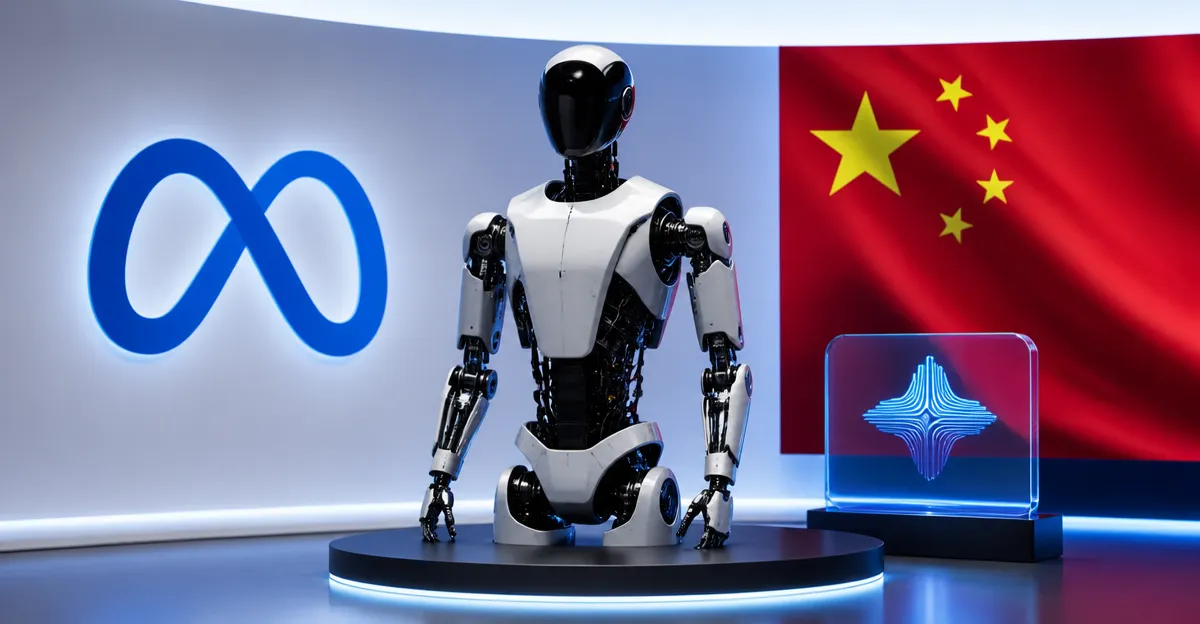
November 2, 2026, (Inside AI) — Meta has built a humanoid robot prototype in partnership with Chinese robotics firm Fourier, and the company is already at work on a second version, according to sources familiar with the project. The prototype, internally named Max, stands roughly five feet tall. It carries speakers in its chest, a face designed to mimic human expressions, and five-fingered hands able to pick up small objects.
The first unit reportedly came together in about three months. Meta has not announced a launch date, and the current machines serve research purposes rather than commercial sale. The effort sits inside Meta's broader ambition to build robots that can handle household chores.
The news lands at an awkward moment for Meta's hardware reputation. The company has spent years and billions on Reality Labs, the division behind its smart glasses and metaverse push, with little to show in consumer adoption. A humanoid robot built in a quarter with an outside partner suggests a leaner, faster approach to physical products. It also raises a question Meta has not answered publicly: whether the company intends to sell robots or simply own the software layer that makes them useful.
Why Meta Needs A Body
Meta's core business remains advertising across Facebook, Instagram, and WhatsApp. That business depends on attention, and attention is shifting toward AI assistants that may eventually live in physical spaces. A household robot would give Meta a direct presence in the home, far beyond a phone screen or a pair of glasses.
The partnership with Fourier is notable for its geography. Fourier, based in Shanghai, has built lower-body exoskeletons and rehabilitation robotics. Working with a Chinese firm gives Meta access to hardware supply chains and manufacturing speed that are harder to replicate in the United States. It also invites scrutiny from regulators already wary of cross-border technology ties.
Meta is not alone in chasing this market. Tesla has shown its Optimus humanoid, and Figure has raised hundreds of millions for similar work. Chinese companies including Unitree and UBTech have demonstrated walking humanoids at lower price points. The race is no longer about whether humanoids can walk. It is about whether they can be useful, safe, and cheap enough for a living room.
Read: ENGINEAI Says General-Purpose Humanoid Robot Costs Fell Below RMB100,000
Max's design choices hint at Meta's priorities. Speakers in the chest and an expressive face point toward social interaction, not industrial lifting. Five-fingered hands that grasp small objects suggest manipulation tasks like picking up a cup or folding laundry. Those are exactly the chores Meta says it wants to address.
The three-month build timeline is striking. Humanoid development typically takes years of iteration. A rapid prototype does not mean a product is close, but it does show Meta can move quickly when it borrows existing hardware and focuses on software. Meta's strength has always been AI models and data, not mechanical engineering. Partnering with Fourier lets Meta concentrate on the intelligence layer.
That division of labor carries strategic risk. If Fourier owns the body and Meta owns the brain, either side could walk away. Meta has a history of building on top of partners and then absorbing their functions. Fourier will need clear terms to avoid becoming a contract manufacturer for its own competitor.
Privacy is another unresolved issue. A robot with cameras, microphones, and a face that reads human expressions would collect intimate data from inside homes. Meta's track record on data handling draws criticism from regulators in Europe and the United States. A household robot would raise those stakes considerably.
Inside AI could not independently verify the prototype's capabilities or the terms of the Fourier partnership. Meta has not confirmed the project publicly.
For now, Max remains a research platform. Meta has not set a price, a release window, or a target market. The second version is reportedly underway, which suggests the company sees enough promise to keep spending. Whether that spending turns into a product consumers trust is a separate question.