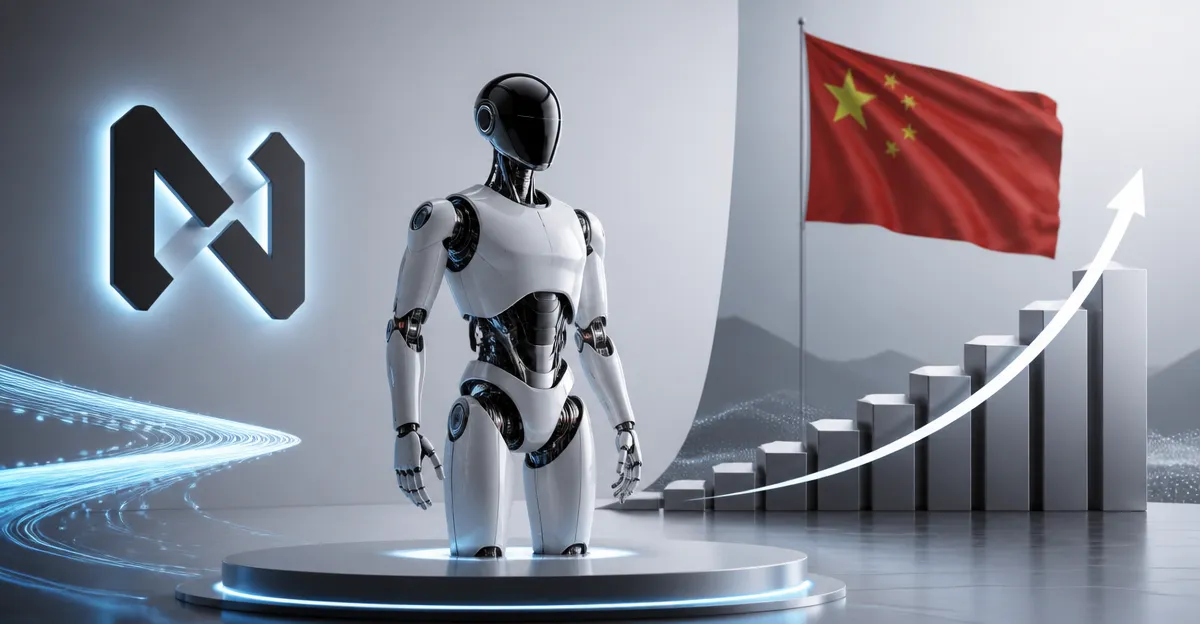
October 30, 2026, (Inside AI) — Noetix Robotics, a Chinese humanoid robot maker founded in 2023, has confidentially filed for a Hong Kong listing, according to media reports, potentially targeting a 2027 flotation. The move caps a three-year strategy that began with an unusually cheap programmable humanoid called Bumi, priced at RMB9,998, and now extends to embodied-intelligence research and overseas expansion.
The company's founder, Jiang Zheyuan, left his doctoral studies at Tsinghua University in 2023 to build machines that could first move reliably, then think. That sequencing decision, made when AI models were changing rapidly, has shaped every subsequent choice about manufacturing, pricing and capital.
Noetix's early bet was that a capable body at a consumer price could generate revenue and real-world experience before the intelligence stack matured. Bumi, launched in October 2025, targeted programming education and companionship. Children could program its movements and watch it dance. Parents and schools could buy a humanoid without waiting for general-purpose domestic labor to become commercially viable.
The strategy worked well enough to attract public attention. Noetix's N2 robot finished second in the 2025 Beijing humanoid half-marathon. In 2026, its robots appeared alongside comedian Cai Ming in a sketch on China's Spring Festival Gala. At the AWE exhibition in March, Jiang said orders had surged after the gala and set a target of more than 10,000 Bumi sales during 2026.
Read: China Humanoid Makers Face Challenge of Putting Robots to Work
Can A Cheap Body Fund An Expensive Brain?
That target tests more than manufacturing capacity. It examines whether Noetix can preserve the economics designed into Bumi while producing and supporting it in much larger numbers. Jiang identified component availability and production-line management as central challenges. A missing part can stop an entire machine from being completed. As monthly output rises, the company must train and manage a larger workforce while maintaining assembly quality.
Every reworked unit, delayed delivery and service visit consumes part of the margin that a low selling price leaves available. The manufacturing milestone therefore carries financial weight, not just operational symbolism.
By September, Noetix had made its next technical commitment explicit. It launched the embodied-intelligence sub-brand Scalabot and the HERON world-model architecture, extending its ambitions into how robots understand environments and learn to act within them. The company had begun assembling a dedicated intelligence team in July 2025, according to Jiang's September interview with Caijing.
His logic connects the two activities. Cheaper, reliable machines can be deployed more widely. Those deployments can create opportunities to collect experience for training better models. But making that connection productive requires another layer of engineering. A robot in a classroom generates experience, yet useful training data must still be selected, recorded, organized and connected to tasks the company wants its models to learn. A large installed base creates access to potential data. The collection and training system determines its value.
Jiang told 21st Century Business Herald that intelligence research had become a major area of expenditure. He also described hardware as a potential source of funds for that work. This is the financial hinge in Noetix's strategy. The body-first approach opened an earlier route to revenue. The company now wants that operating business to help support a more expensive effort whose commercial returns will take longer to develop.
External capital helps bridge the timing. Its backers include Chendao Capital, an investment platform associated with CATL. A prospective Hong Kong listing would take that financing journey into public markets, where investors would be able to examine more closely how hardware sales and research spending fit together.
Read: China’s Humanoid Robot Boom: When Is the ChatGPT Moment?
The listing filing, if confirmed, would arrive as Chinese humanoid robot makers face growing scrutiny over valuations and delivery timelines. Several peers have announced ambitious production targets while reporting limited shipments. Noetix's decision to disclose a Hong Kong application suggests it wants public-market capital before the intelligence business matures. That timing carries risk. Investors may reward the hardware revenue but question the research spending that has no near-term return.
Noetix's domestic route has combined educational demand, accessible hardware and unusually broad public exposure. Its overseas expansion will test how much of that combination travels. At CES in January, co-founder Zhang Shipu outlined five target regions: North America, Europe, the Middle East, Southeast Asia, and Japan and South Korea. He described an ambition to reach thousand-unit scale in overseas expansion during the second quarter, supported by local deployments, customer service and repeatable reference projects.
That program involves more than shipping robots abroad. Schools need teaching materials and support. Distributors need spare parts and repair arrangements. Families need a reason to keep using the product after its novelty fades. Noetix has some of those relationships to build from in China. An investor, Beijing Industrial Development Investment Management, reported partnerships with programming-education provider Codemao and retailer Kidswant, alongside deployments and donations involving schools. These connections show how a robot can become part of an existing educational or retail system.
Overseas growth will require comparable connections in markets with different curricula, languages and purchasing habits. The product's price can win attention, but local usefulness and support will determine whether that attention becomes a durable business.
Noetix's first move was to make a humanoid affordable enough to enter more classrooms and homes. That choice has given it a product to sell while the broader intelligence problem remains under development. It is now trying to make that early foothold carry three ambitions at once: larger production volumes, more capable intelligence and international growth. Building the body first won Noetix a place in the market. The next stage is to make that place valuable enough to finance everything it still wants the robot to become.