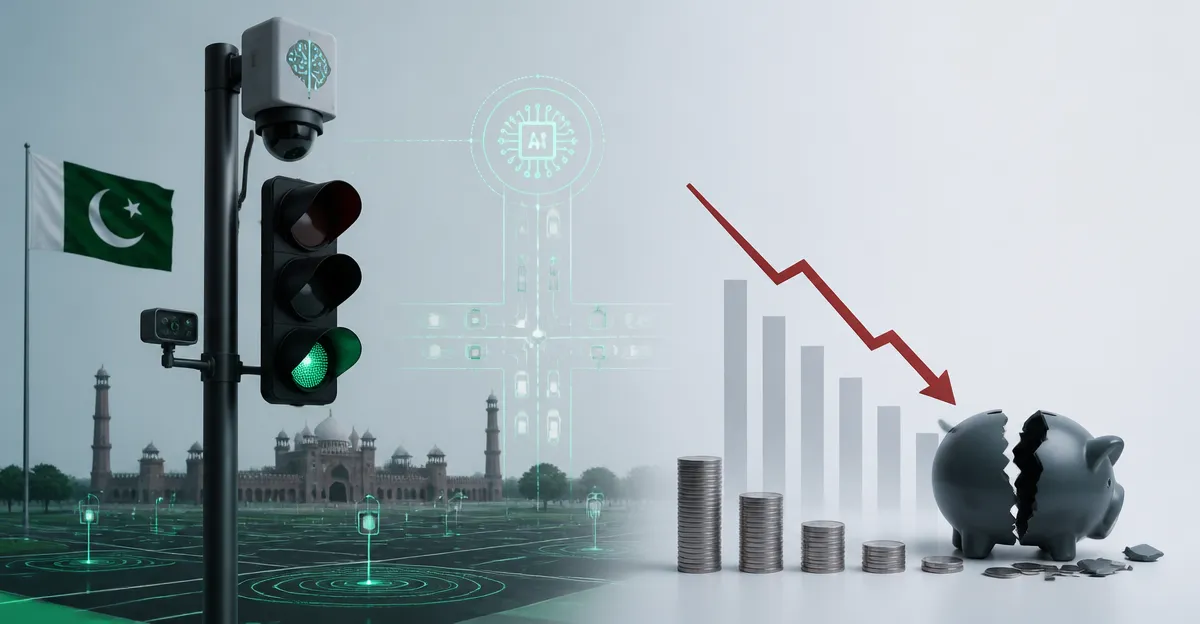
October 30, 2026, (Inside AI) — Lahore's plan to deploy AI-based vehicle video detection traffic signals has hit a funding wall. The Traffic Engineering and Planning Agency (TEPA) has asked the Punjab government to release more than Rs580 million to complete the project, after receiving only Rs10 million in the current fiscal year.
The project, approved at a cost of over Rs590 million, has already completed a successful pilot phase. TEPA's chief engineer has sent a summary to the Punjab Housing Department requesting the funds, according to sources. Around 30 percent of the total work, including the pilot, is done. Modern pelican signals have been installed at locations such as Adda Plot and Jati Umra Chowk. At the remaining sites, signals will use automated vehicle video detection.
The agency wants the full amount released within this fiscal year to finish on time and improve traffic flow through AI-enabled signals. The shortfall threatens to delay a project that has already shown promise in its pilot.
Why The Funding Gap Matters
The gap between approved cost and actual disbursement is stark. TEPA has received just 1.7 percent of the total project cost. Without the remaining funds, the agency cannot install the video detection systems at the remaining sites. These systems use cameras and machine learning to detect vehicles and adjust signal timing in real time, a departure from fixed-time signals that often worsen congestion.
Read: Nvidia Backs Nscale Data Center
Lahore, a city of over 13 million people, struggles with chronic traffic congestion. AI-driven signals could reduce waiting times and emissions. But the project's success depends on timely funding. The pilot phase proved the concept works. Now, the scale-up is stuck in bureaucratic limbo.
This is not the first time a smart traffic project in Pakistan has faced funding delays. Similar initiatives in Karachi and Islamabad have also encountered budget constraints. The pattern raises questions about the government's commitment to modernizing urban infrastructure.
An official who spoke on condition of anonymity said the summary has been sent but no timeline for release has been given. TEPA has urged the government to release the full amount within the current fiscal year.
The project's fate now rests on the Punjab government's ability to prioritize technology-driven solutions over other budgetary demands. With the pilot complete, the agency has demonstrated the system's viability. The question is whether the government will provide the resources to finish the job.
Read: Curbing Data Center Energy Use
For now, the AI signals remain a promise unfulfilled. The pilot sites show what is possible. The remaining sites await the funds that would bring them to life.