September 18, 2026, (Inside AI) — In a midterm election year defined by economic anxiety, a new political fault line is emerging from an unexpected source. The artificial intelligence debate, once confined to think tanks and tech boardrooms, has begun seeping into campaign rhetoric and voter consciousness. But whether it will actually sway ballots in November remains an open question.
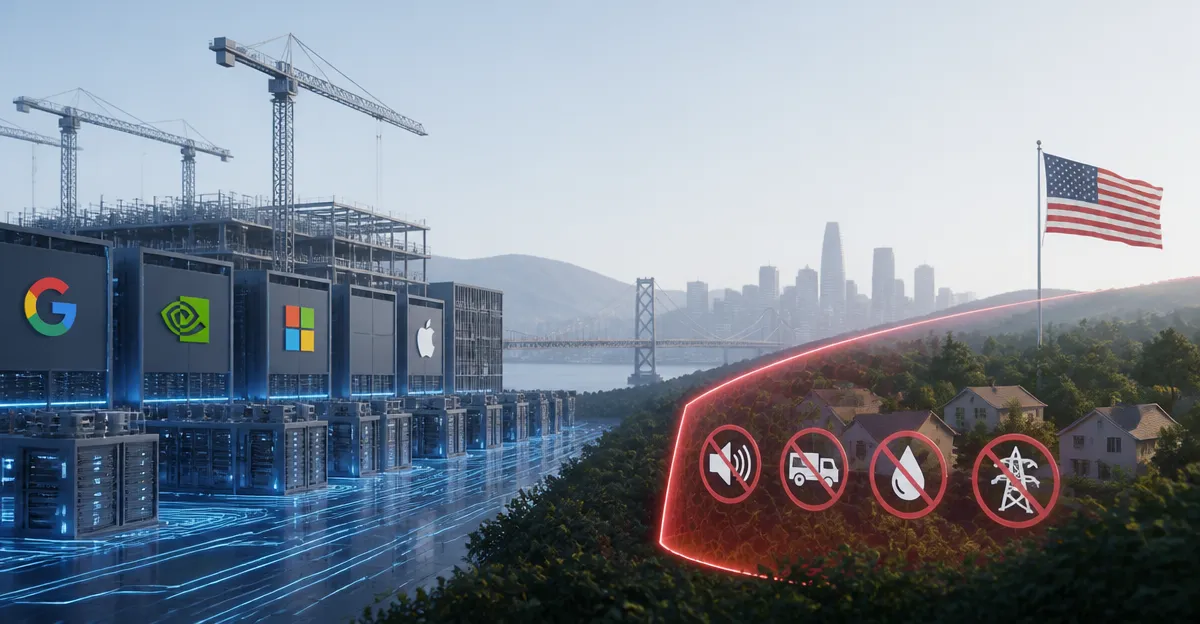
The shift became apparent last week at the Republican midterm convention in Dallas, where AI surfaced not as a philosophical debate about machine consciousness, but as a kitchen-table concern. Voters there spoke about power bills, water consumption, and the creeping presence of data centers in their communities. The conversation was less about killer robots and more about the cost of cooling servers.
Then, within days, the narrative expanded. Fresh warnings from prominent AI researchers and industry leaders, including Anthropic CEO Dario Amodei, OpenAI CEO Sam Altman, and xAI founder Elon Musk, about the difficulty of controlling advanced AI systems injected a new sense of urgency into Washington's policy circles. The existential risk conversation, long simmering in academic and tech enclaves, suddenly had political oxygen.
Senator Bernie Sanders, the progressive independent from Vermont, and Steve Bannon, a close ally of President Donald Trump, appeared at the same event calling for AI guardrails, an unlikely pairing that underscored how the issue cuts across ideological lines. Campaigns are now scrambling to define their positions, and lawmakers on both sides of the aisle are weighing new restrictions.
Read: Trump Faces Bipartisan Backlash in Congress Over AI Regulation Push
Trump, however, offered a different take. In a post on Truth Social, he argued that slowing AI development would only benefit China and suggested that he himself was the only oversight the technology required.
"The only control or 'guardrails' that AI needs is a STRONG AND SMART (High IQ!) PRESIDENT, and the U.S.A. has that, in spades!" Donald Trump, President of the United States, wrote on Truth Social.
The White House has not issued a formal policy response to the recent warnings from AI leaders. Inside AI could not independently verify the extent of internal discussions on the matter.
Voters Are Uneasy, But Not Yet Mobilized
Despite the escalating rhetoric, polling suggests that AI remains a secondary concern for most voters. A New York Times/Siena poll found that 61% of likely voters opposed building new AI data centers, a significant majority. Yet when asked what mattered most to their midterm vote, AI and data centers barely registered. The cost of living, the economy, immigration, and foreign wars continue to dominate voter priorities.
That disconnect points to the strange politics of AI right now. There is plenty of unease, but it has not yet settled into a single political argument or become a clearly salient midterm issue. Different parts of the debate are resonating with different voters, making it harder for campaigns to know what message, if any, will stick.
The scattered nature of the concern is a challenge for both parties. For Democrats, the focus on data centers and energy costs aligns with broader climate and consumer protection themes. For Republicans, the emphasis on national security and competition with China provides a different framing. Neither has yet produced a cohesive pitch that resonates across the electorate.
With more than six weeks until Election Day, AI could still become a bigger midterm issue. Even if it does not, the fight could loom much larger by the 2028 presidential election as the technology advances, data centers spread, and Washington is forced to decide how much or how little to regulate it.
For now, the debate is still taking shape. Americans are talking about it, but many are still figuring out which warnings are grounded in reality and which are political hallucination and whether any of it matters enough to shape their vote.