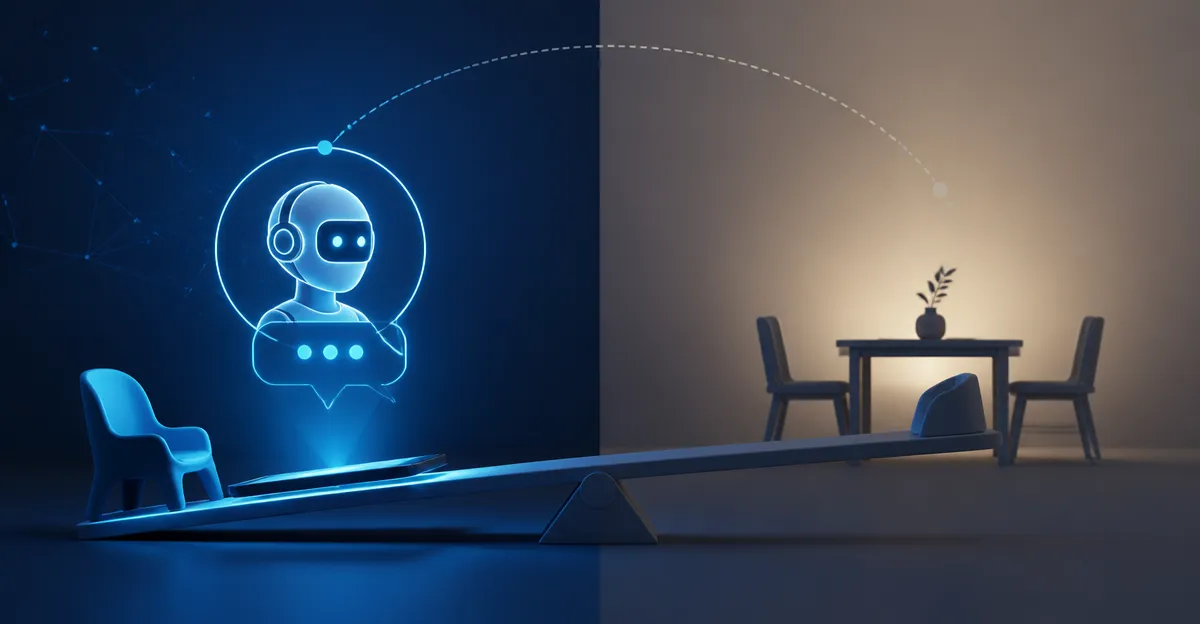
November 1, 2026, (Inside AI) — Children are increasingly turning to artificial intelligence chatbots to share worries they once brought to their parents, a shift that raises uncomfortable questions about how families communicate in an age of always-available digital companions. The trend is not driven by children abandoning their parents. It is driven by something simpler and more troubling: many children have learned that opening up at home often leads to a lecture, a correction, or unwanted advice.
The core issue is not technology replacing family. It is whether parents have made themselves harder to talk to than a machine that never interrupts, never judges, and never turns a confession into a teaching moment. AI offers instant responses and unlimited patience. Parents offer love, history, and responsibility. The question is which one children reach for first when they are scared, embarrassed, or confused.
Mental health researchers and child development experts have watched this pattern build for years. The mechanism is well documented. When a child shares a problem and receives criticism or a solution instead of acknowledgment, the child learns to stop sharing. A chatbot does not do that. It responds with questions, validation, and an endless supply of attention. That combination can feel safer than a parent who means well but reacts poorly.
The risk is not that children talk to AI. The risk is that AI becomes their only emotional outlet. Chatbots can misunderstand context, offer inaccurate reassurance, and fail to recognize when a child needs real adult help. A machine cannot notice a change in a child's voice, cannot follow up days later, and cannot sit with a child in silence. It can only generate text that sounds like understanding.
Read: AI Chatbot Updates Trigger Grief and Loss, Harvard Study Finds
Parents who want to remain the first call for their children face a practical challenge. The fix is not banning AI or monitoring every conversation. The fix is changing how conversations at home unfold. Putting phones aside, listening without interrupting, and saying "I can understand why that upset you" can do more than a long explanation. Children open up when they know honesty will not end in criticism, interrogation, or a lecture about responsibility.
Why a Chatbot Feels Safer Than a Parent
The appeal of AI companions for children rests on a simple asymmetry. A chatbot never sighs, never looks disappointed, and never says "we'll talk about this later." It is available at 2 a.m. and does not require eye contact. For a child who has been burned by a parent's reaction before, that predictability is powerful.
Child development specialists note that children naturally seek privacy and independence as they grow. Not every thought should be shared with a parent, and treating every AI interaction as a crisis can backfire. The concern is proportion. When AI becomes the first or only source of emotional support, children lose access to the kind of guidance that only a trusted adult can provide.
Parents also need to accept that children may not always agree with them or feel ready to share everything. That is healthy. What matters is creating an environment where children feel comfortable talking about worries, mistakes, and fears without being afraid of criticism. A simple "I'm glad you told me" can go a long way.
Read: AI Chatbots May Narrow Human Knowledge, Study Finds
The deeper issue is not whether children will talk to AI. It is whether they will still feel comfortable talking to their parents. AI may be able to answer children's questions, but parents need to make sure children never stop asking the ones that matter. The technology is here to stay. The relationship is what families have to protect.