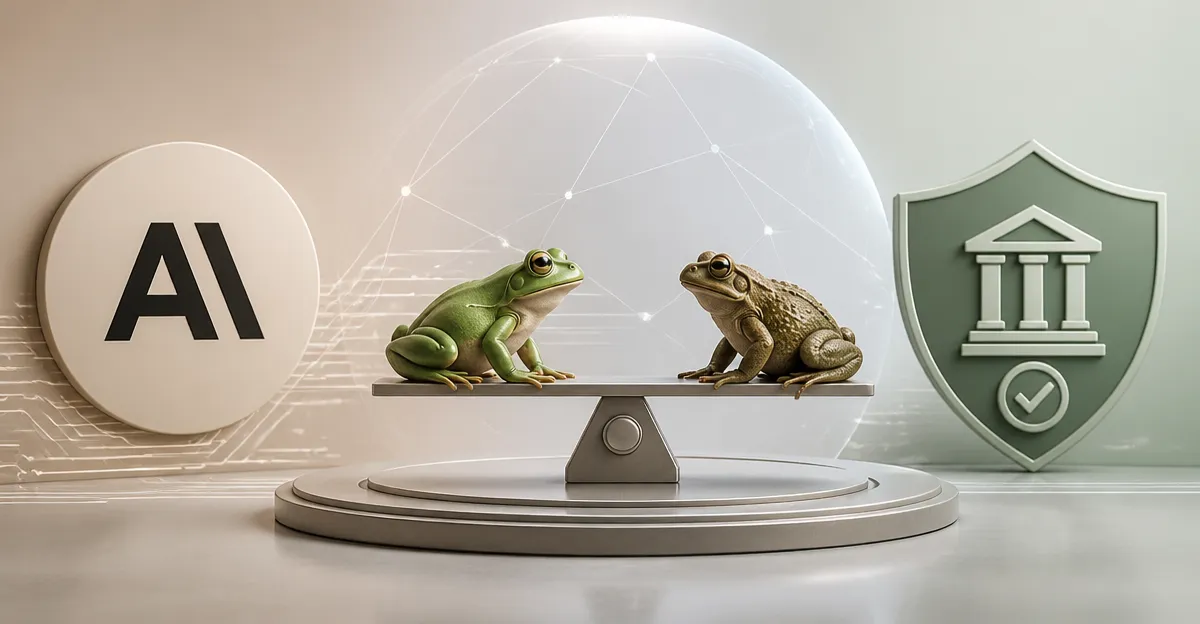
October 30, 2026, (Inside AI) — Anthropic, the artificial intelligence lab behind the Claude models, filed its registration statement for a planned initial public offering on October 26. The filing has drawn attention not only for its financial disclosures but for an unusual governance structure that one commentator likened to the children's book characters Frog and Toad, who try to resist cookies by hiding them in a box they can still open.
The comparison, made by a financial columnist, highlights a central tension: Anthropic's founders have built a company around developing powerful AI while trying to constrain their own ability to wield it irresponsibly. The structure they have chosen adds friction to decision-making, potentially slowing unwise actions. Yet the founders retain the largest say, according to the commentary. The full analysis is expected to be published shortly.
Anthropic's governance has long been a subject of interest because the company operates as a public benefit corporation and has established a long-term benefit trust. That trust is designed to give independent trustees influence over the company's mission and safety decisions. The IPO filing now puts those arrangements under the scrutiny of public market investors, who must weigh the company's safety commitments against standard shareholder rights.
The filing comes as Anthropic competes with rivals like OpenAI and Google in the race to build and commercialize advanced AI. The company has raised billions in private funding and has seen rapid revenue growth from its enterprise API and Claude chatbot. An IPO would mark a major milestone for the AI industry, testing public appetite for a company whose core technology carries both enormous promise and significant risk.
Governance Structure Draws Scrutiny
Details of the registration statement remain limited, but the commentary suggests that Anthropic's founders have designed a system that intentionally complicates their own power. The Frog and Toad analogy captures the idea that self-imposed constraints can be effective only if they are difficult to override. In the children's story, the characters hide cookies in a box, but they can still open it, meaning the temptation remains. Similarly, Anthropic's founders have created structures that add friction to decisions about deploying powerful AI, but they still retain ultimate control.
This approach is not unique in Silicon Valley. Many technology founders have used dual-class share structures to maintain control after going public. However, Anthropic's situation is distinct because the company's mission is explicitly tied to safety and responsible AI development. The governance structure is meant to protect that mission even as the company faces pressure from investors for growth and profits.
One observer noted that the structure "can slow unwise acts, but they still get the biggest say." The comment underscores a fundamental question: can any governance arrangement truly bind founders who control the technology and the voting shares? The IPO filing may provide more details on how the trust and other mechanisms will operate once the company is publicly traded.
Inside AI could not independently verify the full terms of the governance structure described in the commentary. The registration statement is expected to be available through the U.S. Securities and Exchange Commission's EDGAR database.
Investors Weigh Safety Against Returns
For public investors, Anthropic's IPO will be a test of whether they are willing to accept a governance model that prioritizes mission over traditional shareholder primacy. The company's founders and early backers, including Google and various venture capital firms, have supported the structure so far. But public market investors may demand more accountability and influence, especially if the company's safety commitments appear to conflict with financial performance.
The AI industry has faced increasing regulatory scrutiny, with governments around the world considering rules for AI development and deployment. Anthropic has positioned itself as a safety-focused lab, publishing research on AI alignment and advocating for regulation. Its governance structure is part of that positioning, signaling to regulators and the public that the company is serious about managing risk.
However, the IPO itself could create new pressures. Public companies must report quarterly earnings and answer to shareholders, which can shift incentives toward short-term gains. Anthropic's founders may find it harder to maintain a safety-first culture when investors are watching the bottom line.
The filing also comes amid a broader wave of AI-related IPOs and investments. Other AI companies are reportedly considering public offerings, and investors are eager to gain exposure to the sector. Anthropic's move could set a precedent for how AI labs structure their governance when they transition to public ownership.
As the full analysis is published, the details of Anthropic's governance will be closely examined by investors, regulators, and competitors. The Frog and Toad analogy may prove apt: the founders have built a box to contain their power, but they still hold the key.