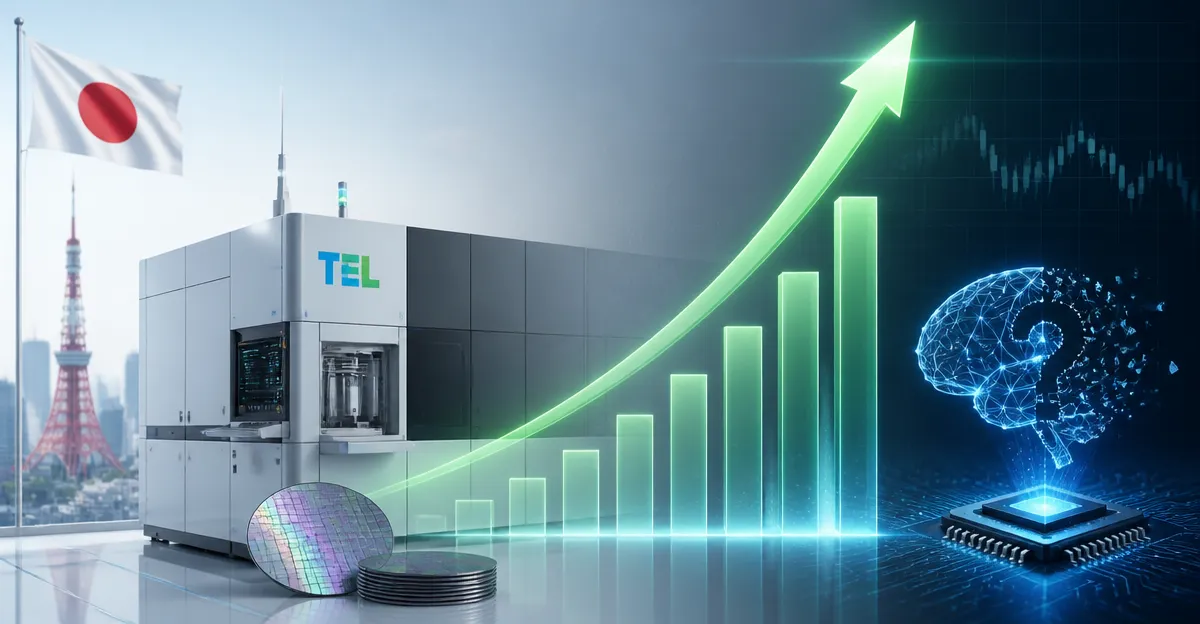
October 30, 2026, (Inside AI) — Tokyo Electron forecast an 87% jump in operating profit to 1.17 trillion yen ($7.41 billion) for the fiscal year, the Japanese chipmaking equipment supplier said Friday. The guidance exceeded analyst expectations and signals that demand for semiconductor manufacturing tools remains strong despite a sharp selloff in AI-related stocks.
The company also announced a share buyback of up to 150 billion yen for some 25 million shares. Its shares closed down 5% ahead of the earnings release, reflecting broader market anxiety.
The upbeat forecast lands at a moment of tension in global markets. Investors have grown wary that massive spending on AI infrastructure may not generate adequate returns. Overnight, Alphabet, Intel, and Amazon all fell amid continued high capital expenditure. The caution spread to Asia on Friday, pressuring technology stocks including South Korea's SK Hynix, Taiwan's TSMC, and Japan's Advantest.
Tokyo Electron's results suggest a different reality on the ground. The company supplies equipment for deposition and etching processes to chipmakers. Its customers, the manufacturers building AI data centers, continue to place orders at a robust pace.
Read: Foxconn Chief Downplays AI Bubble Concerns, Sees Strong 2027 Growth
"In the various conversations we are having with our customers, interest is very strong," Tokyo Electron Chief Financial Officer Hiroshi Kawamoto told reporters. "At present, there are no signs that this is slowing down."
The divergence between supplier confidence and investor skepticism is not new. During previous technology buildouts, equipment makers often reported strong demand while stock markets punished companies with high capital expenditures. The current cycle echoes that pattern. Asian chip suppliers continue to post strong results. SK Hynix said this week it would return about $75 billion to shareholders as higher memory prices boost profits.
Tokyo Electron's forecast underscores a key dynamic: the AI boom is not just about software and models. It runs on physical infrastructure, and the companies that build the tools for that infrastructure are seeing tangible demand. The buyback signals management confidence in cash flow. The 5% share decline before earnings shows that investors remain cautious about whether the good times will last.
Read: Samsung Q3 profit jumps nearly nine-fold as AI memory boom lifts chip earnings
For now, the order books tell a story of sustained investment. Whether that translates into lasting returns for the broader AI ecosystem remains an open question. Tokyo Electron's numbers offer one data point: the picks and shovels of the AI gold rush are still selling fast.