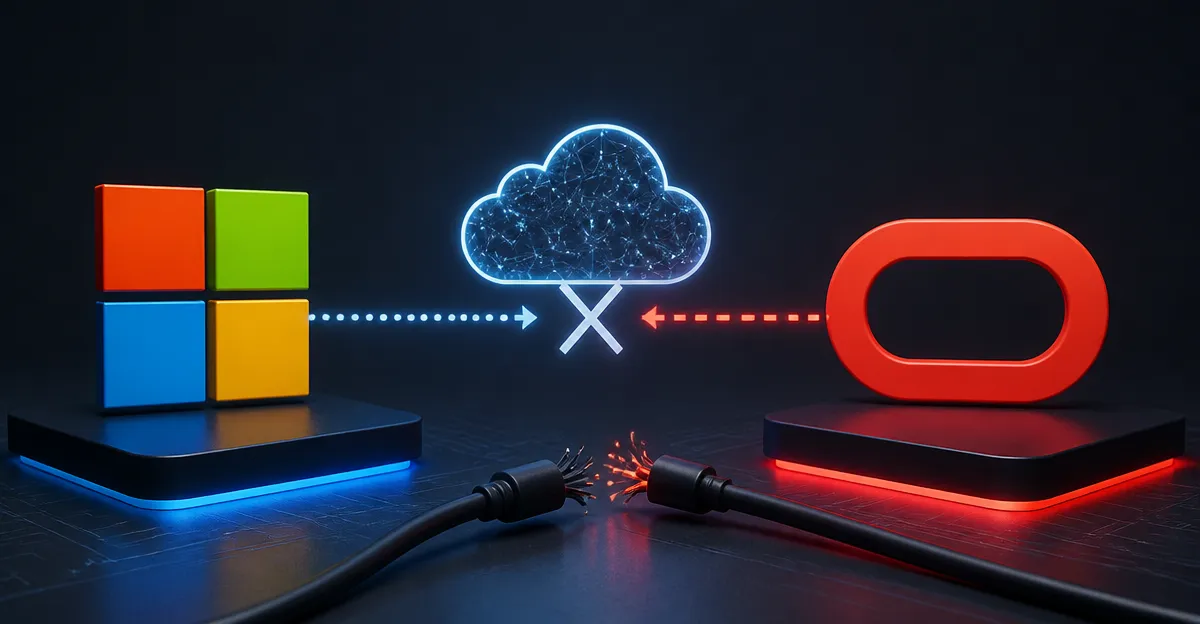
November 8, 2026, (Inside AI) — Microsoft is winding down a multi-year agreement to rent artificial intelligence computing capacity from Oracle, declining to renew a contract that once powered its Bing search enhancements, according to sources familiar with the matter. The move, first reported by Bloomberg, marks a significant shift in how the Windows maker sources the massive processing power required for its AI ambitions.
The decision to turn off rented capacity from Oracle Cloud Infrastructure (OCI) in recent months comes as Microsoft reassesses billions of dollars in cloud partnerships. The contract, announced in 2023, was designed to give Microsoft access to OCI's AI infrastructure to power an AI-assisted version of its Bing search engine. Financial terms were never disclosed.
The core reason for the non-renewal, according to the sources, is that the Oracle hardware relied on an older generation of Nvidia chips. As Microsoft's AI models have grown more complex and demanding, the older hardware no longer met its evolving needs, making the rented capacity less valuable over time.
An Oracle spokesperson pushed back on any suggestion of weak demand for its cloud services, stating that interest remains robust across its portfolio.
"Demand for OCI's (Oracle Cloud Infrastructure) AI infrastructure remains strong, including for earlier-generation GPUs," an Oracle spokesperson told Reuters.
Microsoft did not immediately respond to a request for comment. Shares of both companies were flat in afternoon trading, though both stocks had already come under pressure this week. The market jitters followed a Democratic midterm election sweep in the US, which raised concerns about tighter regulatory scrutiny that could threaten the AI industry's rapid expansion.
Microsoft Tightens Grip On Its Compute Supply Chain
The Oracle pullback is not an isolated event. It forms part of a broader pattern of Microsoft rethinking how it secures computing capacity to maximize returns on its massive AI investments. The company is moving from a strategy of renting capacity from third-party providers to exercising tighter control over its supply chain.
This shift is already having ripple effects. AI cloud company IREN said on Thursday it had delayed some infrastructure deliveries after Microsoft requested changes to its network design. The move pushed back IREN's target for bringing more than $4 billion in annualized revenue capacity online from year-end to January, with a possible further delay until late February.
Earlier on Thursday, Bloomberg News reported that Microsoft was tightening oversight of some data center projects run by neocloud providers including IREN, Nebius, and Nscale amid delays and rising costs. These actions suggest Microsoft is prioritizing efficiency and cost control over the rapid, sometimes chaotic, expansion that has characterized the early years of the AI boom.
This consolidation of control carries a notable implication for the broader AI infrastructure market. By standardizing network designs and phasing out older hardware, Microsoft is effectively setting a higher bar for its vendors. Smaller neocloud providers, which built their business models on renting out capacity with less stringent requirements, may now face pressure to upgrade their fleets or risk losing their largest customers. The era of easy capacity contracts appears to be giving way to a more demanding, performance-driven procurement landscape.
The original 2023 deal between Microsoft and Oracle was seen as a major validation of OCI's AI capabilities. At the time, it signaled that even the largest cloud providers were willing to look outside their own data centers to meet the surging demand for AI compute. The non-renewal of that contract, however, suggests that Microsoft has since scaled up its own infrastructure or found more efficient ways to secure capacity that better aligns with its latest Nvidia chip generations.
For Oracle, the loss of the Microsoft contract is a reputational blow, even if the financial impact is unclear. The company has been aggressively marketing its OCI AI infrastructure as a cost-effective alternative to the larger cloud providers. The spokesperson's emphasis on "earlier-generation GPUs" is a tacit acknowledgment that the hardware in question was not cutting-edge, but it also frames the demand for such equipment as a separate, still-healthy market segment.
The broader context is one of intensifying competition and capital discipline in the AI cloud space. Microsoft, which has invested heavily in OpenAI and its own data centers, is under pressure to show that its AI spending is generating returns. Winding down less efficient contracts is a straightforward way to trim costs. The delays at IREN and the increased oversight of neocloud partners indicate that Microsoft is now managing its AI supply chain with the same scrutiny it applies to any other major capital expenditure.
For the industry, the message is clear: the days of breakneck, unchecked expansion in AI infrastructure may be transitioning into a phase of consolidation and optimization. Companies that cannot meet the evolving technical and operational standards of the hyperscalers may find themselves on the outside looking in. The coming quarters will reveal whether this is a temporary correction or a permanent shift in how AI computing power is bought and sold.

If a research paper dropped this week, Mahesh has already read it. He covers AI tools and vibe coding for builders who need to know what is worth their time and what is not.