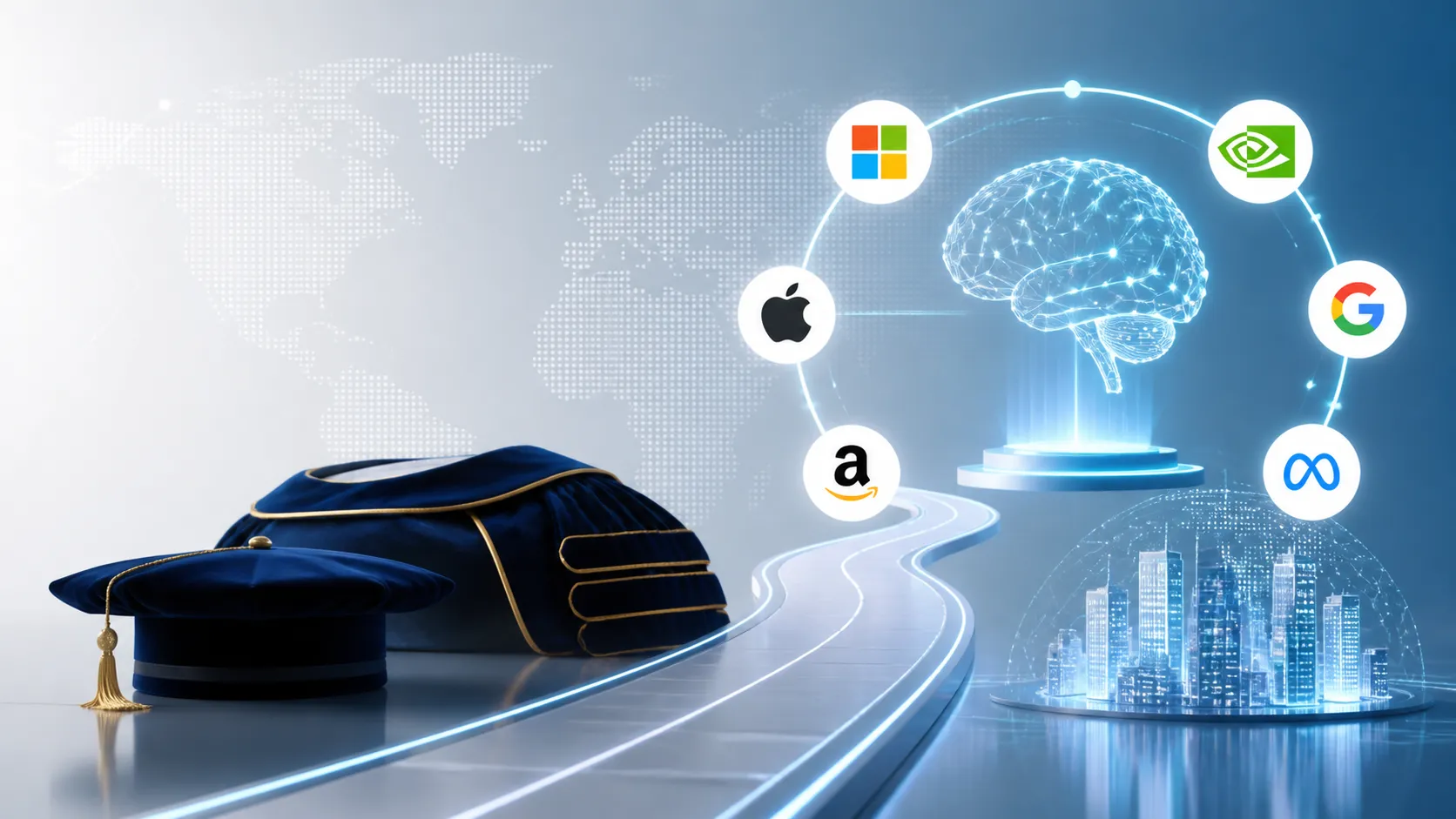
June 17, 2026, (Inside AI) — A new Doctor of Business in Artificial Intelligence (DBAI) program is drawing senior corporate leaders who want to embed AI into their company’s core strategy, not just bolt it onto existing operations.
The program, led by Professor Xu, targets top decision-makers. It pushes them to move from “AI-first” add-on approaches to truly AI-native models where AI is part of the enterprise’s operating system from day one.
Why a veteran tech leader went back to school
John Li, a participant with over 20 years in ICT leadership at HP, PCCW, and IBM, and founder of cybersecurity firm eWalker Solutions, enrolled to stay relevant.
“If you don’t want to be replaced by AI, the only way is to understand it deeply,” Li said. He acknowledged the rapid pace of change left him few alternatives.
Read: AI Transformation Forces US Media Firm to Cut 200-Person Analyst Program
Li’s hands-on projects include using AI for red-team and blue-team cybersecurity simulations. These uncover system weaknesses faster than traditional methods. But he warns against over-reliance.
“You cannot just fire people and rely only on AI,” Li cautioned. “Human judgment remains indispensable.”
Designing a curriculum for AI-native leadership
Professor Xu’s diverse background—from civil engineering to psychology, a Wharton MBA, global investment, and CTO roles—shapes the program’s design.
“AI transformation is never only a technical issue. It is simultaneously a strategic issue, an organisational issue, a governance issue, a human issue and ultimately a leadership issue,” Xu said.
The program rejects AI-first thinking. Instead, it teaches leaders to treat AI as core infrastructure. “AI-native leadership means treating AI not as an add-on, but as part of the enterprise’s core operating system,” Xu explained.
Participants must define real business problems, test assumptions, and measure outcomes. One student built virtual avatars for teaching. Others in cybersecurity run AI-powered attack and defense simulations.
Read: How AI-Native Companies Turn Workflows Into Operating Capability
Hong Kong’s push for AI talent at the top
The DBAI arrives as Hong Kong invests heavily in AI. The 2026-27 budget allocates HK$50 million for public training and HK$2 billion for digital and AI education in schools.
As chairman of the Hong Kong AI Foundation, Xu sees the DBAI as vital for the top of the talent pyramid. “Hong Kong cannot become an AI hub only by buying hardware or training more users,” he said. “It also needs leaders who can translate AI capability into sector-level transformation.”
The program attracts students from mainland China, Singapore, and Belt and Road countries. Li recalled classmates from oil trading and fintech sharing uses unfamiliar in Hong Kong, sparking collaboration talks.
Jobs, risks, and the rise of one-person companies
Xu cited a media firm that used AI automation and retrained staff, growing tenfold. “AI does not necessarily mean massive layoffs,” he said. “But the requirements for skills and talent have changed.”
He predicts AI will fuel “one person company” or “one person department” models. “It means one highly capable individual, supported by multiple AI agents, can now perform work that previously required a much larger team,” Xu said. This gives businesses new agility.
Li noted real risks: “including cybersecurity, data leakage, biased decisions and unclear responsibility.” Xu stressed keeping risks within controllable, auditable limits.
“The truth is usually not as dangerous as the most conservative people estimate, nor as risk-free as the most optimistic ones believe,” Xu said.
The weekend program gives access to computing resources, including government-backed GPUs. Li received university assistance to fund AI projects.
Xu said the biggest hurdle is moving from AI awareness to AI-native execution. Success, he added, would let Hong Kong build high-value services in finance and beyond.