November 11, 2026, (Inside AI) — Nvidia CEO Jensen Huang admitted to staff on November 8 that he was "unfaithful" to his wife, triggering an internal board investigation, a U.S. Department of Justice probe, and bipartisan calls for congressional scrutiny. The admission follows reports that his alleged extramarital partner, Chinese businesswoman Alice Huang, was recruited by China's Ministry of State Security to gather intelligence on him and influence Nvidia's China business. The claims remain unsubstantiated publicly, and China has denied them. The fallout now threatens to complicate U.S. chip export enforcement and Nvidia's role in the AI supply chain.
Nvidia shares fell about 5% on Monday morning, November 9, after the board announced its independent investigation, according to Yahoo Finance data. The probe is overseen by independent directors with outside counsel. The board stated it has "no reason to believe that either national security or NVIDIA secrets were compromised." The DOJ has opened its own inquiry, and three Republican House committee chairs have requested a voluntary closed-door briefing from Huang on November 18. A shareholder class action also accuses Nvidia of "false and misleading statements" about Huang's interactions with Alice Huang.
Who Is Alice Huang?
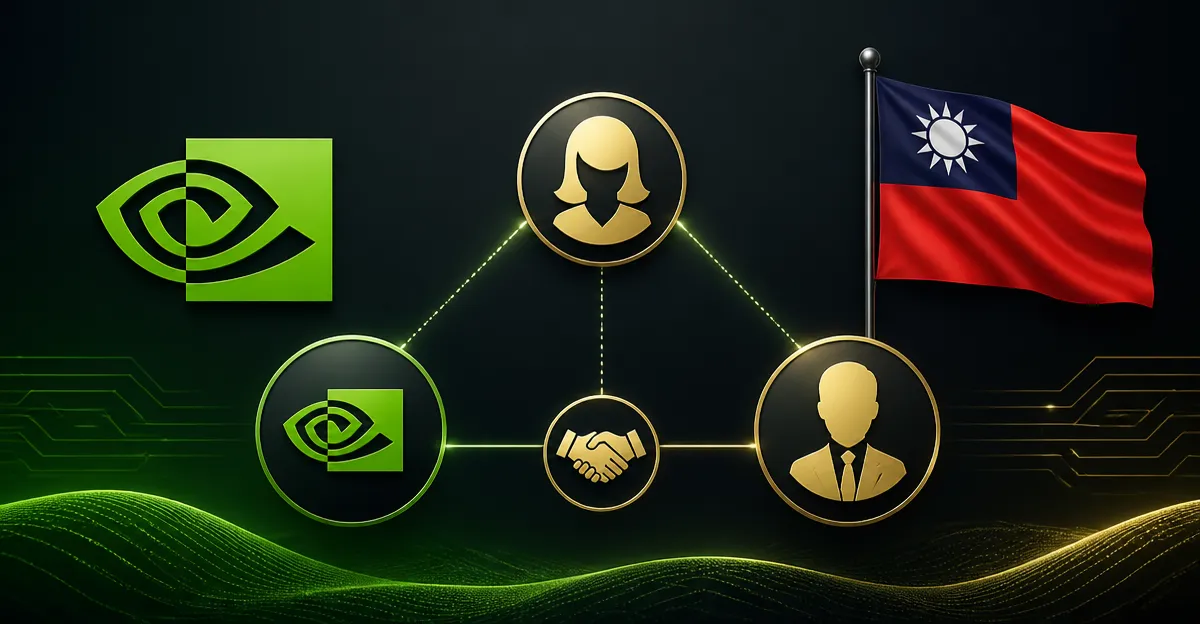
Alice Huang, also known as Huang Le, is a Chinese citizen who shares a surname with Jensen Huang but is not related to him, according to Reuters and AFP. Footage from a dinner in Taipei in May 2025 showed Jensen Huang putting his arm around Alice as she kissed him on the cheek; they were later seen leaving in the same car. A profile on Chinese financial database Simuwang lists four years in television journalism at CCTV and Hunan TV, then roles at HSBC and CITIC Securities. In 2016-17 she was an executive at Shanghai Hexi Investment Management. She became the controlling shareholder of Megaspeed International, a Singapore-based cloud computing firm formerly known as 7Road International, in March 2023.
U.S. intelligence officials concluded that Alice Huang was recruited by China's Ministry of State Security to gather information on Jensen Huang and potentially influence Nvidia's business with Chinese companies, according to reporting by The New York Times and the Financial Times. Reuters could not independently verify this assessment. China's foreign ministry spokesman Guo Jiakun called the accusations unsubstantiated and a smear campaign against China.
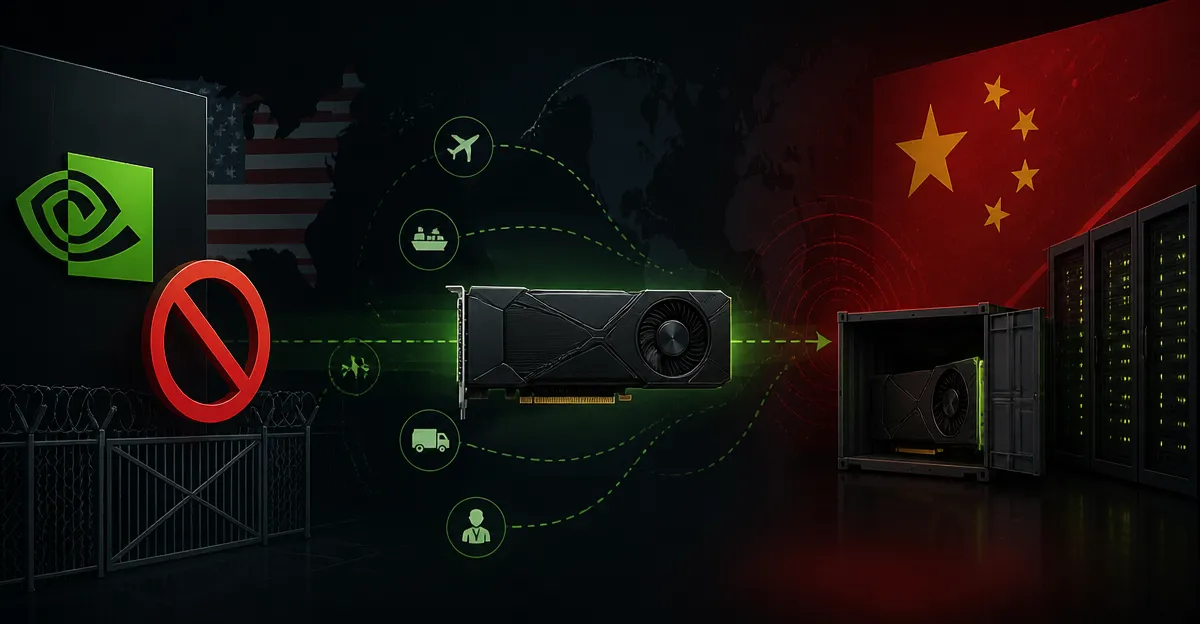
Megaspeed rents out computing power on advanced Nvidia processors. Shipping records show its Indonesian subsidiary imported Nvidia H100 processors and related hardware between 2024 and 2026. Short-selling firm Culper Research claims Megaspeed's balance sheet grew from $33 million at the end of 2023 to nearly $3 billion a year later, including about $2.9 billion in deposits from an unidentified source. The Information alleges a network run by Alice, her husband and her sister moved about 240,000 H100, H200 and A100 chips into China, with at least $7.5 billion in shipments since 2023. Reuters could not verify that report.
Singapore police said: "Investigations are ongoing into Megaspeed for suspected breaches of our domestic laws." Megaspeed says investigations found no evidence of illegal chip transfers.
The controversy has drawn high-level political attention. Secretary of State Marco Rubio oversaw a classified memo on Huang's relationship, circulated to top officials before President Trump's May trip to China, according to The New York Times. Huang was left off the May 11 list of executives for the Beijing trip, but he later joined Air Force One at a refuelling stop in Anchorage, Alaska. Trump said on November 9: "Certainly, it didn't make much of an impact on me." He added: "I really believe him." Trump also said the FBI is "looking into it in terms of something else," without providing details.
In his November 8 email to staff, Huang wrote: "I was unfaithful to my wife." He added: "There is no excuse for what I did. I am deeply sorry." He did not name anyone. Nvidia co-founded in 1993 and has led it ever since. He was born in Taiwan and moved to the U.S. as a child.
The timing of the revelations is particularly sensitive for U.S. chip export controls. On November 11, Reuters reported that a Chinese university with military links bought two Nvidia H200 chips despite being on a U.S. export blacklist. The case underscores the challenges of enforcing restrictions on advanced AI chips, especially when intermediaries like Megaspeed operate in third countries. Nvidia's internal review and the DOJ probe will likely examine whether company secrets or controlled technology were compromised through personal relationships.
The House committee briefing, scheduled for November 18, will be closed-door and voluntary. It remains unclear whether Huang will appear. The shareholder class action, filed in court, alleges that Nvidia made "false and misleading statements" about Huang's interactions with Alice Huang. No one named in the case has been charged. Alice Huang has not commented publicly.
As the investigations unfold, the case raises questions about the intersection of personal conduct and national security in the AI era. Nvidia's board says its review has just begun, and the FBI's inquiry remains opaque. For now, the facts on record are limited: Huang admitted an affair, the board is investigating, Singapore police are investigating Megaspeed, Congress has requested a briefing, and shareholders have sued. The espionage allegations, the extent of any chip diversion, and whether Huang knew anything remain unproven.

Sofia spent years studying how machines parse human language before pivoting to cover the systems now rewriting it. She reads technical papers the way others read news and looking for what the numbers are actually saying beneath the headlines.