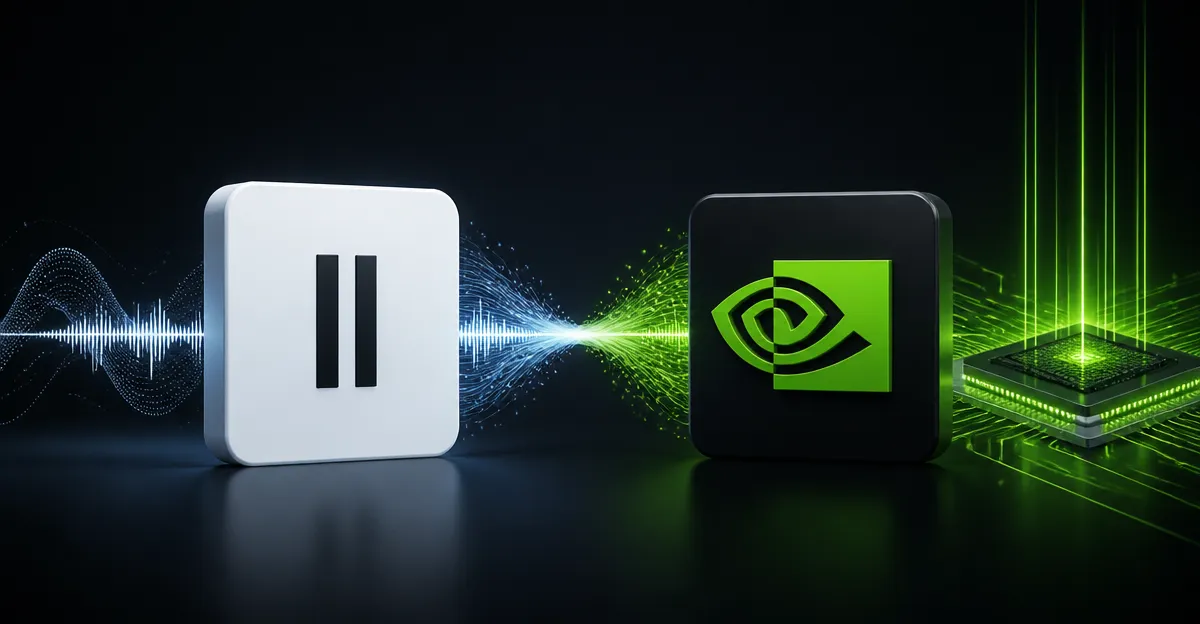
November 11, 2026, (Inside AI) — ElevenLabs announced a major expansion of its partnership with Nvidia at its New York Summit today, integrating Nvidia's Nemotron 3.5 Super VL model into its ElevenAgents voice platform and deploying the Vera Rubin computing architecture to meet enterprise and government demand. The deal deepens a relationship that began in 2022 and now extends to national-scale infrastructure, including Poland's Centralna e-Rejestracja health appointment system.
The partnership signals a strategic shift for ElevenLabs, which has moved from a text-to-speech vendor to a provider of voice agents that governments and enterprises rely on for critical services. Nvidia's investment, confirmed last year, and ElevenLabs' recent $300 million employee tender offer, which doubled its valuation to $22 billion, underscore the financial stakes behind this technical integration.
At the summit, ElevenLabs also unveiled new agent features: memory capabilities, established routines, and tools for users to architect entirely new agents. These additions aim to make voice agents more autonomous and capable of handling complex workflows, moving beyond simple query-response interactions.
Voice Agents Become Critical Infrastructure
ElevenLabs CEO Mati Staniszewski framed the expansion as a response to voice agents becoming "critical infrastructure." In a statement, he said:
"By combining our audio models and agents, with Nvidia's LLMs, accelerated computing and security stack, we're giving enterprises and governments the platform they need to deploy voice agents at massive scale." (Mati Staniszewski, CEO, ElevenLabs)
Nvidia CEO Jensen Huang echoed the sentiment, emphasizing the shift in human-computer interaction:
"For decades we adapted to computers -- keyboards, screens, menus. Now computers are learning to speak our language." (Jensen Huang, CEO, Nvidia)
Huang added that combining Nemotron reasoning with accelerated computing allows governments and enterprises to run secure voice agents on a national scale, making talking the fastest way to get things done.
The technical underpinnings of this expansion rely on Nvidia's Nemotron 3.5 Super VL, an open model designed to help AI agents understand human reasoning and complex workflows. By integrating this model, ElevenLabs' agents can better interpret user intent and manage multi-step tasks, such as scheduling appointments or handling customer service inquiries. The deployment of Nvidia's Vera Rubin architecture provides the computational muscle to support these agents at scale, ensuring low-latency responses and high reliability.
ElevenLabs' voice agents already power Centralna e-Rejestracja, Poland's national online health appointment platform. This deployment serves as a proof point for the partnership's ambition to bring voice agents to more governments worldwide. The companies also aim to extend these agents to robots, although details on that initiative remain sparse.
The partnership's evolution from GPU supply to deep technical collaboration mirrors broader industry trends. Nvidia has increasingly positioned itself as a full-stack AI company, offering not just hardware but also software and models. ElevenLabs, meanwhile, has leveraged Nvidia's technology to scale its audio models and agent capabilities. This symbiotic relationship could set a template for future AI infrastructure deals, where compute providers and application-layer startups co-develop solutions for regulated industries.
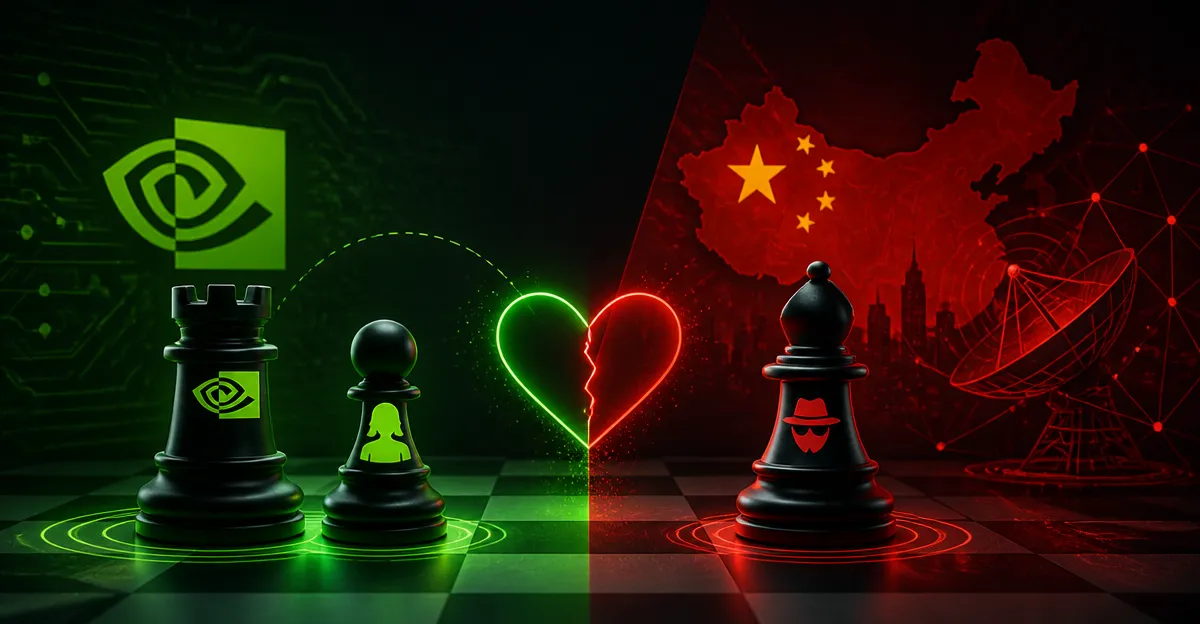
However, the expansion arrives amid turmoil for Nvidia. CEO Jensen Huang is currently embroiled in a national-security scandal involving an affair with a Chinese tech executive whom China allegedly recruited to spy on him and learn more about the company's AI technology. Huang pulled out of the ElevenLabs summit this week, and both the FBI and Nvidia's board of directors are investigating the relationship. Despite the inquiries, Huang will continue leading the chipmaker.
The scandal raises questions about Nvidia's governance and the potential risks to its partnerships. While ElevenLabs' deal appears technical and commercial, the reputational shadow over Nvidia's leadership could complicate future government contracts, especially as the companies target national-scale deployments. Neither company has commented on how the investigation might affect their collaboration.
Read: Nvidia Board Under Fire: Jensen Huang Affair Exposes Governance Gaps
ElevenLabs' financial trajectory remains strong. The $300 million employee tender offer in September valued the company at $22 billion, double its $11 billion valuation from a February funding round. This growth reflects surging demand for AI voice technology across customer service, healthcare, and public services. The company's partnership with Nvidia, which became an investor last year, has provided both capital and technical credibility.
As ElevenLabs and Nvidia push voice agents into governments and robots, the stakes extend beyond commercial success. Voice interfaces could become the primary way citizens interact with public services, raising issues of accessibility, privacy, and security. The integration of Nvidia's security stack suggests the partners are aware of these concerns, but the proof will lie in deployments like Poland's health system.
For now, the summit highlighted technical milestones and ambitious plans. Yet the absence of Huang, a key architect of the partnership, served as a reminder that even the most promising AI collaborations can be unsettled by human factors. The coming months will reveal whether the scandal impedes Nvidia's ability to support ElevenLabs' global expansion, or whether the companies can keep their focus on the technology.

Shamil has a low tolerance for AI that only works in controlled demos. He covers agentic systems and generative AI with the skepticism of someone who has seen too many “revolutionary” tools quietly disappear six months after launch.