November 12, 2026, (Inside AI) — President Donald Trump on Thursday suggested that Tim Cook, the executive chairman of Apple, should become the next chief executive of Nvidia, following the resignation of Jensen Huang amid an investigation into an extramarital relationship with a woman suspected of being a Chinese spy.
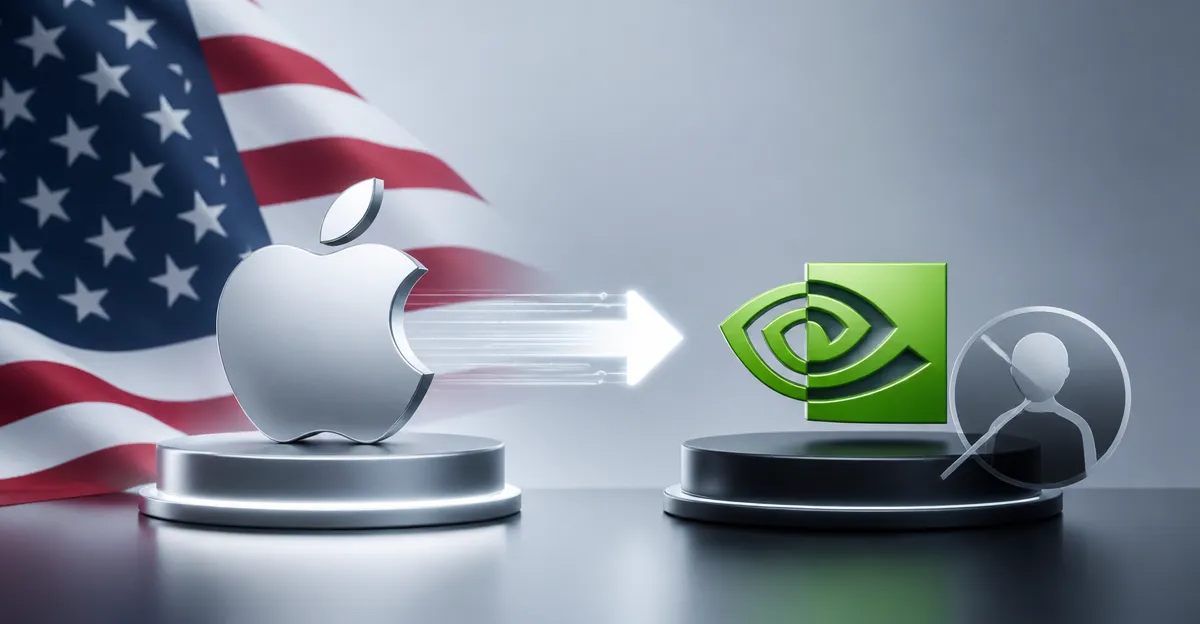
Trump made the proposal in his first public statement on Huang's departure, posting on Truth Social that Cook should replace Huang. The president praised Huang's tenure, saying he had done a fantastic job, and called Cook a legend. The post read: "NOW THAT Nvidia CEO JENSEN HUANG, who has done a fantastic job, has resigned, there is only one man to take his place - TIM COOK of Apple. A Legend replaces a Legend!" (Donald Trump, President of the United States, Truth Social).
Huang resigned after Nvidia opened an investigation into his affair. He acknowledged being unfaithful to his wife and apologized to his family. The admission followed a report that he had a romantic relationship with Alice Huang, a Singapore-based tech executive whom U.S. intelligence officials suspect of spying for China. The FBI has opened an investigation into the matter.
Nvidia announced that Colette Kress, the company's chief financial officer, will serve as interim CEO while the board of directors searches for a permanent successor. The company confirmed the leadership transition in a news release on Nov. 12.
Cook's Shift And The Succession Question
Cook stepped down as Apple's CEO on Sept. 1, a role he held since 2011, to become the company's executive chairman. The transition was announced in April. His move to Nvidia would be unusual given his current position and his long association with Apple.
Trump's suggestion comes amid his close ties to both Huang and Cook. Both men attended a White House State Dinner in September for Chinese President Xi Jinping and sat together at the same table. They were also part of Trump's entourage during his visit to China in May. Trump has been a strong proponent of artificial intelligence pushed by tech companies.
The president's endorsement of Cook for the Nvidia role raises questions about the independence of corporate governance at the chipmaker. Nvidia's board has not indicated any preference for Cook, and the search for a permanent CEO is ongoing. The company has not commented on Trump's post.
Earlier this week, Trump defended Huang as an honorable guy following initial reports on the affair and predicted the executive would be in good shape despite the FBI investigation. The president's latest statement marks a shift in tone, focusing on a successor rather than Huang's conduct.
Nvidia's stock has been volatile since Huang's resignation. Analysts have noted that the company's leadership transition comes at a critical time for the AI chip industry, as competition from rivals intensifies and demand for AI infrastructure continues to grow. The appointment of an interim CEO from within the finance ranks suggests the board is prioritizing stability.
Cook's experience at Apple, where he oversaw the company's expansion into services and wearables, could be relevant to Nvidia's efforts to broaden its business beyond chips. However, his lack of direct experience in the semiconductor industry may be a concern for some investors.
Trump's post did not address these concerns. The president has frequently weighed in on corporate matters, often using his platform to influence public discourse. His endorsement of Cook may carry weight with some shareholders, but it does not guarantee the board's support.
The investigation into relationship with Alice Huang continues. U.S. intelligence officials have not publicly commented on the case. Nvidia has not provided further details about the investigation or the circumstances of Huang's resignation.
As the board searches for a permanent CEO, the interim leadership of Colette Kress will be closely watched. Kress has served as Nvidia's CFO since 2013 and is well-regarded in financial circles. Her appointment may reassure investors seeking continuity.

Shamil has a low tolerance for AI that only works in controlled demos. He covers agentic systems and generative AI with the skepticism of someone who has seen too many “revolutionary” tools quietly disappear six months after launch.