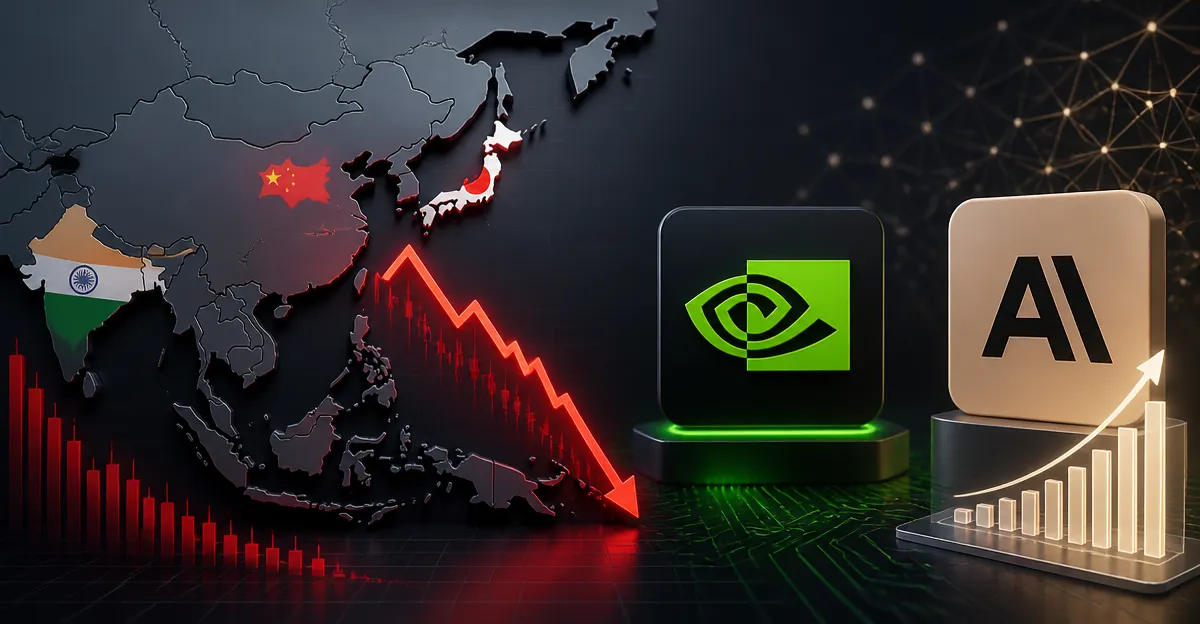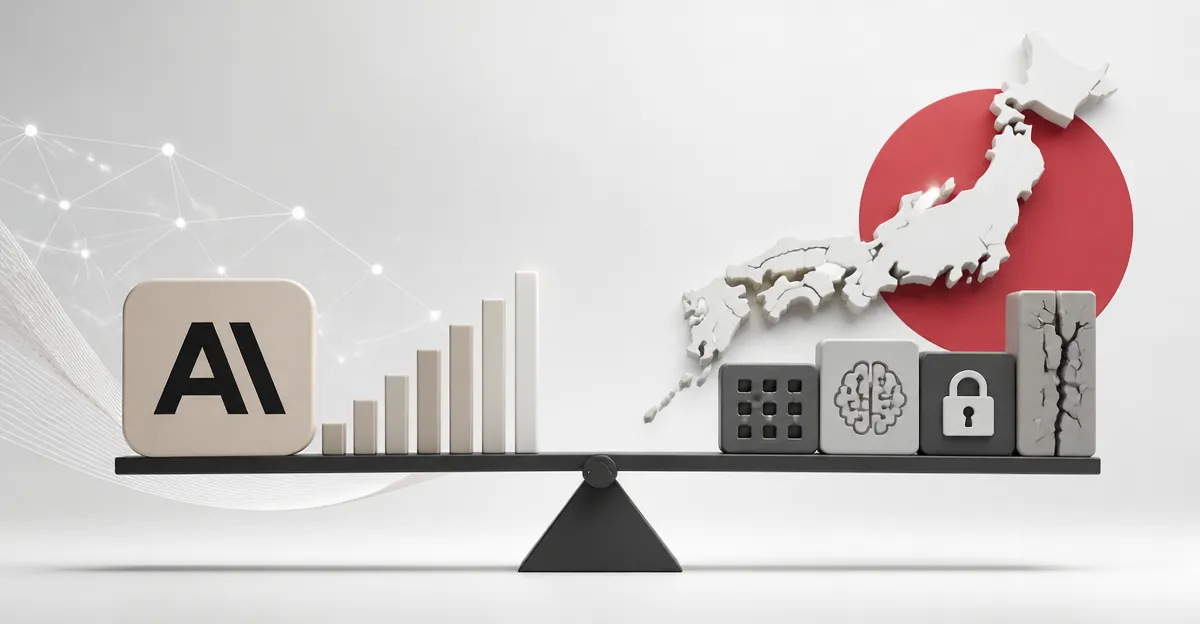
November 16, 2026, (Inside AI) — Japan's deepening labor shortage and stagnant productivity have made artificial intelligence a national imperative, but a new index from Anthropic suggests the country's corporate sector remains slow to convert that urgency into adoption. The index, which measures AI usage and integration across major economies, places Japan behind several peers in both deployment and workflow penetration.
The findings arrive as Anthropic prepares for a large initial public offering, a move that will sharpen scrutiny of the company's global market strategy and the economic impact of its technology. For Japan, the stakes are especially high: the working-age population has shrunk for decades, and industries from logistics to elder care face chronic staffing gaps.
Anthropic's data points to a familiar pattern. Japanese firms show high awareness of AI but lag in embedding it into core operations. The gap mirrors earlier technology cycles, where Japan excelled at hardware innovation but moved slowly on software-driven business model change.
Startups Cluster, Enterprises Hesitate
In Hongo Valley, a startup hub near the University of Tokyo, founders are building AI tools for manufacturing, healthcare, and administrative automation. The energy there contrasts with the caution inside many large corporations, where legacy systems and rigid procurement processes slow adoption. Anthropic's index captures this divide: strong grassroots experimentation, weak enterprise diffusion.
Read: Anthropic Hiring Culture
That pattern has economic consequences. Japan's productivity growth has trailed other advanced economies for years, and AI could help offset demographic decline if deployed widely. But diffusion requires more than tools. It demands retraining, data infrastructure, and a willingness to redesign processes, areas where Japanese firms have historically underinvested.
Anthropic's own commercial interests intersect with this story. The company has been expanding its presence in Asia, and Japan represents a large, wealthy market with a pressing need for automation. A successful IPO would give Anthropic capital to deepen that push, but it would also expose the company to investor pressure for measurable revenue growth in markets like Japan.
The index's release also lands in a policy vacuum. Japan has published AI guidelines and funded research, but it lacks the kind of coordinated national adoption strategy seen in Singapore or South Korea. Without that, adoption may remain uneven, concentrated in a few forward-leaning firms and startups.
The commentary here is that Japan's AI challenge is less about technology access and more about organizational inertia. The country's corporate governance, with its emphasis on consensus and risk avoidance, is poorly suited to rapid AI integration. Anthropic's index, whatever its methodological limits, highlights a real gap that will not close on its own.
Anthropic has not disclosed the full methodology behind the index, and independent verification of its rankings is not possible. Still, the directional finding aligns with other surveys showing Japanese firms slower to adopt generative AI than counterparts in the United States and China.
For now, the spotlight falls on Japan's ability to turn startup energy into enterprise-scale change. The alternative is a widening productivity gap that AI, however powerful, will not close by itself.

Shamil has a low tolerance for AI that only works in controlled demos. He covers agentic systems and generative AI with the skepticism of someone who has seen too many “revolutionary” tools quietly disappear six months after launch.