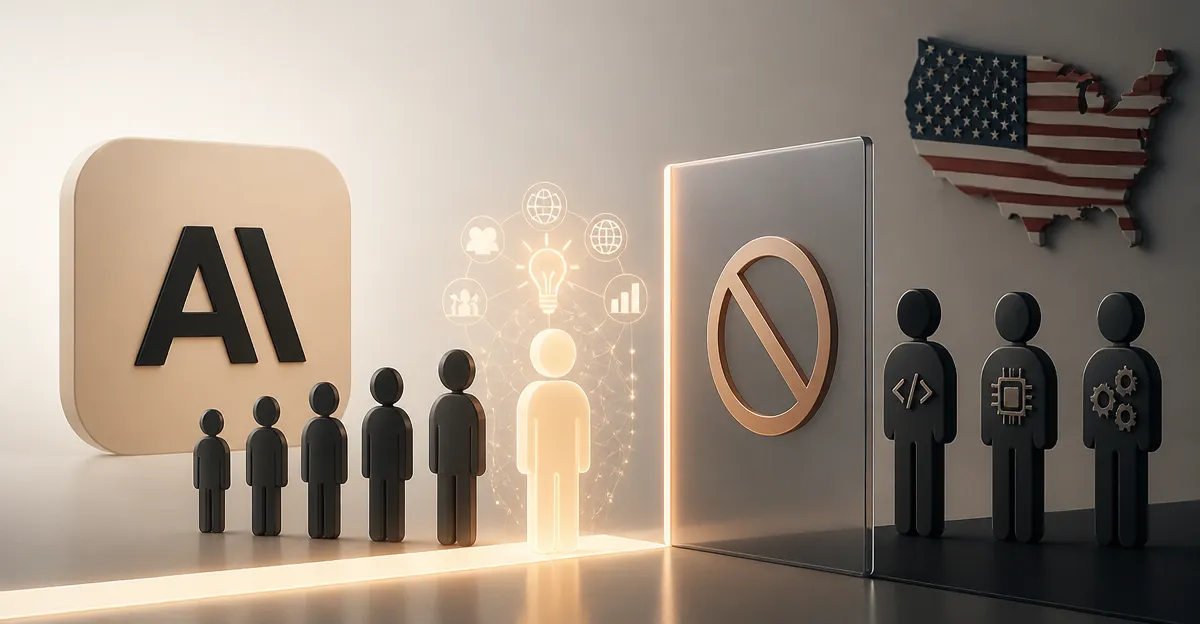
November 15, 2026, (Inside AI) — Anthropic will reject engineers with exceptional technical skills if they fail the company's culture interviews, CEO Dario Amodei said during a live stream interview with JPMorgan Chase CEO Jamie Dimon. The remarks come as Anthropic prepares for its initial public offering and scales its workforce from roughly 940 employees at the end of 2024 to about 5,300 as of late September, according to its IPO filing.
Amodei described the policy as deliberate, not incidental. "We are very disciplined about turning down people who are deeply technically talented," he said, adding that such candidates can still fail the company's cultural bar. The disclosure offers a rare window into how one of the world's most valuable AI labs weighs human capital ahead of a public listing, when investors will scrutinize hiring costs, retention, and organizational cohesion.
Why Culture Outranks Raw Technical Skill
Amodei framed the hiring philosophy around two pillars: talent and culture. He said Anthropic devotes 40 to 50 percent of its recruiting time to assessing both dimensions, a ratio that is unusually high for a sector where speed and technical pedigree often dominate. The company's workforce has grown more than fivefold in under two years, making consistent cultural screening harder to sustain at scale.
"We don't want people who are jerks. We don't want people who try to steal the show and don't work well with others. We don't want people who aren't oriented towards the public benefit," Amodei said. The criteria reflect Anthropic's stated mission of building safe AI, but they also raise practical questions about how a company defines and measures traits like public benefit orientation during a 45-minute interview.
Read: Cold Messages Beat AI-Polished Resumes
Inside AI's analysis: Anthropic's emphasis on cultural screening arrives as the AI industry faces a broader talent crunch, with labs competing for a limited pool of researchers who can train frontier models. Turning away technically strong candidates is a costly strategy in a market where compensation packages routinely exceed $1 million for senior researchers. The approach may reduce internal friction and alignment failures, but it also risks narrowing the candidate pool at precisely the moment Anthropic needs to scale. Whether public investors will tolerate slower headcount growth in exchange for cultural coherence remains an open question.
Honesty And Trust As Leadership Tests
Amodei, a former vice president of research at OpenAI and senior research scientist at Google Brain, linked the hiring philosophy to leadership. He said two qualities matter most in the leadership space: honesty and trust. Shared values, he argued, allow the company to move faster on complex tasks, whether training a model, meeting a safety objective, building a product, or advancing a policy priority.
"If you stick to that consistently, it's painful in the short run. But you get a team where everyone works together, and everyone is on the same side," he said. He added that when alignment is strong, "the whole company comes together to make it happen." The comments echo a management doctrine that has gained traction across AI labs, where safety decisions often require cross-functional agreement among researchers, policy staff, and product teams.
The IPO filing's headcount figures underscore the stakes. Growing from 940 to 5,300 employees in roughly 21 months means Anthropic has hired, on average, more than 200 people per month. Maintaining a strict culture filter at that velocity requires dedicated recruiting infrastructure and consistent interviewer training, both of which add cost ahead of a public offering.
Dimon, who leads the largest U.S. bank by assets, has publicly discussed AI's impact on workforce planning. His conversation with Amodei placed hiring philosophy alongside broader questions about how AI companies govern themselves as they mature into public entities. Anthropic has not disclosed the full details of its culture interview process, and Inside AI could not independently verify how the company scores candidates on cultural fit.
Read: Public Funds Ploughing Cash
For now, Amodei's message is clear: technical brilliance alone will not secure a job at Anthropic. The company's bet is that shared values and trust produce better technology and fewer internal conflicts, even if that means passing on some of the most skilled engineers in the field.

Shamil has a low tolerance for AI that only works in controlled demos. He covers agentic systems and generative AI with the skepticism of someone who has seen too many “revolutionary” tools quietly disappear six months after launch.