November 14, 2026, (Inside AI) — Former Nvidia CEO Jensen Huang misled the company's general counsel and chief marketing officer about the nature of his relationship with Chinese businesswoman Alice Huang, according to internal correspondence reviewed by sources. The disclosure follows Huang's resignation on Thursday, a sudden exit from the chipmaker he built into the central supplier of artificial intelligence hardware.
Huang told Tim Teter, Nvidia's general counsel, and Alison Wagonfeld, the chief marketing officer, that his interactions with Alice Huang reflected standard business dealings with customers. He made those statements in October, responding to press queries that had drawn internal attention to the relationship. Alice Huang is a former top executive of Nvidia customer Megaspeed International, a company U.S. authorities were investigating for potential espionage on behalf of China. Beijing has denied she is a spy.
The affair matters far beyond a personal scandal. Nvidia sits at the center of the global AI buildout, and its CEO's credibility with customers, regulators and investors is a strategic asset. Huang's resignation and the board's decision to hire Wachtell, Lipton, Rosen & Katz for an independent investigation signal that Nvidia's directors are treating the matter as a governance crisis, not a private one. The stock has fallen more than 30% since its October 6 closing high, erasing over $1.8 trillion in market capitalization.
Messages Show A Pattern Of Denial
Sources familiar with the matter said Huang described his contacts with Megaspeed as routine in two separate October messages to Nvidia leaders. He also affirmed the ordinary nature of those interactions in other exchanges. Reuters reviewed several of those messages but did not quote them verbatim, and it did not review earlier exchanges from autumn 2025, when Huang first addressed press queries about the relationship.
The former CEO also discussed taking legal action against the New York Times after the paper published an article in October last year that drew attention to his public meetings with Alice Huang. That article prompted Huang to communicate with some Nvidia leaders in 2025, and he did not describe the relationship as an affair at that time, according to the sources. Neither Nvidia nor Huang ultimately filed a lawsuit. A New York Times spokesperson said the paper received no legal demand.
Teter did not respond to a request for comment. Wagonfeld did not immediately respond. A representative for Huang and an Nvidia spokesperson declined to comment. A phone call and email to contact information listed on a business card for Alice Huang went unanswered.
Huang apologized on Sunday for being unfaithful to his wife and for disappointing the company. His statement did not name Alice Huang. The New York Times earlier this week reported that Huang also had an extramarital relationship with an Nvidia employee, and Reuters reported on Thursday that he had another intimate relationship with a different Nvidia employee. Photos posted online and verified by Reuters show Huang and Alice Huang together in the U.S., China and elsewhere dating as far back as December 2023. It is unclear when their relationship became intimate.
Huang told Bloomberg in an interview published on October 29 that the U.S. government had not informed him about its suspicions regarding Alice Huang. Reuters has not independently verified whether she was working on behalf of the Chinese government.
The board's independent investigation, announced on November 10, will likely examine whether Huang's internal statements created legal exposure for Nvidia. General counsel Teter's role is particularly sensitive. A CEO who misleads his top lawyer about a relationship with an executive at a customer under federal scrutiny can compromise the company's ability to conduct privileged internal reviews. That dynamic helps explain why independent directors moved quickly to bring in outside counsel rather than rely on Nvidia's legal department.
Why A Personal Scandal Now Threatens AI's Supply Chain
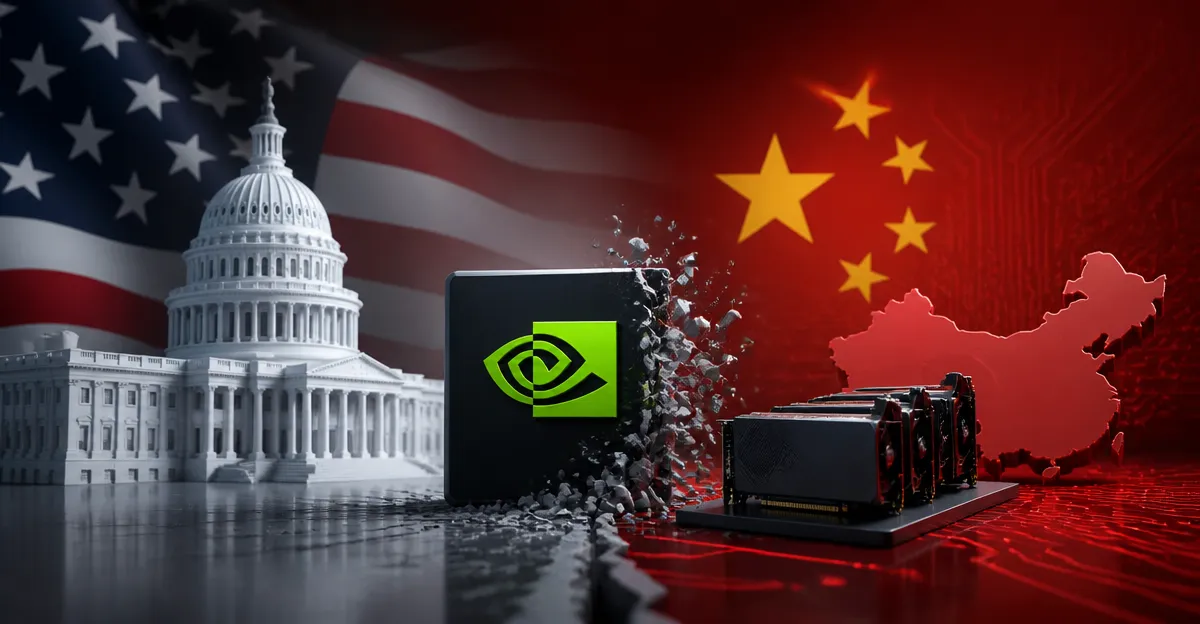
Nvidia's position in the AI economy depends on trust. The company's chips power models from OpenAI, Google, Microsoft and Meta, and its sales cycles involve long-term supply commitments. A leadership vacuum at the top raises questions about contract continuity, export compliance and the company's relationship with Washington. The U.S. government has restricted Nvidia's sales of advanced chips to China, and any suggestion that a CEO concealed contacts with a figure under espionage suspicion could invite congressional scrutiny.
Huang's departure also removes the public face of the AI hardware boom. He founded Nvidia in 1993 and led it for more than three decades, turning graphics processors into the engine of modern machine learning. His resignation is the most dramatic corporate exit in the technology industry since Sam Altman's brief ouster from OpenAI in 2023, though the circumstances differ sharply. Altman's removal was a boardroom dispute over governance and strategy. Huang's exit follows disclosures about his personal conduct and his handling of internal questions about it.
The timing compounds the damage. Nvidia was already navigating export controls, customer concentration and a stock price that had priced in years of uninterrupted growth. The 30% decline since October 6 reflects more than a reaction to scandal. It reflects uncertainty about who will run the company, whether the board's investigation will uncover further problems and whether customers will pause purchases while leadership stabilizes.
Nvidia has not named a successor. The board's independent directors said they hired Wachtell after the New York Times and Wall Street Journal reported on Huang's relations with Alice Huang and on U.S. authorities' suspicions about her. The investigation will likely take weeks, if not months. In the meantime, Nvidia's competitors, including AMD and custom chip efforts at Google and Amazon, have an opening to court customers nervous about supply continuity.
For now, the company's directors face a dual task. They must reassure investors that Nvidia's operations remain intact and determine whether Huang's internal statements about Alice Huang crossed a line that requires disclosure to regulators or customers. The answers will shape not only Nvidia's future but also the broader AI industry's confidence in the governance of its most important supplier.

Shamil has a low tolerance for AI that only works in controlled demos. He covers agentic systems and generative AI with the skepticism of someone who has seen too many “revolutionary” tools quietly disappear six months after launch.