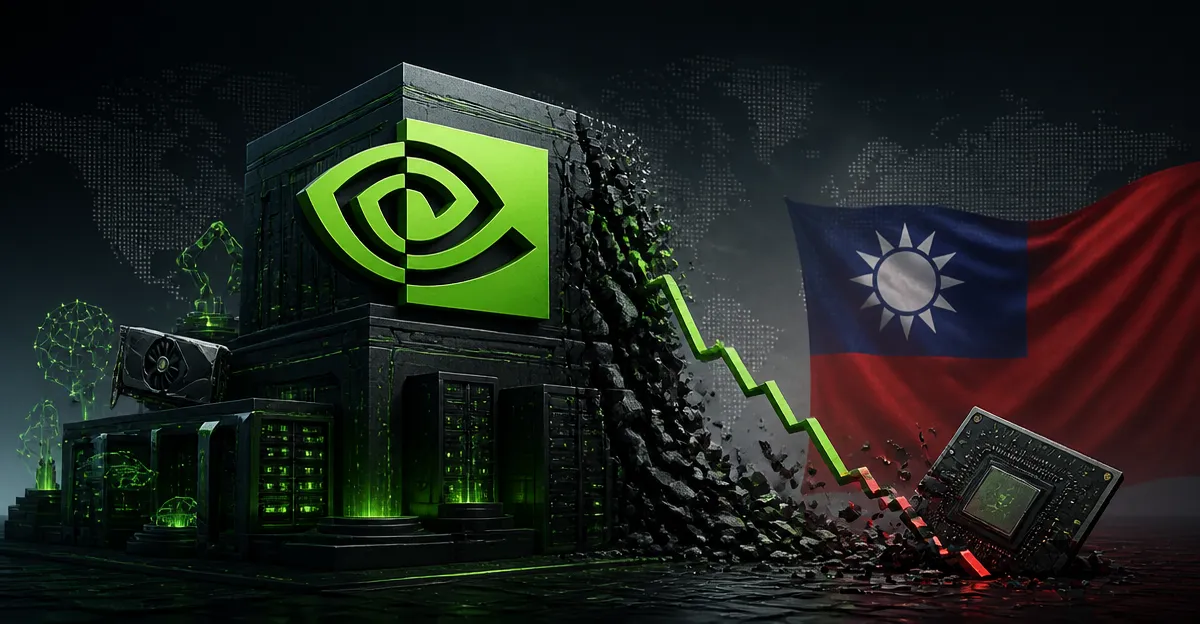
November 13, 2026, (Inside AI) — Nvidia CEO Jensen Huang, the public face of the AI boom, is facing allegations of undisclosed personal financial dealings that threaten to tarnish his reputation and raise governance questions at the world's most valuable chipmaker. The claims, which surfaced this week, have not been independently verified by Inside AI. Nvidia has not issued a public statement on the matter.
The allegations center on Huang's failure to disclose certain personal investment activities, according to sources familiar with the situation who spoke on condition of anonymity. The specific nature of these dealings remains unclear, but the timing is critical: Nvidia sits at the heart of the global AI infrastructure buildout, supplying the GPUs that power everything from large language models to autonomous systems.
Huang co-founded Nvidia in 1993 and has led it since. Under his watch, the company's market capitalization crossed $1 trillion in 2023 and has since climbed higher, making it a bellwether for the entire AI sector. His keynote presentations at industry events have become must-watch affairs, blending technical detail with showmanship.
Now, those same high-profile traits may amplify the fallout. Governance experts note that CEO misconduct allegations can erode investor confidence, particularly at firms whose valuations hinge on founder vision. Nvidia's board has not commented on whether it has initiated an internal review.
Can Nvidia's Board Contain the Fallout?
The company's board of directors, led by independent chair Tench Coxe, faces a delicate balancing act. On one hand, Huang's technical leadership is widely credited with Nvidia's dominance in AI chips. On the other, any hint of financial impropriety could trigger regulatory scrutiny and shareholder lawsuits.
Unlike typical corporate scandals, this one arrives during a period of intense public and political attention on AI. Governments worldwide are drafting rules for AI safety and corporate accountability. A leadership distraction at Nvidia could slow industry coordination on those fronts.
Investors have so far shown muted reaction, but analysts caution that the situation is fluid. "The market is giving Nvidia the benefit of the doubt because of its track record," said one portfolio manager who requested anonymity to speak freely. "But if more details emerge, that patience will wear thin."
Nvidia declined to make Huang available for comment. The company's shares closed slightly lower on Thursday, though the move was within normal daily volatility.
This is not the first time a tech founder has faced personal conduct allegations. Travis Kalanick's departure from Uber in 2017 and Adam Neumann's ouster from WeWork in 2019 both followed governance controversies. In each case, the companies eventually recovered but not without significant restructuring and reputational damage.
Nvidia's situation differs in one key respect: its technology is deeply embedded in critical infrastructure, from data centers to defense systems. Any leadership instability could have ripple effects across the AI supply chain.
The allegations also come as Nvidia faces growing competition from AMD, Intel, and a wave of custom chip startups. Rivals have been quick to capitalize on any perceived weakness, though none have publicly commented on the Huang matter.
For now, the story remains in the realm of allegation and speculation. But in the age of AI, where information travels instantly and public trust is fragile, even unverified claims can move markets and shape narratives. Nvidia's next move, whether a denial, a disclosure, or a board investigation, will be closely watched.
Huang himself has not addressed the allegations publicly. His last public appearance was at a developer conference in Tokyo earlier this month, where he delivered a keynote on AI advances without mentioning the controversy.
Read: IMF Monitors AI Valuations and Nvidia Leadership Change
As the week ends, the tech industry waits to see whether this is a minor stumble or the start of a major fall.

Shamil has a low tolerance for AI that only works in controlled demos. He covers agentic systems and generative AI with the skepticism of someone who has seen too many “revolutionary” tools quietly disappear six months after launch.