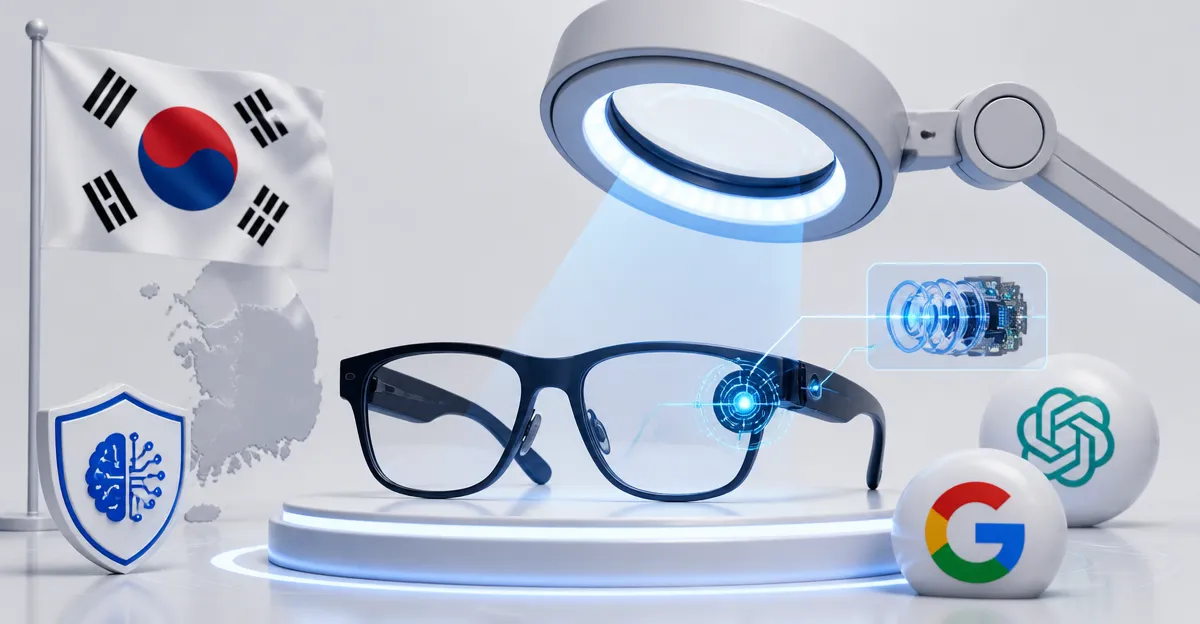
November 16, 2026, (Inside AI) — South Korean education authorities will inspect every pair of eyeglasses worn by candidates sitting for the national college entrance exam this week, a direct response to an AI-assisted cheating scandal that has undermined public trust in the country's high-stakes testing system. The exam, known as Suneung, will proceed as scheduled despite calls for a postponement, the Education Ministry confirmed. The decision follows revelations of cheating in the tax accountant examination, where candidates allegedly used AI-enabled devices to gain an unfair advantage.
The inspection mandate, reported by Reuters, represents one of the most aggressive physical screening measures ever deployed for a standardized test. It underscores how quickly generative AI tools have outpaced traditional exam security protocols. With millions of students and families treating the Suneung as a determinant of lifetime opportunity, even a hint of compromise triggers national anxiety.
Why Glasses Became the New Frontline
South Korea's exam authorities have long battled high-tech cheating. In past years, they banned smartwatches, mobile phones, and even electronic pens from test halls. But the tax accountant scandal revealed a gap: AI-powered devices can now be embedded into everyday items, including eyeglass frames. Cameras and wireless transmitters small enough to hide in a hinge or temple can capture exam questions and relay them to outside helpers. The Education Ministry has not disclosed the specific technology detected in the tax accountant case, but officials confirmed that the inspection will involve physical checks of all eyewear at exam centers.
"We will inspect every pair of glasses to ensure fairness," an Education Ministry official said, speaking on condition of anonymity because they were not authorized to speak to media.
Read: CAT 2026 AI Facial Recognition
Inside AI could not independently verify the exact detection methods being used. However, exam security experts note that simple visual inspection may not catch devices that look identical to ordinary frames. Some have suggested the use of handheld metal detectors or signal jammers at exam sites, though no such measures have been officially announced.
The Suneung is scheduled for November 19, 2026, and will be taken by approximately 500,000 students. The exam lasts eight hours and covers Korean, math, English, social studies, and science. A single point can separate thousands of applicants for top universities. The stakes have made cheating attempts creative and persistent, but the AI scandal has introduced a new dimension.
Public Outcry and the Fairness Calculus
The tax accountant exam cheating case, which first surfaced in October, involved multiple candidates who allegedly used AI-equipped glasses to receive real-time answers. Prosecutors have charged at least three individuals, and the Korean Institute of Certified Public Accountants has launched its own investigation. The scandal prompted online petitions demanding a delay of the Suneung, with some parents arguing that the integrity of the entire testing system is now in question.
"If they can cheat in a professional exam, what stops them from cheating in the college entrance exam?" one petition read, according to sources. The Education Ministry has rejected the delay, stating that the inspection protocol will be sufficient.
This is not South Korea's first encounter with exam cheating. In 2004, a massive cell phone cheating ring led to the cancellation of scores for hundreds of students. That incident prompted a ban on mobile phones in exam halls and the introduction of signal detectors. The current response echoes that history but faces a more sophisticated adversary. AI devices are smaller, cheaper, and harder to detect than early smartphones.
The ministry's decision to inspect glasses rather than ban them outright reflects a practical compromise. Many students require prescription eyewear, and a blanket ban would be discriminatory. Instead, inspectors will check for unusual components or modifications. Students have been advised to wear simple frames without metal embellishments to speed up the process.
Read: Australia AI Incident Reporting
For now, the Suneung will proceed. But the inspection policy may only be a temporary fix. As AI hardware evolves, exam authorities will need to invest in more advanced detection technologies, such as RF scanners or AI-powered video analytics that flag suspicious behavior. The arms race between test makers and cheaters is entering a new phase, and South Korea's response will be watched closely by education systems worldwide.

Sofia spent years studying how machines parse human language before pivoting to cover the systems now rewriting it. She reads technical papers the way others read news and looking for what the numbers are actually saying beneath the headlines.