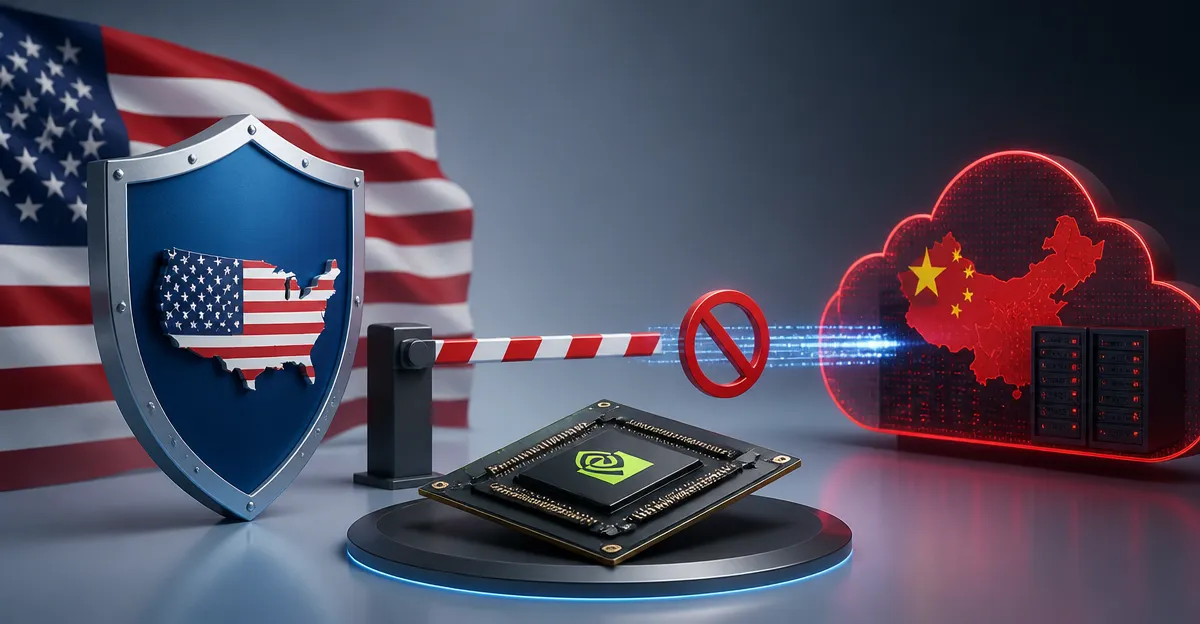
November 17, 2026, (Inside AI) — The United States has tightened restrictions on China's access to advanced AI chips just days before President Donald Trump is scheduled to meet with Chinese President Xi Jinping, according to sources familiar with the move. The timing of the escalation, which remains officially unannounced, places semiconductor policy at the center of the upcoming bilateral talks.
The new measures, which multiple officials described as a significant expansion of export controls, target the flow of high-performance computing hardware to Chinese firms. Washington has long argued that such chips could aid Beijing's military modernization and surveillance capabilities. The decision to act now, rather than after the summit, signals that the White House intends to enter negotiations from a position of strength.
The chip restrictions are part of a broader set of global flashpoints dominating the news cycle this week. Investigators in Europe are probing a series of hoax bomb threats that they suspect may be coordinated by a single group. Separately, nuclear regulators have warned that Russian strikes on Ukraine's power grid could trigger a catastrophic accident. And in the Middle East, Houthi forces are reportedly closing in on the Yemeni city of Aden.
Why Chip Controls Matter Before The Summit
The timing of the U.S. action is not accidental. By moving before the Trump-Xi meeting, Washington aims to preempt any attempt by Beijing to negotiate a relaxation of chip controls in exchange for concessions on other issues. The strategy mirrors previous administrations' use of export controls as leverage, but the scope of these new restrictions appears broader.
The restrictions focus on advanced AI accelerators, the specialized chips used to train large language models and run complex machine learning workloads. These components are produced by a handful of American and allied firms, giving Washington significant leverage over the global supply chain. China's domestic chip industry has struggled to match the performance of these processors, though it has invested heavily in alternatives.
Industry analysts note that the timing also serves a domestic political purpose. President Trump has faced pressure from lawmakers who argue that previous controls were too porous. By tightening the rules now, the administration can claim it is taking a harder line on China while still leaving room for negotiation at the summit.
The meeting between Trump and Xi is expected to cover a range of issues, including trade, Taiwan, and regional security. But the chip question will likely dominate the economic agenda. Both sides have signaled a willingness to talk, but neither has indicated a readiness to back down on core demands.
Meanwhile, the hoax bomb threats in Europe have raised concerns about coordinated disruption campaigns. Investigators have not publicly identified a suspect group, but the pattern of threats suggests a sophisticated operation designed to test emergency response systems. The threats have caused evacuations and delays in several countries, though no explosives have been found.
In Ukraine, nuclear regulators have issued a stark warning about the risks of continued attacks on the power grid. The Zaporizhzhia nuclear plant, Europe's largest, has repeatedly lost external power during the conflict, forcing it to rely on emergency generators. A prolonged blackout could compromise cooling systems and lead to a meltdown, though the plant's reactors have been shut down.
The situation in Yemen has also escalated, with Houthi forces reportedly advancing on Aden, the country's temporary capital. The move threatens to further destabilize a region already grappling with a humanitarian crisis. International observers have called for restraint, but the fighting shows no signs of abating.
Back in Washington, the chip restrictions are expected to draw criticism from some industry groups, which argue that overly broad controls could harm American firms by cutting off a major market. But supporters counter that national security concerns outweigh commercial interests. The debate is likely to intensify as the summit approaches.
The White House has not commented publicly on the new measures, and it remains unclear whether they will be formally announced before the meeting. Officials have indicated that the president intends to raise the issue directly with Xi, framing it as a matter of mutual security rather than a unilateral action.
For now, the world waits to see whether the chip controls will become a bargaining chip or a stumbling block in the high-stakes diplomacy. The outcome could shape the future of AI development and global trade for years to come.

Sofia spent years studying how machines parse human language before pivoting to cover the systems now rewriting it. She reads technical papers the way others read news and looking for what the numbers are actually saying beneath the headlines.