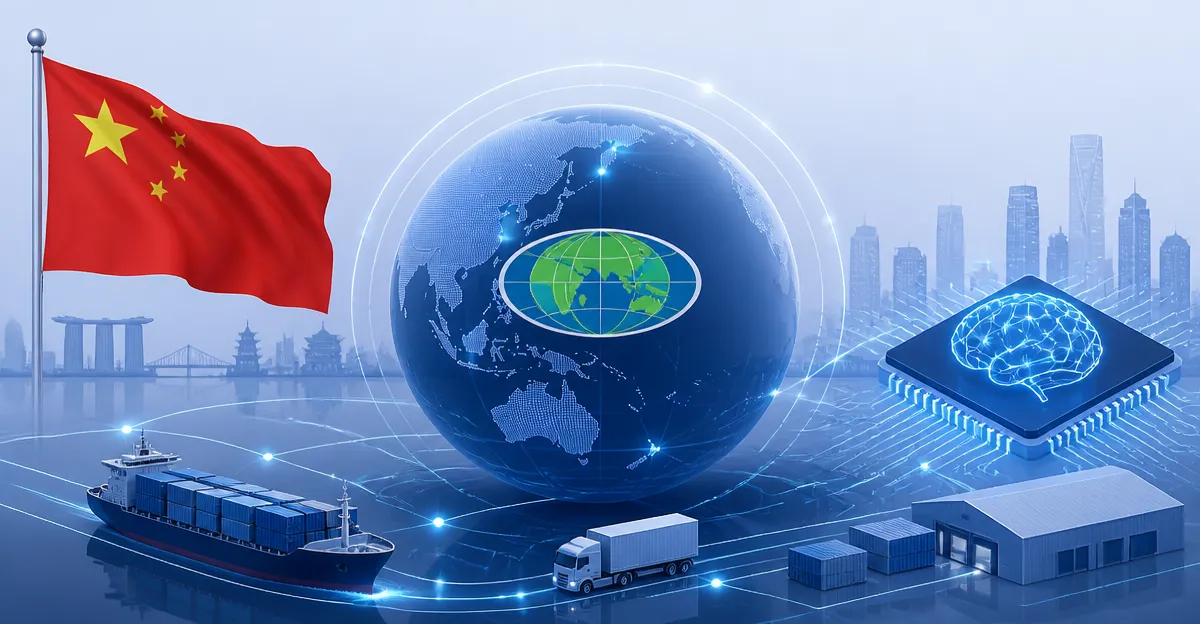
November 19, 2026, (Inside AI) — Chinese President Xi Jinping opened the Asia-Pacific Economic Cooperation (APEC) summit in Shenzhen on Wednesday with a call for regional cooperation on artificial intelligence and supply chains. The meeting brings together U.S. President Donald Trump and Russia's Vladimir Putin, among other leaders, against a backdrop of ongoing geopolitical tensions.
Xi used the platform to showcase China's technological advances, positioning the country as a leader in AI and global supply networks. The summit, held in the southern tech hub of Shenzhen, marks a rare gathering of leaders from rival powers amid conflicts in Europe and the Middle East.
The APEC forum, which includes 21 Pacific Rim economies, has traditionally focused on trade and economic cooperation. This year's agenda places AI governance and supply chain resilience at the center, reflecting the growing importance of technology in global affairs.
Xi's emphasis on AI cooperation comes as China and the United States remain locked in a technology rivalry. Both countries have imposed restrictions on semiconductor exports and AI technology transfers, raising concerns about a fragmented global tech landscape.
In his opening remarks, Xi stressed the need for shared responsibility in managing AI's risks and benefits. "We must work together to ensure that artificial intelligence serves the common good and does not become a source of division," Xi Jinping, President of the People's Republic of China, said.
The presence of Trump and Putin at the summit underscores the complex dynamics at play. Trump has pursued a confrontational approach toward China on trade and technology, while Putin's attendance signals Russia's continued engagement in Asia-Pacific affairs despite Western sanctions.
Analysts view the summit as an opportunity for Xi to project China's technological self-reliance and to court regional partners wary of U.S. dominance in AI. Shenzhen, home to tech giants like Huawei and Tencent, serves as a fitting venue for this message.
The summit also features discussions on supply chain security, with Xi advocating for diversified and stable supply networks. "Supply chains should be open, inclusive, and not used as tools for political pressure," Xi said.
However, the U.S. has accused China of coercive economic practices and intellectual property theft, a charge Beijing denies. The two sides have held sporadic talks on AI safety but remain far apart on key issues.
Inside AI could not independently verify the details of closed-door meetings scheduled during the summit. The forum is expected to produce a joint statement on AI principles, though disagreements may soften its language.
Xi's call for cooperation contrasts with recent U.S. actions to restrict AI chip exports to China. In October, the Biden administration expanded bans on advanced semiconductor sales, citing national security concerns. Trump has indicated he would maintain a hard line on technology transfer.
The APEC summit runs through Friday and includes sessions on digital economy, climate change, and trade facilitation. Leaders are also expected to discuss regional security issues, including North Korea's nuclear program and tensions in the South China Sea.
For China, the summit offers a chance to reshape the narrative on AI governance, which has been dominated by Western concerns over authoritarian uses of the technology. Beijing has proposed its own AI ethics framework, emphasizing sovereignty and non-interference.
As the world's two largest economies vie for influence, the outcomes of this summit could set the tone for future AI collaboration or competition. The presence of both Trump and Putin adds a layer of unpredictability to the proceedings.
Xi's remarks are likely to resonate with smaller APEC economies that seek to avoid choosing sides in the U.S.-China rivalry. Many rely on Chinese investment and technology while maintaining security ties with Washington.
The summit's focus on AI also highlights the technology's role in economic growth and national security. Countries are racing to develop AI capabilities, and the rules governing its use are still being written.
China has invested heavily in AI research and applications, aiming to become a global leader by 2030. The U.S. remains ahead in foundational research and chip design, but China excels in deployment and data access.
This summit may not resolve the deep-seated differences between the major powers, but it provides a platform for dialogue. Xi's call for cooperation will be tested by the actions of the other leaders present.
The APEC forum has a history of fostering economic integration, including the Bogor Goals for free trade. This year's meeting could see new initiatives on digital trade and AI standards.
As the summit continues, observers will watch for bilateral meetings on the sidelines, particularly between Xi and Trump. Any sign of easing tensions would be welcomed by global markets.
For now, Xi's message is clear: China is open for cooperation on AI and supply chains, but on its own terms. The response from Washington and other capitals will determine whether this summit leads to concrete progress or remains a symbolic gesture.
Inside AI will continue to monitor the summit and provide updates as they become available.

Sofia spent years studying how machines parse human language before pivoting to cover the systems now rewriting it. She reads technical papers the way others read news and looking for what the numbers are actually saying beneath the headlines.